News Archive
21st August, 2025
New Books
Good Days, an A-Z of Hope and Happiness
Brand new book for adults just out. It’s a book to cheer us up, and give us strength to cope with tough times and a troubled world.
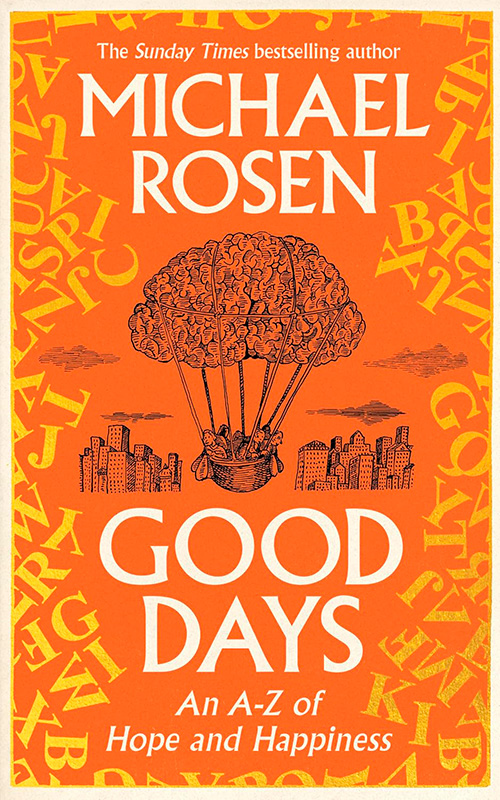
I’m also doing a tour of bookshops to launch it.
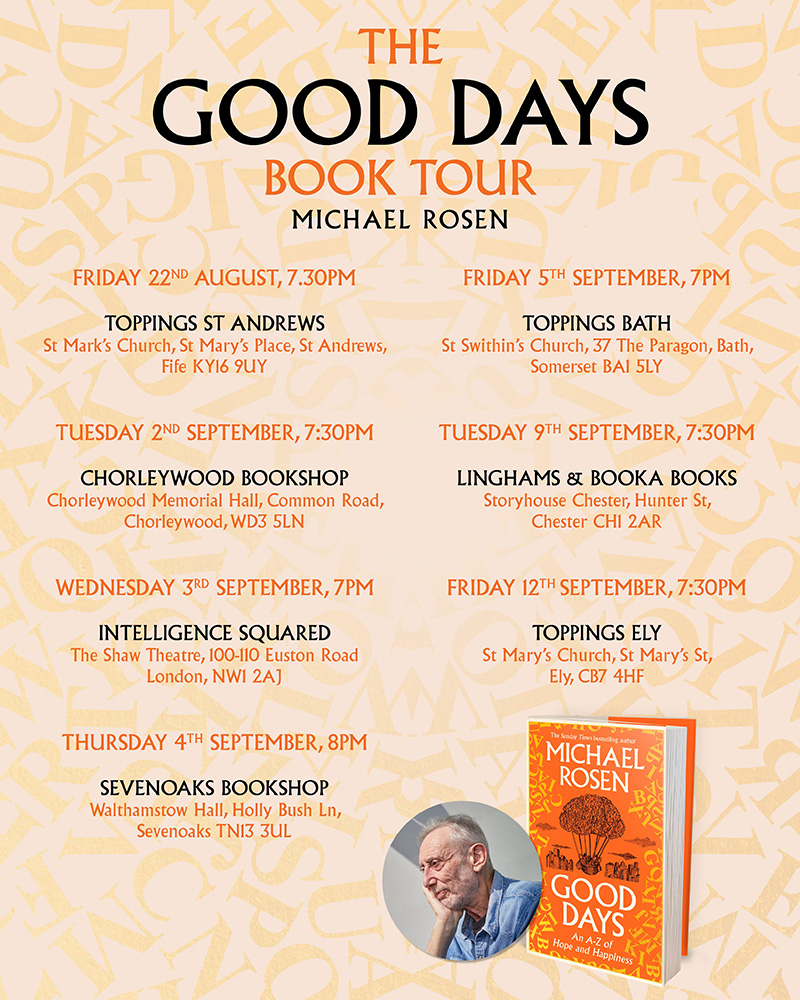
You can find details and links to all these evenings on my Events page.
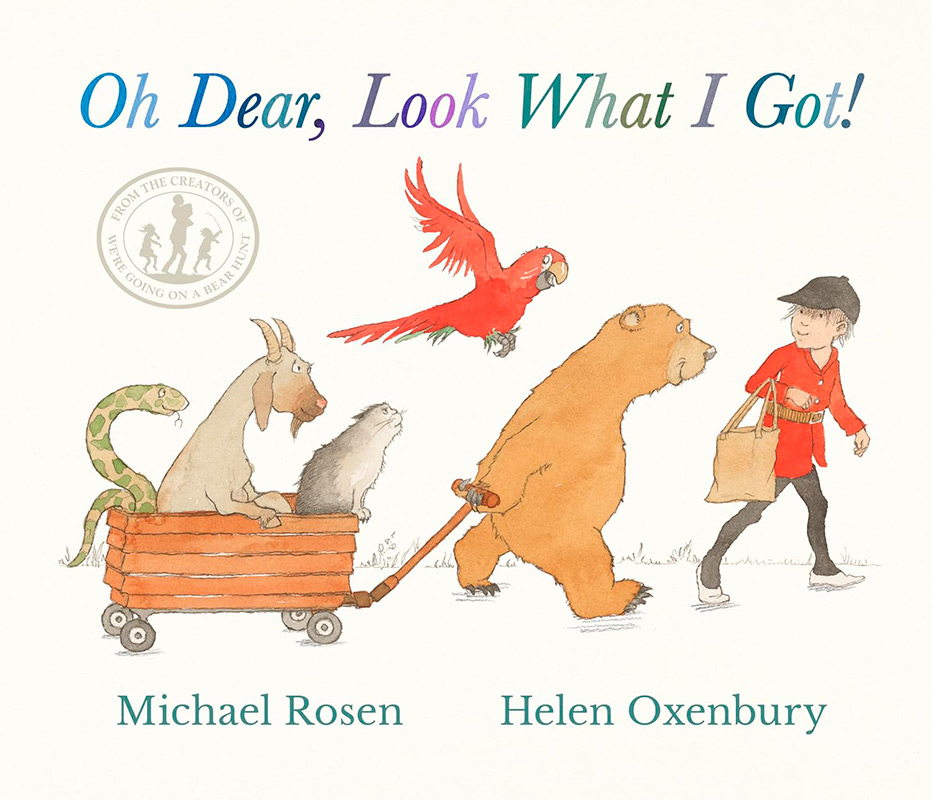
Oh Dear, Look What I Got!
For many years, people have asked me whether I was ever going to do more books with the great Helen Oxenbury. And now the answer is YES! It’s Oh Dear, Look What I Got! and Helen and I have been doing interviews, vids, and a hu-u-u-u-ge sign-in at Walker Books. It is released on the 11th September.
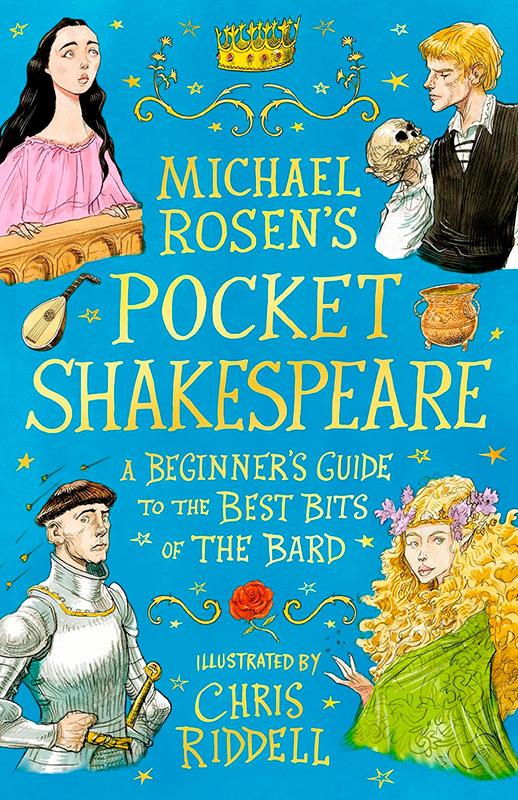
Michael Rosen’s Pocket Shakespeare: A Beginner’s Guide to the Best Bits of the Bard
This book came out a few months ago, and is billed as ‘the ultimate beginner’s guide to the magic of Shakespeare’, it is illustrated by the wonderful Chris Riddell.
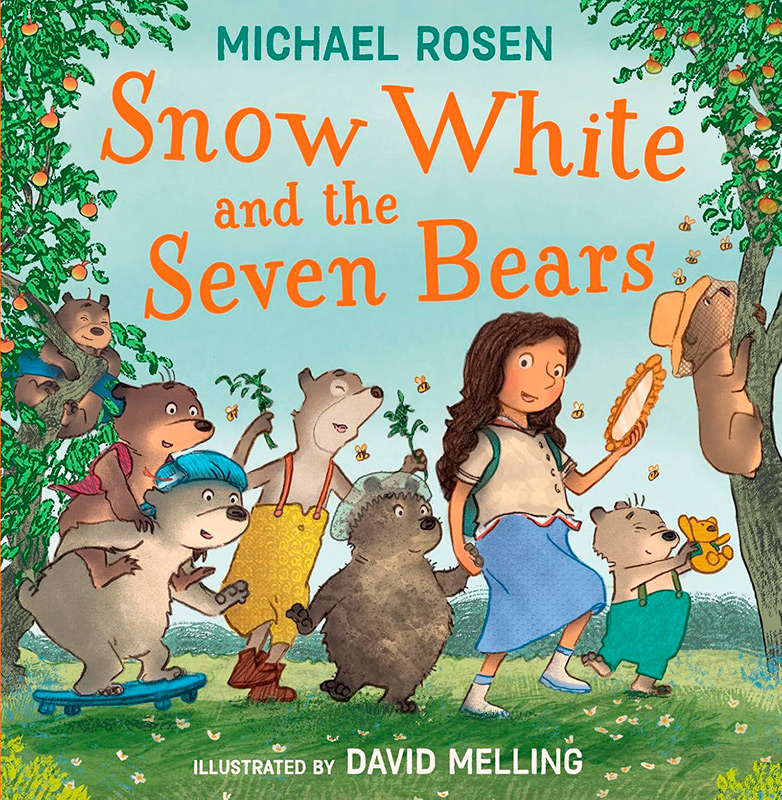
Snow White and the Seven Bears
Released in June, this wonderful story is inspired by the famous fairy tale, and is brilliantly brought to life by David Melling, the creator of Hugless Douglas.
Words United
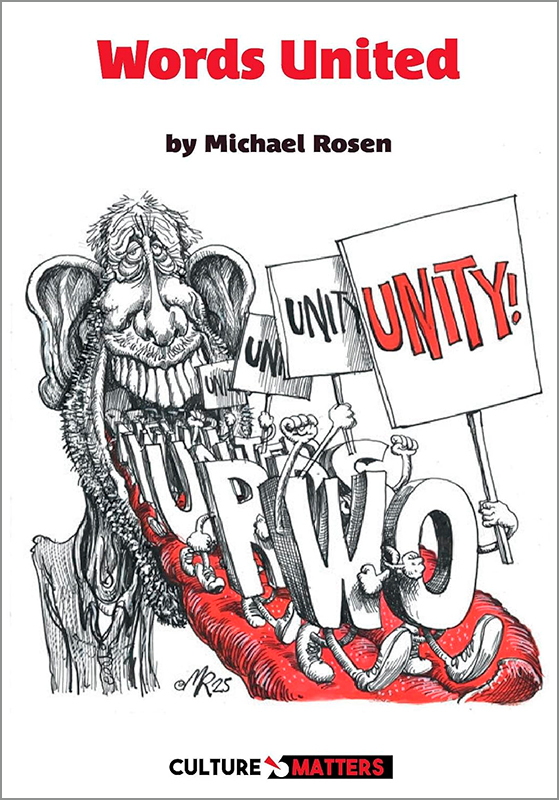
Words United is a new book of poems, anecdotes and observations, a fleet of word-drones. Can words pierce the armour of lies, bias and misinformation peddled by politicians and the media as they engineer and support war, starvation and genocide in Palestine? All profits from books and ebooks sold will be donated to Medical Aid for Palestine.
Finally on the books front, also coming out is an academic book called Adventures in Wonderland. No cover available just yet. It’s a book of the lectures I’ve given at Goldsmiths University of London as part of the MA in Children’s Literature, I teach on. More details very soon.
Hay Festival
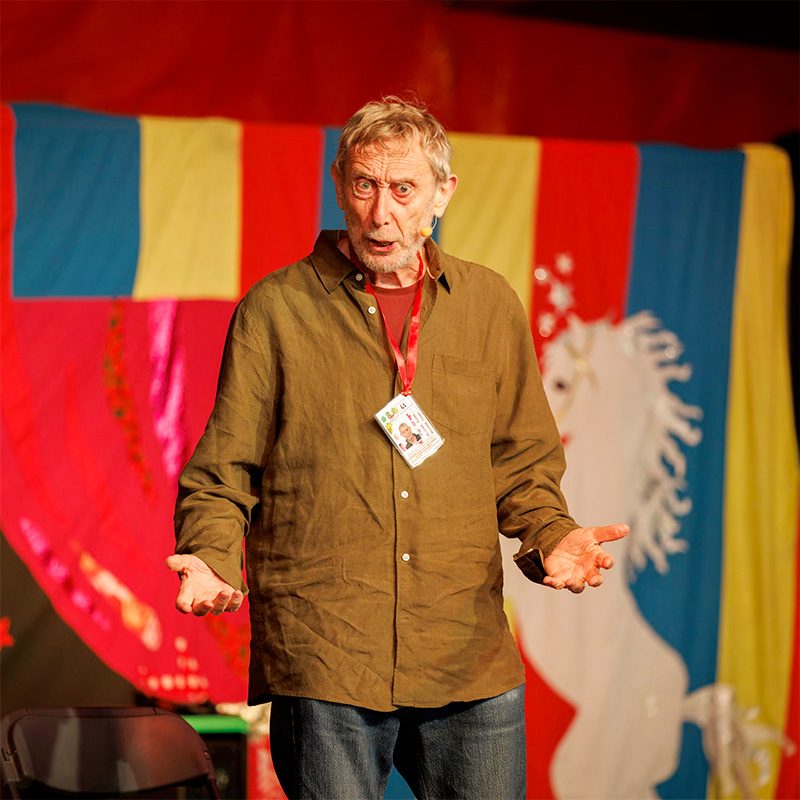
At the Hay Festival this year, I launched my Pocket Shakespeare book with a live event. We were in a huge tent, with an audience of over 1,500. The book is my selection of great speeches from Shakespeare along with my comments about them.
The artist for the book is the great Chris Riddell and he was at the event with his ‘visualiser’ doing live drawings as we performed.
Amongst the performers was MC Grammar who rapped some Shakespeare for us – in his sunglasses of course.
It felt amazing!
Sita Brahmachari
In June, I did a public event at Goldsmiths University of London with the wonderful writer Sita Brahmachari. I interviewed her about her book, Phoenix Brothers (Oxford).
I really like her books. They show us how people think when they’re going through difficult and challenging times. You can find out more about her at: www.sitabrahmachari.com
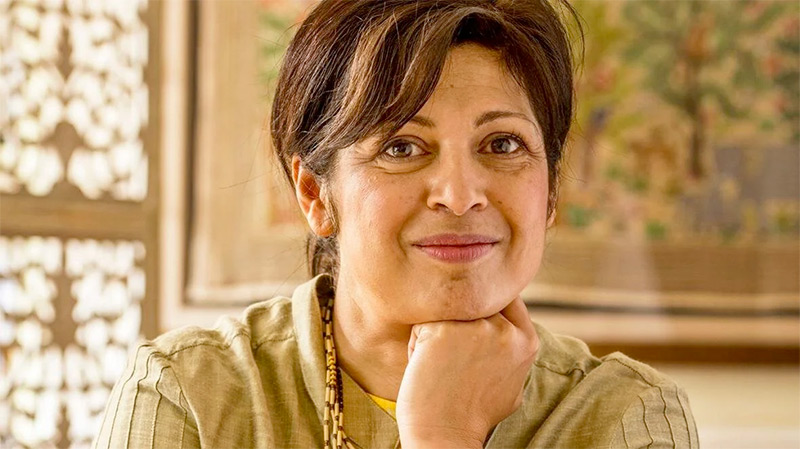
Sita Brahmachari
Jaipur Literature Festival
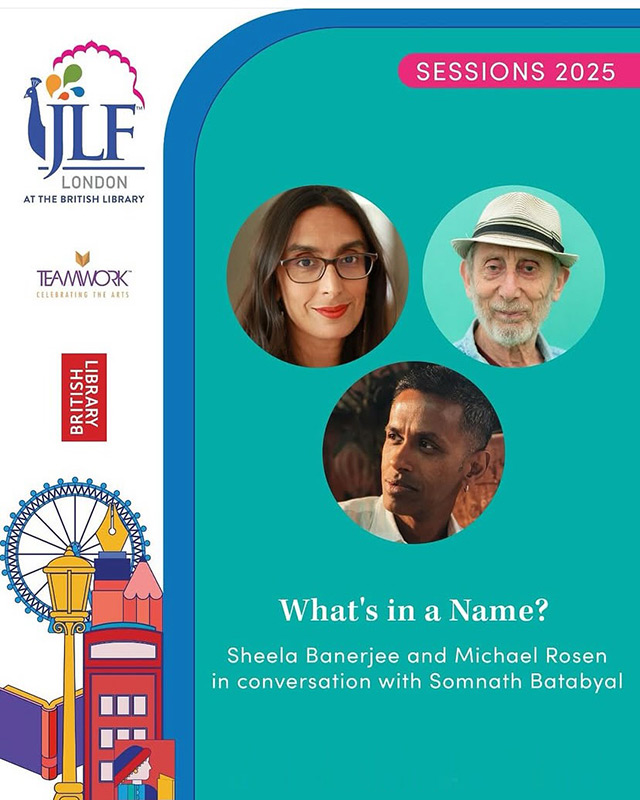
Also in June, I did an event with Sheela Banerjee about our names at the Jaipur Literature Festival at the British Library in London. The session was moderated by Somnath Batabyal. Sheela shows in her book, What’s In a Name? how our names have so many stories and so much culture wrapped up in our names. Great theme to explore.
Refugee Week
In Cambridge, for Refugee Week, this year, we had a wonderful day of poems, songs, dance and drama organised by Professor Helen Weinstein of History Works TV. It took place at the Corn Exchange and it was packed.

Glastonbury
Get this: I did Glasto!
OK, I wasn’t on the Pyramid Stage (surprise), I was in the really lovely Kidzfield.
Photograph: Alicia Canter/The Guardian
I did two shows over two days. Thanks to organiser Tony Cordy, I didn’t have to camp. Instead I had a really luxe caravan. It’s called ‘Airstream’ but my step-daughter tells me that you don’t call them that. You call it a ‘streamer’. You sound casual and you say, ‘Yeah, I was staying in a streamer.’
Great Glasto moment: another event with MC Grammar!
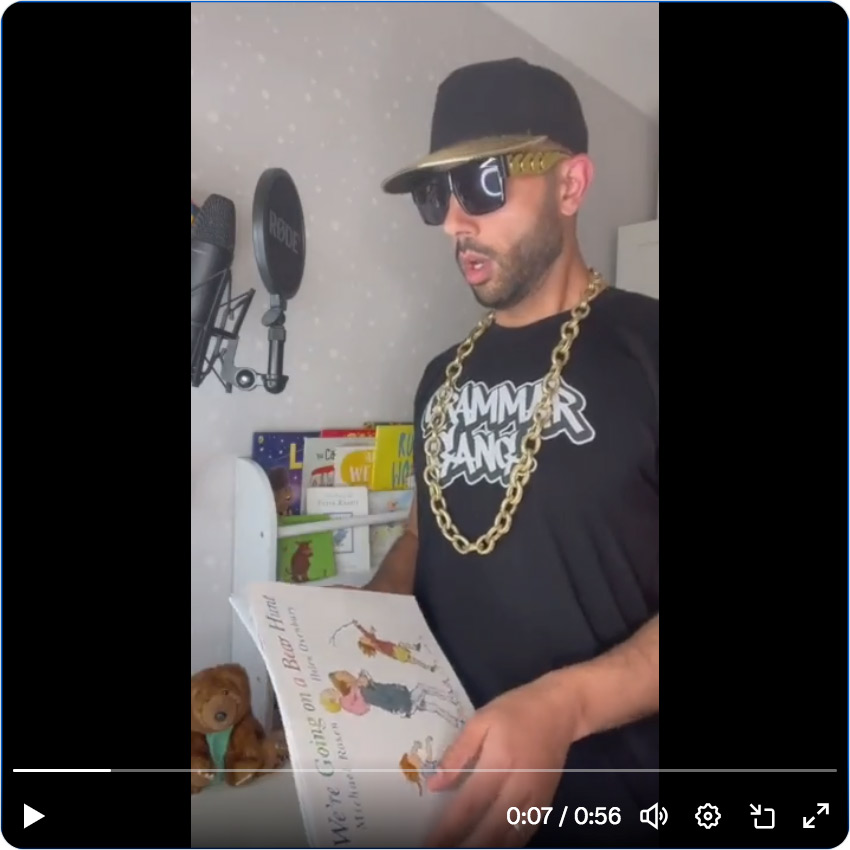
He was on doing a show and I stood at the side watching. All of a sudden he pitched into his rap version of We’re Going on a Bear Hunt and I wobbled around in time with it.
Little did I know that MC’s wife was filming it! And then she posted it on Insta and in a day or so it went viral. It was huge. MC and me doing ‘Bear Hunt’.
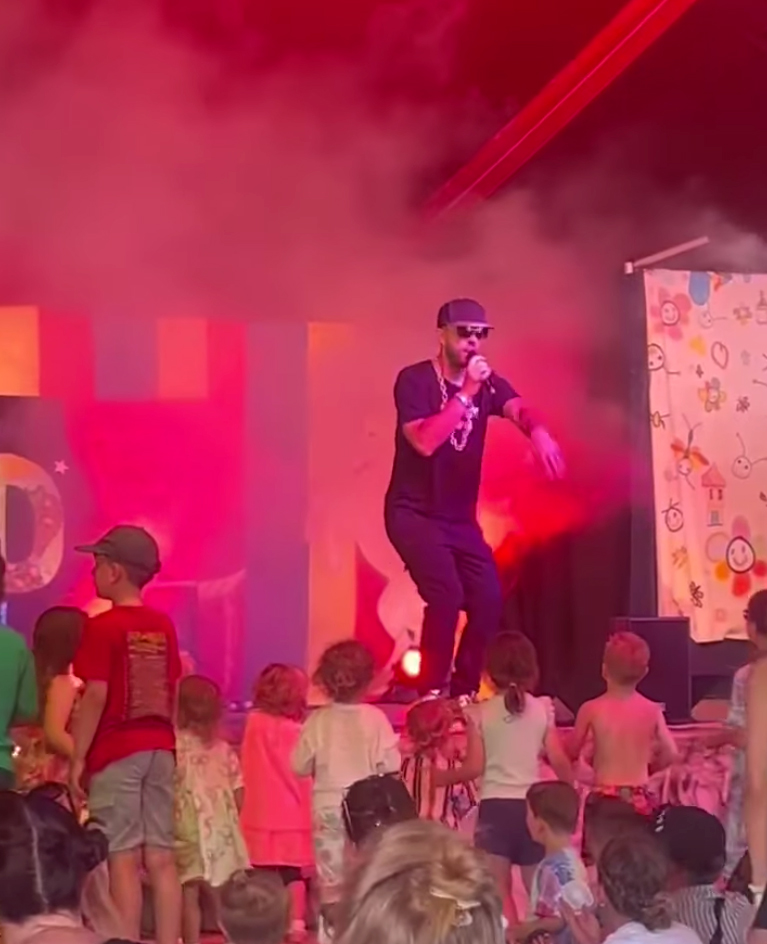
Standby for future collabs between MC and me!!! (Really!)
Getting Through It – The Old Vic, London, 19th October
I’m excited to announce the London premiere of Getting Through It, my double bill on love, loss and mortality. I’m performing at The Old Vic for one day only, on Sunday 19th October at 2pm.
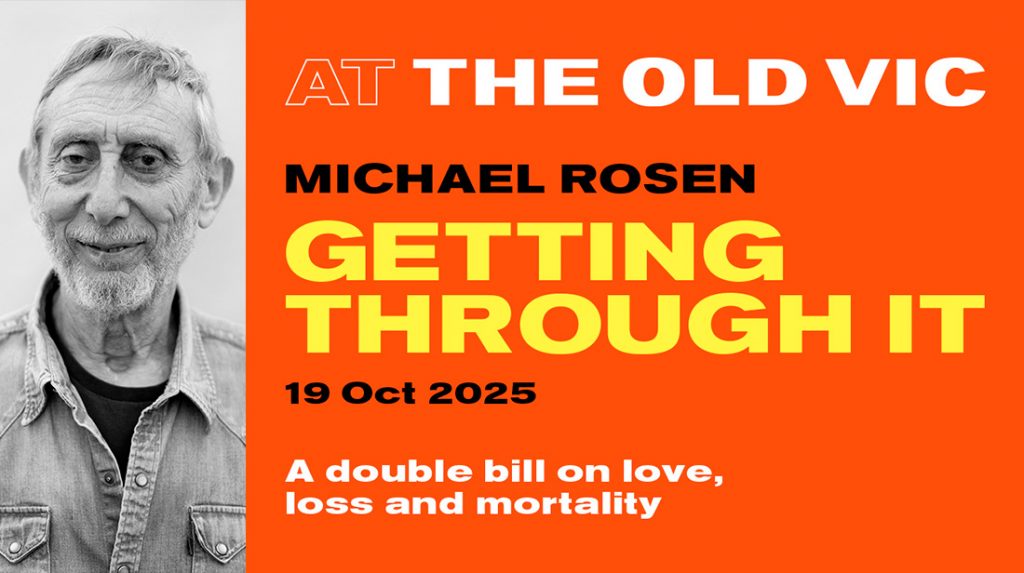
Tickets are on sale now at:
www.oldvictheatre.com/stage/getting-through-it
PRESS RELEASE
Getting Through It is a powerful, deeply personal, yet universally relatable, double bill of monologues and poetry.
In the first part, The Death of Eddie, Michael explores his experience after losing his 18-year-old son to meningitis, recalling the strange and contradictory mix of emotions felt after the unexpected loss. This story, memorably captured in Michael’s children’s book The Sad Book, is told in vivid and poetic detail.
In the second part, Many Kinds of Love, Michael recounts his 48-day period in intensive care, after contracting COVID-19 early in the pandemic, and having to face his own mortality.
Both stories are told with Michael’s signature positivity, humour and poetry. Together, the two pieces are a testimony to the spirit of recovery.
Previous News
14th February 2025
New Books
I have three new books out:
One Day, published by Walker Studio, illustrated by Benjamin Phillips

A poignant and ultimately uplifting picture book based on a true story of an escape from a convoy to Auschwitz.
“Get through one day and then on to the next. One day at a time. One day after another.” Eugène Handschuh was a Jewish member of the Resistance in occupied Paris. After he was captured by the Nazis, he was placed on a convoy to Auschwitz. Against all the odds, with the help of strangers and fellow members of the Resistance, Eugène and his father escaped the convoy and survived – when so many others did not. Former Children’s Laureate Michael Rosen was inspired to tell this story after discovering his father’s uncle and aunt were on the same convoy as Eugène, but never returned. With powerful illustrations from Benjamin Phillips, whose work has been shortlisted for the Carnegie Medal for Illustration, this sensitive true-story picture book reminds us of the best of people, in the worst of times.
“A perfectly pitched Holocaust story. These are not easy subjects to tackle in a book aimed at readers as young as six. But Benjamin Phillips’s illustrations cleverly evoke the privations of life in the camp, without focusing on the brutality. The text is similarly careful, with much of the emphasis on the internal…there is no anger, and no grand prose. Instead, the emphasis is on the human capacity for renewal.” ― The Telegraph
The King and the Tutor

This book is inspired by another book: The Prince by Niccolò Machiavelli in which Machiavelli appears to be giving a ruler advice on how to rule. Whether you take it at face value or as an ironic satire on cynical ways to maintain power is up to you.
In 2023 and 2024, I thought I would have a go at doing something similar for what’s going on now. Who or what these fables are about is for you to decide. With illustrations by Tim Sanders.
Poems About Education

This is a book of the poems I’ve written in ‘The Teacher’ and ‘Educate’ over the last few years (the NUT and the NEU union newspapers). With illustrations by Tim Sanders.
Jersey
I was invited to Jersey to take part in their books festival, the Jersey Festival of Words.

I had never been to Jersey, though I had been ‘next door’ to Guernsey. As you might expect, that’s probably not the best thing to say because each island is very keen to have its own identity, history and traditions.
One really nice thing for me was to be able to visit one of my father’s old college students who I knew as Cyril Le Bail. Apart from it being great to make contact, it was also wonderful to hear some stories about my dad back in the 1960s and also the fact that ‘Cyril’ remembers the Nazi occupation of the island. He remembers him and his mates making a racket outside the billet of one of the Nazi officers and the man coming out with some prunes and custard and giving it to him and his mates. The officer told them that he had a son about their age back home in Germany.
It all seemed so ‘normal’. I thought of the kinds of games and mischief I got up to (‘knock-down ginger’ and the like) just 10 years after ‘Cyril’ and his mates’ adventure. Though Jersey isn’t part of the UK, it’s part of the overall governance of the UK head of state, the monarch. It feels like a very British place too. So, what was uncanny about the story was the idea of someone right now, in 2024 who I could talk to and who was being given prunes and custard by a Nazi officer in a place that feels like Britain!
I also thought how just a few miles away in France, at exactly the same moment, Nazi officers were rounding up my relatives and sending them Auschwitz.
It all seems grotesque and bizarre at the same time.
Scriptwriting
I’ve been busy doing some scriptwriting with another writer. I can’t say what the script is for the moment but it’s been a great experience. It’s not really anything like writing a story because you have to keep thinking of what will work visually without necessarily describing it.
One thing that’s really helped us is to imagine an actor in the part of the person who’s speaking, so that we have a ‘voice’ and ‘look’ to write. So we’ve cast the film! Not that we’ve told the actors, of course. It just helps as you’re writing to do that.
We’ve had some great feedback from a script editor. It’s great when you’re told about how to develop characters or how to make sure that a character has motives and the like.
Anyway, standby. Will it ever get made? I don’t know!
Cockney Yiddish
Queen Mary College is running a research project on ‘Cockney Yiddish’ and they asked me to come and talk to them about my parents and what it was like growing up in a household that used a lot of Yiddish but didn’t actually speak it in conversation.
It was great to reminisce about these things and gather together in my mind the ways in which my my mum and dad spoke – and indeed the way my mum’s parents spoke too. I’ve put quite a lot of that in my book Rosen’s Almanac which is a collection of family sayings from all over Britain, along with some thoughts about language.
There is also a Podcast that has been made in conjunction with the project and you can listen to the episodes here.

Relative Values
The Sunday Times put my brother Brian and me into their regular feature ‘Relative Values’. It was great fun to do. They photographed us and interviewed us at the Natural History Museum in London, where my brother has worked for most of his life. The photo they printed in the paper, is a kind of joke. It’s my brother and me standing on a balcony overlooking the back of a huge dinosaur. There’s a hidden gag there, I think, that really it’s a picture of three dinosaurs: the dinosaur and me and my brother! Anyway, I’m not sure that the dinosaur is in the digital version. Shame! It’s a good joke.
You can find the article here.

Brian Rosen and Michael Rosen, at the Natural History Museum PAUL STUART FOR THE SUNDAY TIMES MAGAZINE
Book-signing
Coming up to Christmas I did a book-signing at Hatchards Bookshop in Piccadilly. Whenever you do this, you never quite know who you’re going to be put with or who else might be in the room with you. In fact, I was with Gyles Brandreth, who I’ve known since university so there were a few gags. Gyles was kind enough to interview me for his podcast Rosebud.
Anyway, also in the room was Jeffrey Archer.
No comment.

Gyles Brandreth with me
Pebbles
I’ve done a couple of shows around my poetry book Pebbles. These have been completely different. I read from the book, explaining that my ‘pebbles’ are short glimpses of things I see, hear, think about, dream about. They are like stones in a mosaic, making up a bigger picture or indeed pebbles on a beach making up the beach itself. I encourage people to write while they’re listening to me. Then after about 40 mins of me reading my ‘pebbles, we have an interval while people finish what they’re writing. And then we have a unique ‘Pebbles Show’, where people read out their ‘pebbles’. It’s great. Really good fun.
If anyone reading this would like me to do a ‘Pebbles Show’, please get in touch.

One of my previous ‘Pebbles’ shows
Smokestack Books
Sadly, Smokestack Books have wound up. We had a poetry performance by way of a ‘wake’. Andy Croft ran it entirely by himself and published great poets and collections. He was kind enough to publish my books of adult poetry. We had a reading at the Cockpit Theatre in London and the theatre is going to carry on the tradition of performing radical poetry – once a month.

Peter Raynard’s photo of me reading poetry at the Cockpit Theatre on the night. Read his write-up of the event.
Talking of carrying on: my next book of poems for adults will be with a publisher called Culture Matters and it’s going to be called Words United.
Paris Launch
A very nice occasion: I was invited to launch our book One Day in Paris where it appears as Un Jour. The book tells the story of some men who jumped from the same train that my father’s uncle and aunt were on, as it headed to Auschwitz.
I was interviewed in a great bookshop called ‘L’Écume des Pages’ (which literally means ‘The froth of the pages’). I had to speak in French for about an hour and I mostly held up! I could hear myself making some mistakes and then every now and then I had a complete blank. Luckily, there were a couple of bilingual people in the audience who dived in and helped me out. I started to wonder where in my brain, all that French I was speaking, sits! Where does it hide, unused for weeks, months, years on end? And then I can find it, and out it comes. Sometimes I catch myself saying something and I hardly know how I’ve said it, until after I’ve said it!
The husband of one of my students is a ‘brain’ man (!) and my student offered to ask him about this. His answer is that our brains opt for the easiest thing to do. So if you’re in France and you can speak French and you want to be understood, the easiest or most obvious thing to do is speak it. It’s as if the brain says, ‘Don’t speak English, the result will be difficulties so go for the easy thing – speak French!’ This is very interesting, isn’t it? It chimes with the way we move and do things. Unless we are deliberately doing things that are hard (like going to the gym, say), more often than not, we do what’s most economical. In fact, things get very hard for us, when we find that we can’t do the economical things, as I found out when I had to learn how to walk again after I was ill.

Me being interviewed in ‘L’Écume des Pages’
12th September 2024
New Books
I’ve had several new books released over the last few months.
The first is the paperback edition of Getting Better, published by Penguin. Find out more…

In June, Smokestack Books published Pebbles, a book of my Poetry Tweets. Find out more…

Out of this World, poems to make you laugh, smile and think, was published at the end of August by HarperCollins and is illustrated by Ed Vere. Find out more…

Earlier this month, Rosen’s Almanac, weird and wonderful words for every day of the year, was published by Ebury Press. It has been illustrated by Andrzej Krauze. Find out more…

Finally, Michael Rosen’s Totally True (and Totally Silly) Book of Bedtime Stories is about to be published this month by Hachette, with illustrations by Emily Fox. Find out more…

North London Book Fest
In March I did a show in my local ‘palace’, Alexandra Palace, known locally as Ally Pally. It’s an amazing building with great history, and there are wonderful views over London from its forecourt.
I knew Ally Pally when I was very young because we had friends who lived nearby. The dad of our friends used to take my friend Malcolm and me to Ally Pally and it seemed magical. There was a little railway that went round the lake and there was a shed where they kept the engines. In fact, I’ve written a poem about that in my new book, Out of this World (illustrated by Ed Vere) published by HarperCollins.
A few years ago they ‘discovered’ an old theatre inside that hadn’t been used for decades. It was a great treat to do a show on that stage. More details and highlights…


Benjamin Zephaniah
It was an honour in May to pay tribute to the great poet Benjamin Zephaniah who sadly and tragically died. He was giant, who we looked up to and admired. He had a way of making big ideas and big thoughts understandable and powerful.
There was an event in Liverpool where along with Benjamin’s friends, colleagues and relations I read some of Benjamin’s poems and some of mine, including this tribute I wrote to him. I tried to write it, as if he’s saying it himself:
Benjamin Zephaniah
was a giant of fire
a thousand rhymes on his tongue
dazzling us all, old or young
cutting through the politicians
word conjuror and magician
It was his obsession
to fight oppression
Rastafarian
egalitarian
Invincible
man of principle
Benjamin Zephaniah
was a giant of fire


You can read details of the event here…
Heath Robinson Museum
It’s been very exciting over the summer to have been part of an exhibition at the Heath Robinson Museum in Pinner, in North London. The exhibition has been of pictures that artists have done for books of mine. And, as I say, it’s been in Pinner. As you may now, this is where I was brought up until I was 16.
In fact, the building that the Museum was in, was exactly on my route walking to the primary school I went to between the ages of 8 and 11, West Lodge Primary.
The Museum overlooks the pond and park where my friends and I played football, fed the ducks and when the pond froze over, we skated or slid on it.
So the exhibition of pictures was itself a great treat but to have it right on my old ‘patch’ was something very special.
The exhibition runs until the 22nd of September. Details here…


Illustration by Korky Paul for No Breathing in Class by Michael Rosen © Korky Paul
Another Year of Poetry
This year, a group of teachers have come together at the Centre for Literacy in Primary Education, to talk about how they teach poetry. Each session, the teachers brought examples of the work they were doing. The idea is that they are going to turn this into a book. Many years ago, I did this before and we called the book, A Year of Poetry, so this one is going to be Another Year of Poetry. I hope that it’ll be a really useful book for teachers.
Frank Cottrell Boyce
We have a great new Children’s Laureate with Frank Cottrell Boyce. It’s a great choice and he’ll be a huge champion of children, children’s books and reading.
I interviewed him for our YouTube Channel a few years ago which you can watch below:
PREVIOUS NEWS
26th February 2024
Wadham College
On November 8, I went back to my old college, Wadham College, Oxford to read from my book Many Different Kinds of Love.
It’s a strange feeling visiting a place that a long time ago was so full of what seemed at the time so life-changing. On the one hand, as I walked about, the place was full of ghosts of the people I knew then, and on the other hand, there were all these new young faces. In my mind, the young person I was then, merged with them and I thought about how they must be full of the kinds of excitement and hope I had then.
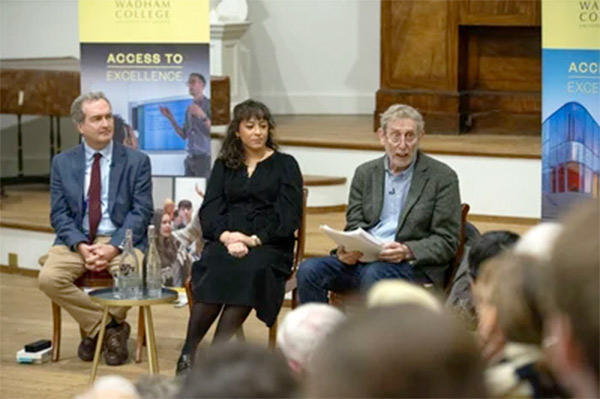
More details and video: www.wadham.ox.ac.uk/news/michael-rosen-at-wadham-college
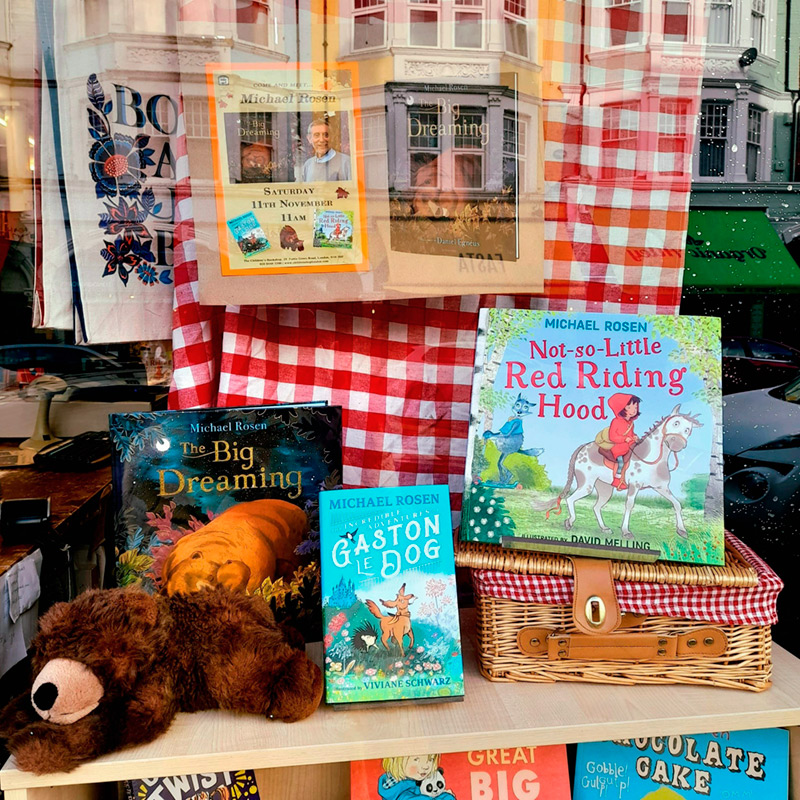
Children’s Bookshop
I did a signing at the great Children’s Bookshop in Muswell Hill. If ever you want a book signed by me. Just call them, order a book, tell them what you want me to write in the book, who you want me to dedicate it to. I pop in and do what you tell me to do!
Phone: 020 844 5500
Website: www.childrensbookshoplondon.com
Here’s the lovely display they put up when I did the signing:
Shoah Memorial
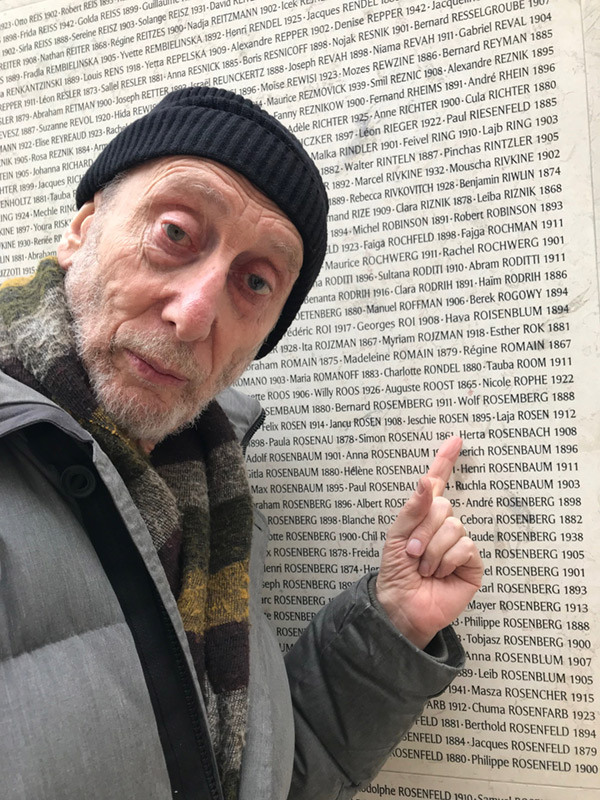
On November 20th I was in Paris at the Shoah Memorial (Mémorial de la Shoah) for a sad event: the commemoration of the departure from Paris on that day in 1943 of Convoy 62. It was taking over 1200 Jewish men, women and children to Auschwitz. On that train were my father’s uncle Jeschie Rosen (also known as Oscar Rosen) and his wife Rachel Rosen (born Kesler). I read their names at the ceremony and also some other names from the list of names.
If you want to know the story of what happened to my father’s uncles and aunts, you can watch me telling the story below, or look at my two books, The Missing and On the Move.
Here’s me next to the Wall of Names at the Memorial pointing to my father’s uncle’s name.
Hatchards
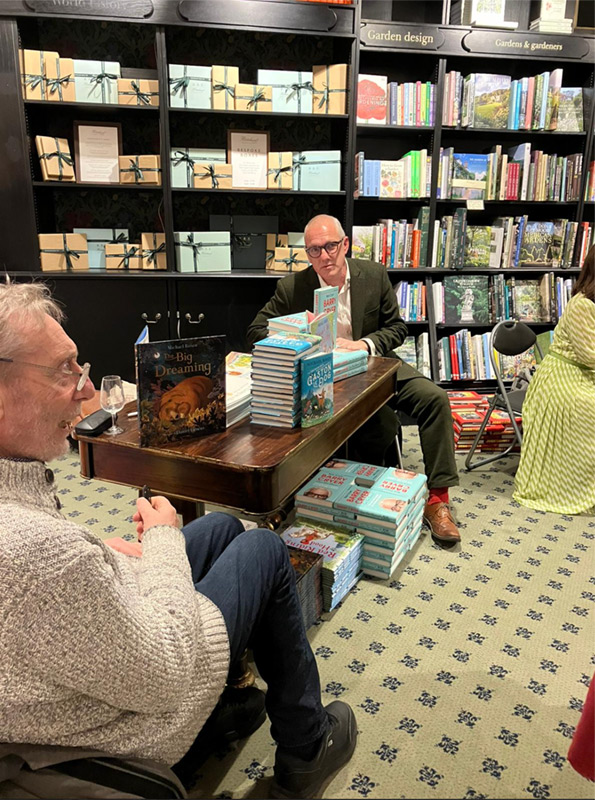
Great fun at the annual Hatchards book signing just before Christmas. Here’s me and Barry Cryer’s son Bob Cryer, having a bit of a laugh and remembering dear Barry.
The Old Vic
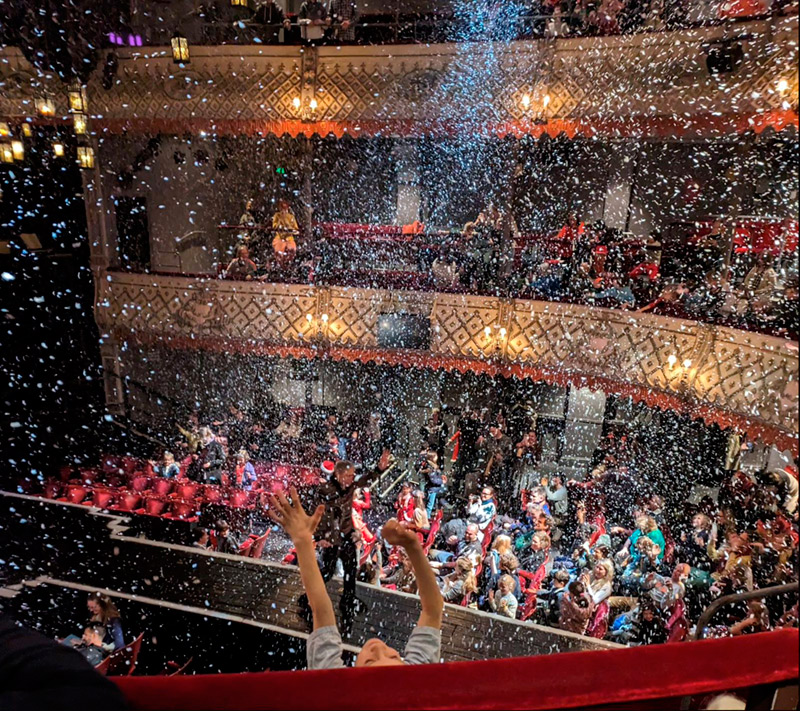
On Dec 16 I did one of my annual Christmas Shows at the Old Vic Theatre in London. I love doing these as it reminds me of my parents taking me to the Old Vic when I was young. Here you can see the ‘snow’ that falls from the ceiling at the end of the show. Love it!!!
NHS SOS
Here’s Dr Gavin Francis, Dame Elizabeth Anionwu and me at the Wellcome Trust’s theatre for an event about the NHS.
It was called ‘NHS SOS’.
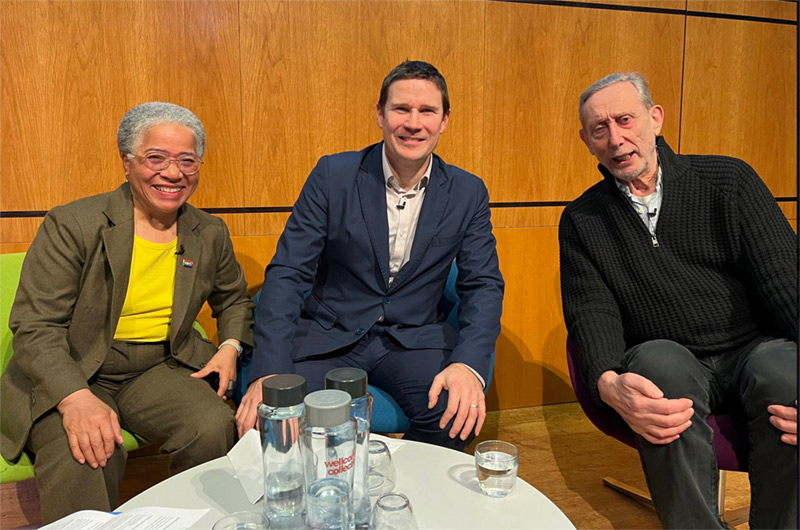
The event was filmed and can be viewed at: www.wellcomecollection.org/events/ZWXA9BUAACUAWpuR
Good Morning Britain
Here’s me on ‘Good Morning Britain’ talking with Kate Garraway and Ben Shephard about ‘Breathtaking’ (ITV1), the series about the Covid Pandemic.
By the way, when I went to the Preview of the series, I found out that one of the doctors in the series is a) the medical adviser on the series and b) was also one of the doctors who looked after me in the intensive care ward at the Whittington Hospital. He’s Thom Petty.

We’re Going on a Bear Hunt
Have you seen this? MC Grammar rapping ‘We’re Going on a Bear Hunt’!!!
Might there be more to come? Hmmmm.
PEN Pinter Prize 2023
I was very honoured to be awarded the PEN Pinter Prize in 2023.
Here’s how PEN announced it: www.englishpen.org/posts/events/the-pen-pinter-prize-2023-michael-rosen/
Here is the speech I gave at the Prize ceremony: www.pentransmissions.com/2023/10/12/in-the-midst-of-this-i-write/
What Am I Writing?
A book of poems that are poem-tweets from Twitter/X. It’s called Pebbles and will be published by Smokestack Books in June.
A book about words and language called Rosen’s Almanac to be published by Ebury Press.
And there are several books coming along on the book train which will appear over the next year or so!
And look out for many more videos on our YouTube Channel, Kids’ Poems and Stories with Michael Rosen. Why not subscribe? That way you’ll hear about the new videos immediately they go up.
24th October 2023
New Books
Not-so-Little Red Riding Hood, illustrated by David Telling, published by HarperCollins.
A modern Red Riding Hood, goes off through the woods on her talking pony and she’s in for a big surprise.

The Big Dreaming, illustrated by Daniel Egnéus, published by Bloomsbury.
Winter is coming and Little Bear is worried that when he and Big Bear go to sleep for the winter, he’ll run out of dreams.

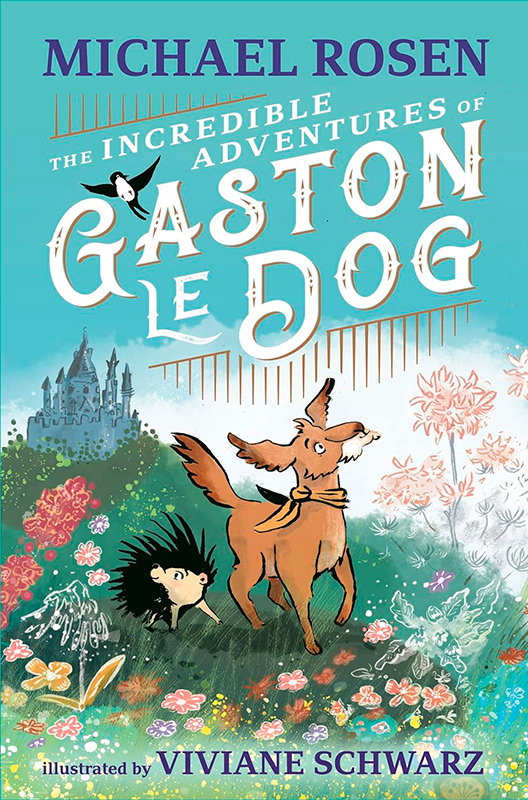
The Incredible Adventures of Gaston le Dog, illustrated by Viviane Schwarz, published by Walker Books.
Gaston tells his best friend, Hirondelle the house martin that he has to go for a big walk to the beach. On the way he meets up with friends – hedgehog, butterfly, snake – yes!, fox, owl, yak, – and meets some enemies: a cat, and a very bossy dragonfly. Will they find what really matters?
Farce Majeure – volume II of the Boris letters as dictated to Michael Rosen, illustrated by Zoom Rockman, published by Seven Arches.
More letters from Boris Johnson culled from Michael Rosen’s twitter account.

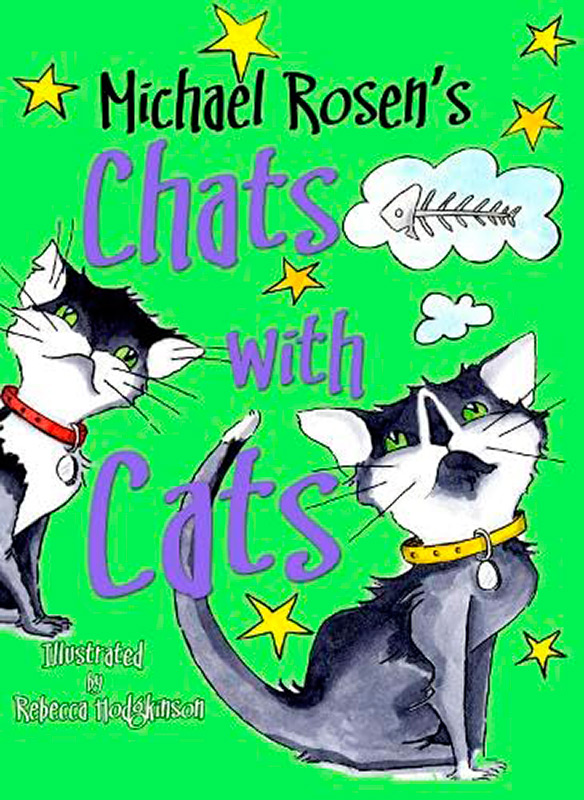
Chats with Cats, illustrated by Rebecca Hopkinson, published by Seven Arches.
Michael Rosen’s cats tell him what to do, disapprove of his behaviour, question him closely about his values and these comments all end up on Twitter. Now they’re in a book!
‘Three Little Words’ Podcast
I did a podcast with John Bishop and Tony Pitts. I had to choose three words that have been important in my life.

WOMAD
In July, I was at the WOMAD festival doing a poetry reading. I was expecting about 50 or so to come, because the main attraction at WOMAD is music, but in the end about 1000 people came. Thanks WOMAD folks!

WOMAD Festival appearance. Photo courtesy of Andy Worthington
You can find details of my appearance on Andy Worthington’s site, if you scroll down:
Yiddish Lessons
I am enjoying learning Yiddish, the language of my grandparents and it was also the language of my parents when they were children. I do a zoom session every Sunday night for two hours.
Before we began the course, we were asked to write down all the words or expressions we knew. I thought that it would come to about 30 or 40. In fact, it was nearly 300! I was amazed.
Yiddish can be written with the same letters as the ones you’re reading now but originally and traditionally it’s written with a form of Hebrew script. There are 40 letters. How many of these do you think I knew before I started? Just 3! Here is the alphabet:
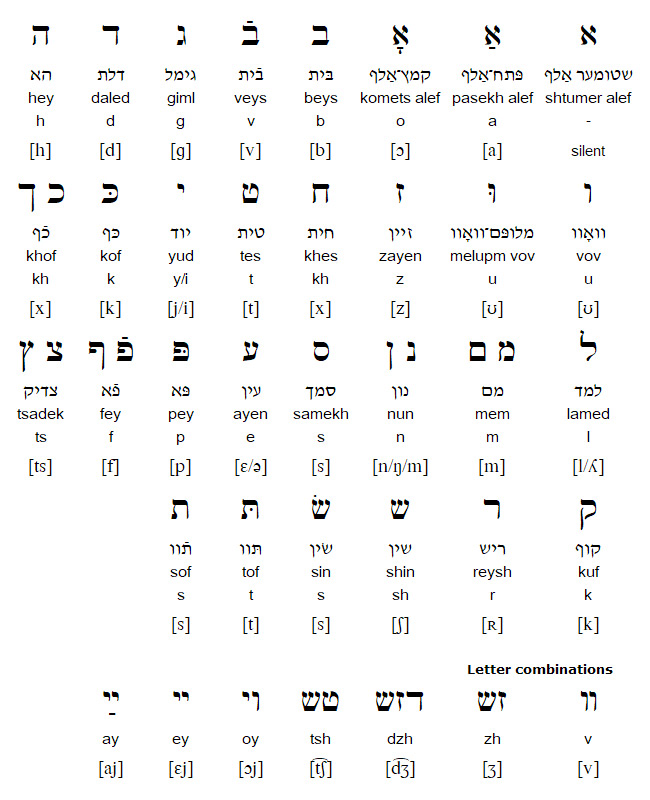
So I’ve had to work very hard to learn the other 37 and I’m not very good at it!
You can hear me talking to my Yiddish teacher here:

Films
I’ve now made two films about major things that have happened in my life. One is about me getting Covid and being in intensive care for 47 days or so, and the other is about the death of my son, Eddie.
We’ve made them in very similar ways: me talking to the camera, telling a mixture of poems and documentary pieces. They were funded by Apples and Snakes, directed and produced by Lisa Mead, shot and edited by Matt Dove from Little Ginger Co. Here they are:
We’ve been filming another film: a short about my time in a coma. It’s going to be very weird! Here are a couple of photos from behind the scenes:


Finally, while Finn Woodruff was a student at the University of Westminster he adapted the Sad Book that I wrote and Quentin Blake illustrated. Now it’s up on our YouTube Channel here:
PEN Pinter Prize
On October 11 I was very honoured to accept the PEN Pinter Prize 2023. There was a ceremony at the British Library.
Here’s my speech:
pentransmissions.com/2023/10/12/in-the-midst-of-this-i-write/

Other Appearances
Here’s a photo of me at the Rye Festival.

Photo by KT Bruce. https://www.ktbruce.co.uk/
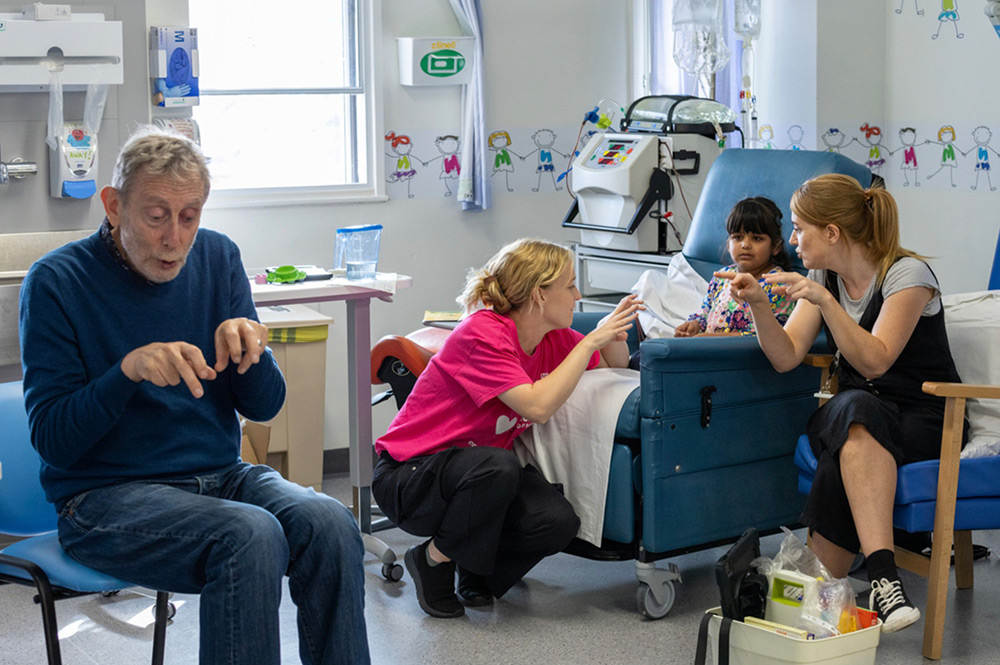
And here I am at Leeds Children’s Hospital in September:
5th June 2023
Book News
The next book of mine to come out is I am Wriggly with wonderful pictures from Robert Starling.
It will be in the shops from July 6 this year.

The Repair Shop
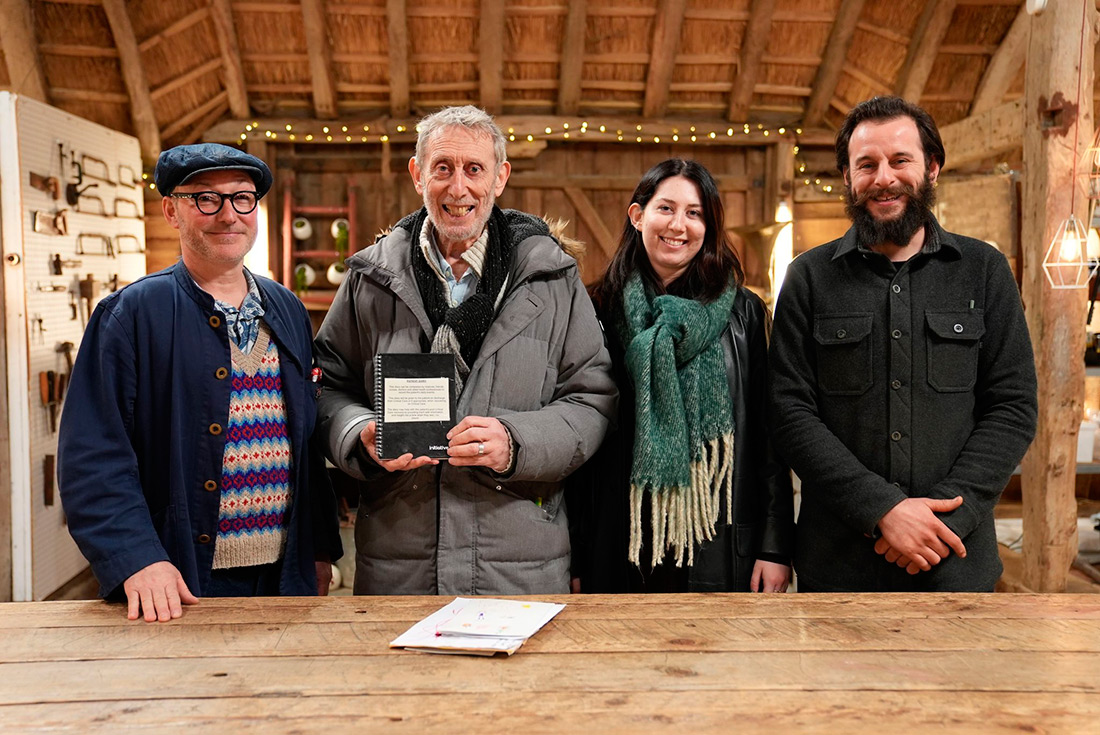
I’ve filmed at BBC TV’s ‘The Repair Shop’. As I write this, I can’t tell you exactly where, why or what, but the programme I’m in goes out on June 28th. The programme has already put up some photos from the day, so here they are.

My Old Primary School
In March, I went back to one of my old primary schools, West Lodge, in Pinner. I’ve been back several times but it’s always quite an emotional feeling to be there.
I was a founder pupil at the school and it was not only a brand new building but it felt at the time that it was incredibly modern: big glass windows, girders running across the ceilings, brick walls inside with no plaster on them, and strange materials used for the ceiling so that they looked as if they were made of Weetabix or Shredded Wheat.
Anyway, I did a bit of show for the children in the hall, where I had sat so many times between 1954 and 1957. I almost felt like my headteacher, Mr Scotney, standing exactly where he stood.
Then I opened the school’s newly renovated library which, very kindly, they’ve named after me – as you can see from the picture!
www.westlodge.harrow.sch.uk/news/detail/new-michael-rosen-library-opened/

University of Westminster students’ film
The event was filmed by film students from the University of Westminster and afterwards we went out and filmed around Pinner in the park where I used to go every day and also where I used to live, 6A Love Lane Pinner.
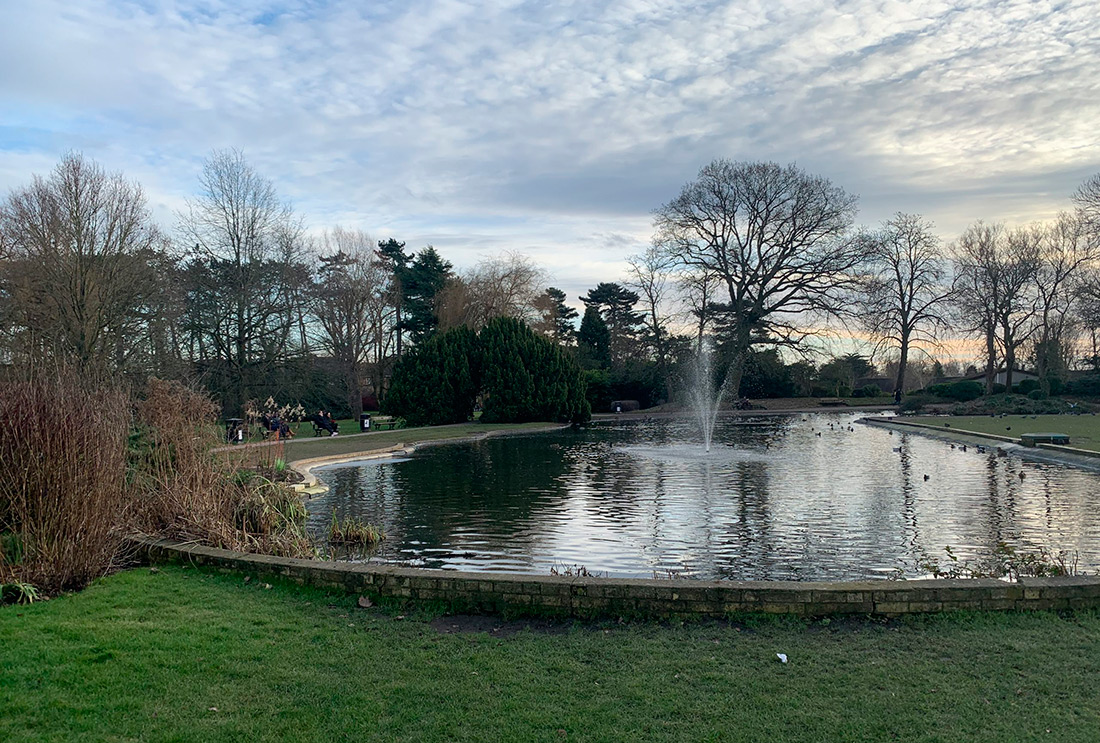
Pinner Memorial Park
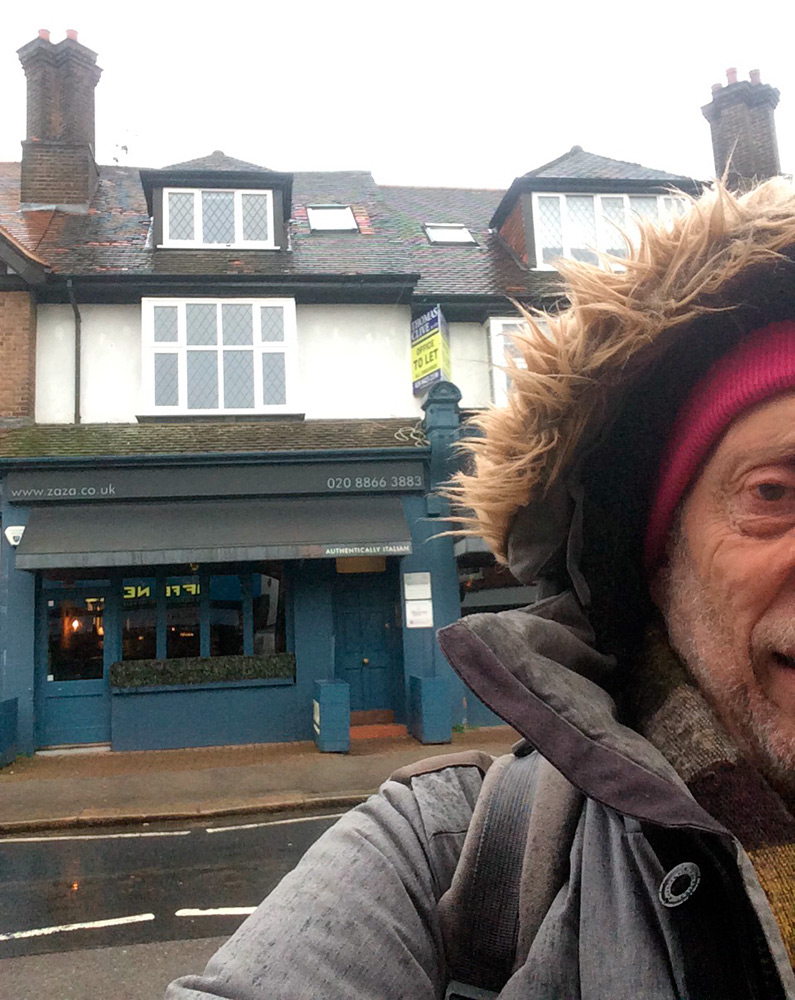
Here’s the photo I tweeted of me outside our old flat – I deliberately chopped half my face off, by the way!
The Questors Theatre
Another visit to old haunts!
When I was a teenager, I used to go once a week to the Questors Theatre in Ealing. I belonged to the Young Questors which was a drama club but quite serious in how they taught us how to act using what are called Stanislavsky techniques. We had two teachers, Rena Rice and Larry! I thought they were brilliant and we did all sorts of shows – a mix of plays and sketches. One I remember was the play ‘The Red Velvet Goat’ and we all forgot when to sing the theme song of the play, ‘La Cucaracha’, so Larry, who was waiting at the side, started singing it for us and we pretended that he was on stage and one of us!
In that play, I had to rush across the stage and say to one of the girls in our class (acting the part, of course) that I loved her and thought she was beautiful and how her eyes looked like the stars…etc etc It was so-o-o-o-o-o-o-o embarrassing. And then – I had to grab her hand too! Oh no! But yes! I don’t think that the girl herself liked me very much so that made it even more embarrassing! Help!
Anyway, enough of that. On May 13, I went back to Questors and did two shows there. It was in the theatre that wasn’t built when I was there. The theatre then was an old ‘tin’ chapel. In fact, most of our shows were to raise money for this new theatre that I was acting in.
It was wonderful to be there and be part of it again. One of the guys in my group when I was a teen couldn’t make it because he was ill but there’ll be another occasion, I’m sure.
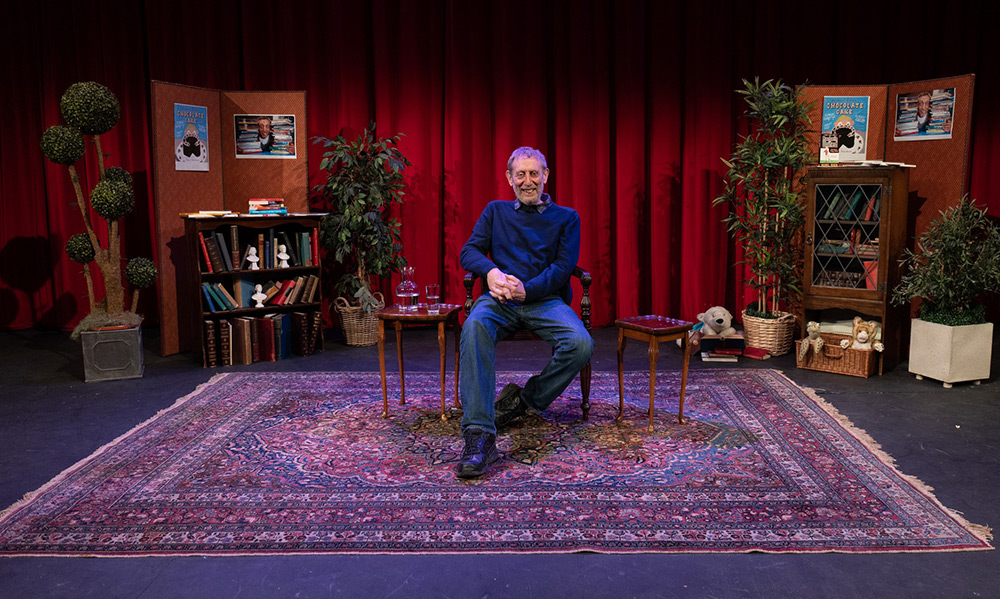
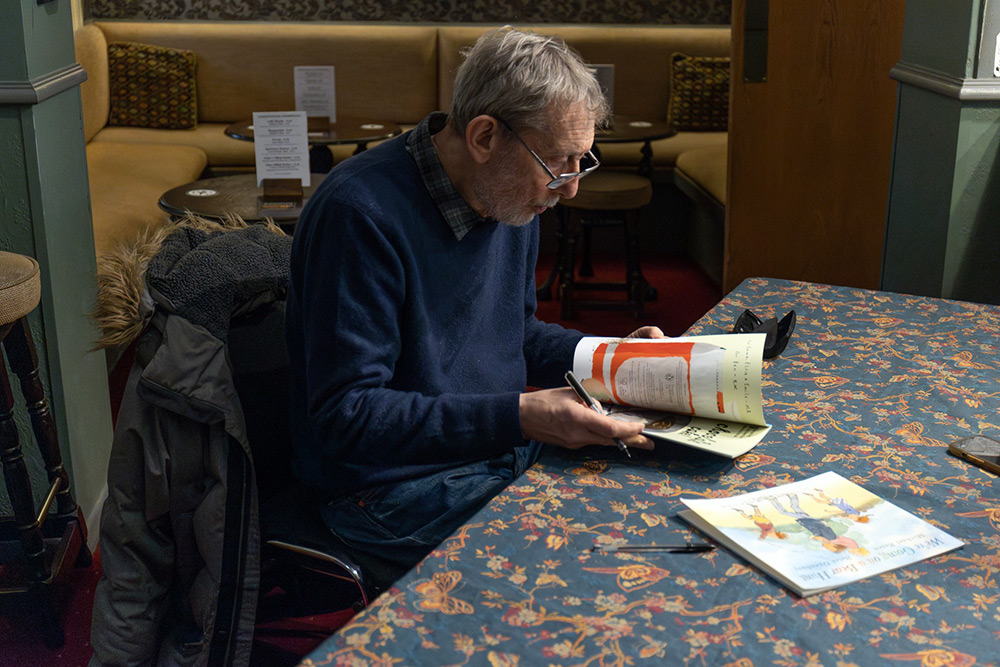
Here are some images from the Questors Facebook page:

Here are some images of Questors, then and now, courtesy of the Questors Theatre Archive:
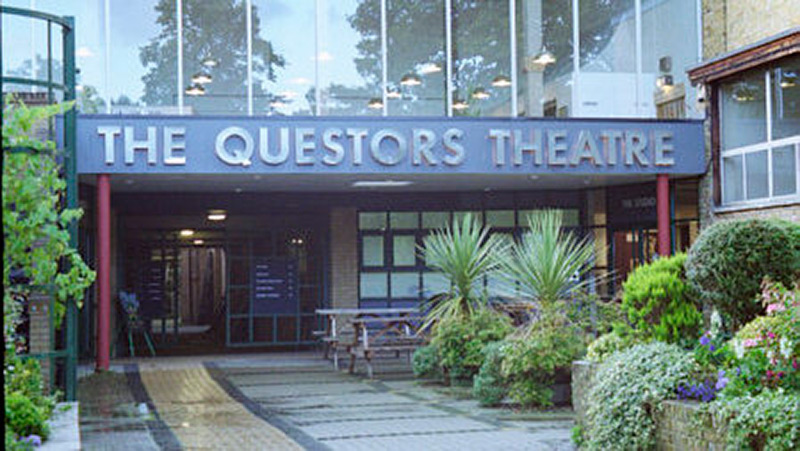
Questors as it is now, with the Shaw Room on the right, where we used to have our drama club
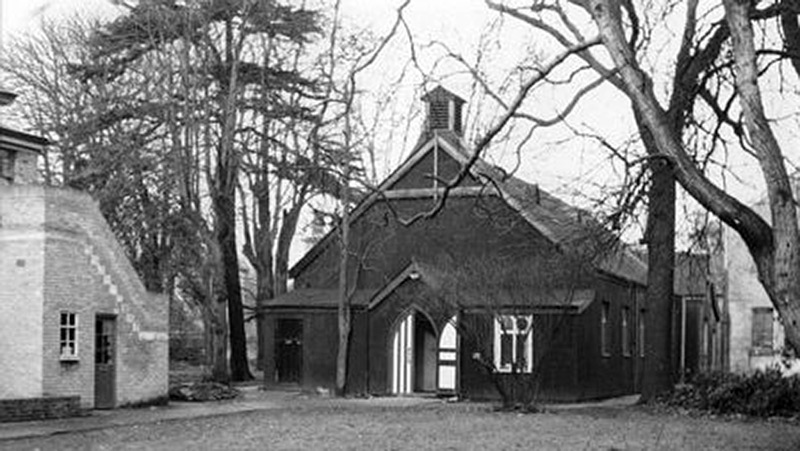
Old tin chapel Questors…taken from Questors Theatre Archive
Hay Festival
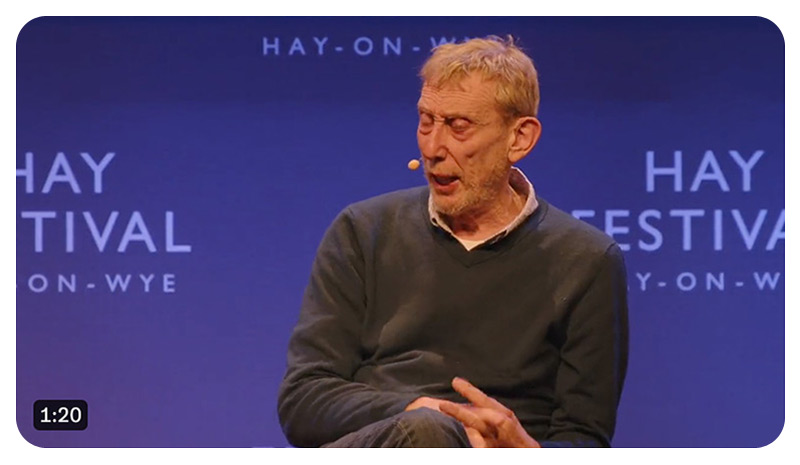
I did five events for this year’s Hay Festival: I took part in a panel to talk about the 100 best children’s books, I did my show for families and children. Next day, I joined with some wonderful actors and writers like Helena Bonham-Carter, Timothy West, Tony Robinson, Olivia Williams and Julia Donaldson as well as Maggie Aderin-Pocock – to read nursery rhymes and sing songs from Allie Adiri’s new book ‘A Nursery Rhyme for Every Night of the Year’. In the afternoon, Dr Rachel Clarke interviewed me about my book ‘Getting Better’. Then the next day, I took part in BBC Radio 4’s ‘Start the Week’ with two great writers: Barbara Kingsolver and Natalie Payne,
The weather was wonderful, the festival was packed, everyone was having a great time. It was a lovely way to spend the Bank Holiday weekend.
Here are a couple of video snippets from the Hay Festival Twitter feed:

7th March 2023
First of all – apologies! It’s been some time since I did a News update here.
New Books
Several new books have come out:
Getting Better, published by Ebury. Read more…

The Advantages of Nearly Dying, published by Smokestack Books. Read more…

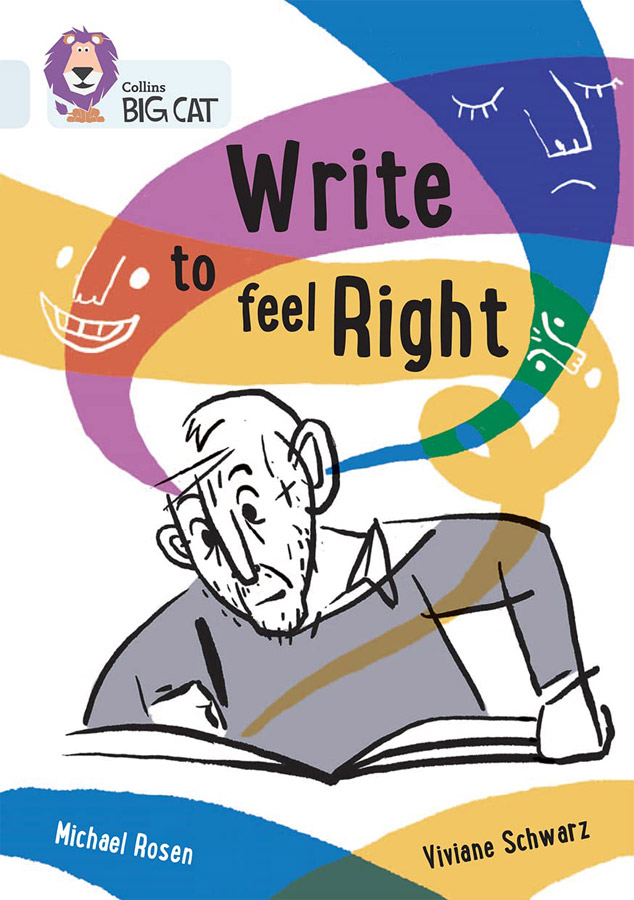
Write to Feel Right, illustrated by Viviane Schwarz, published by Collins. Read more…
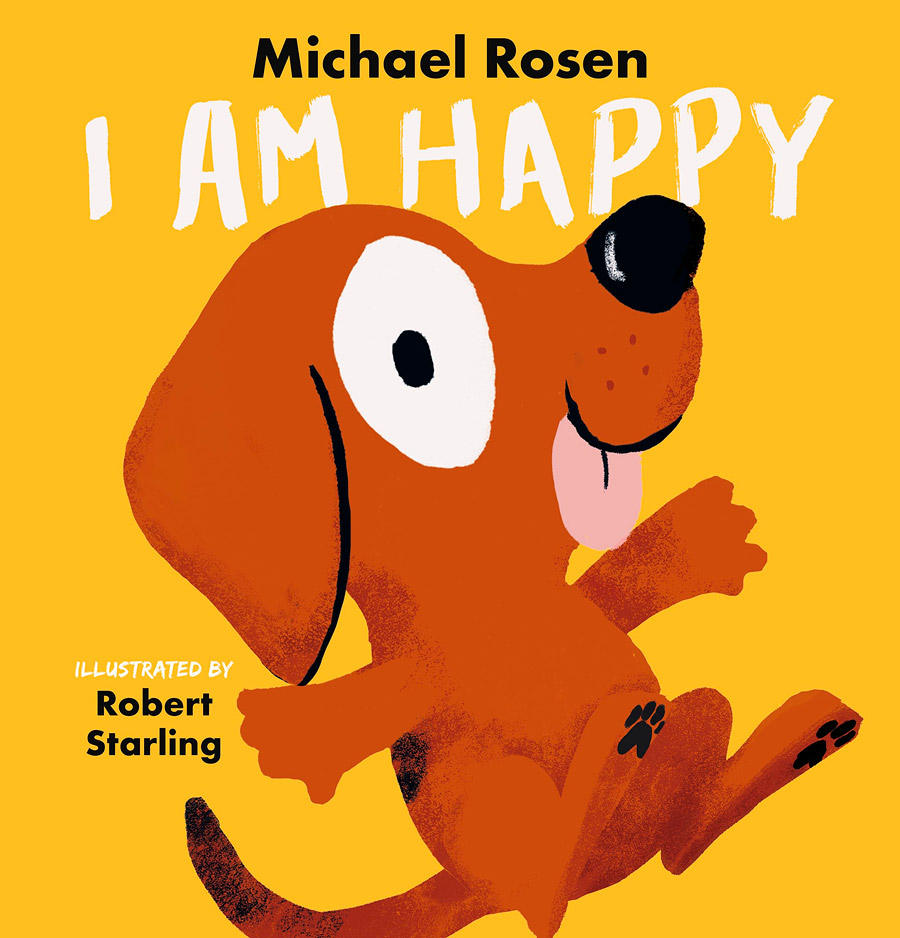
I am Happy, pictures by Robert Starling, published by Walker Books. Read more…
I am Hungry has also just come out in paperback, pictures once again by Robert Starling, published by Walker Books. Read more…

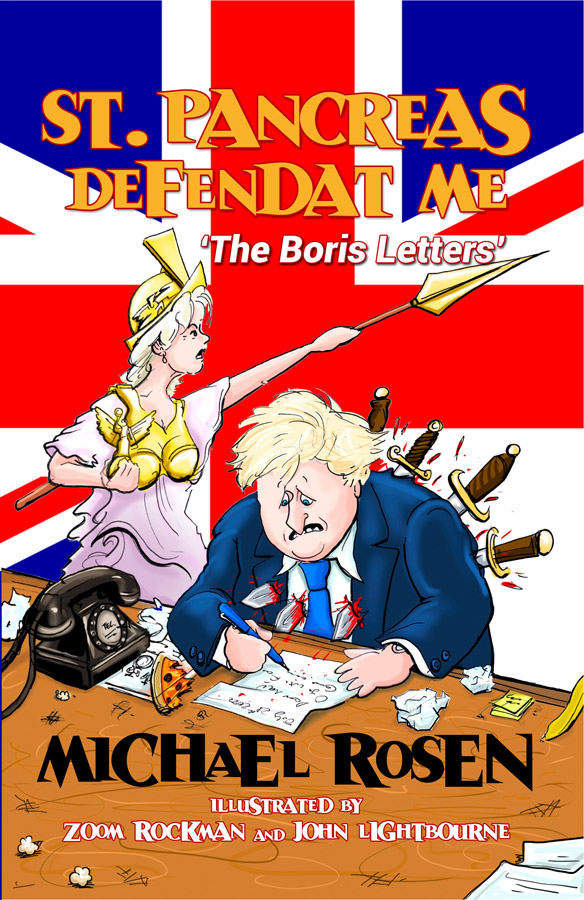
St Pancreas Defendat Me, with cartoons by Zoom Rockman, published by Seven Arches. Read more…
Unexpected Twist
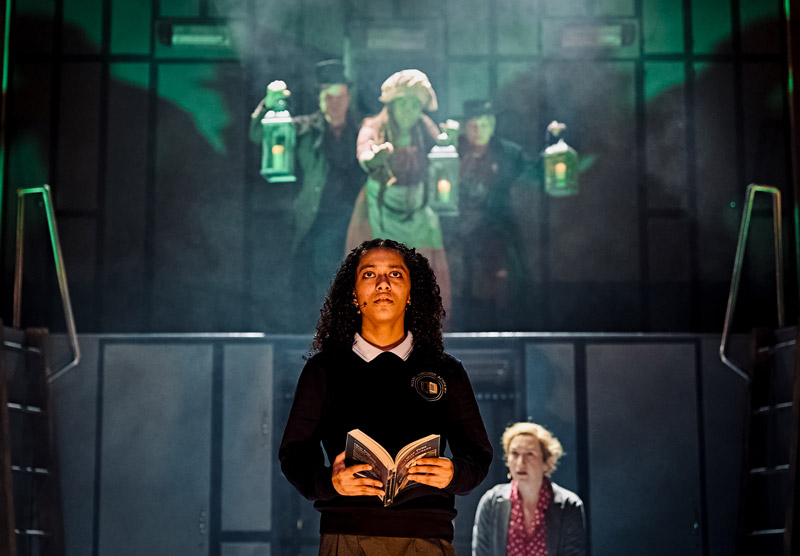
My book Unexpected Twist (an adaptation of Charles Dickens’s Oliver Twist) has been made into a play with music – rap and beatbox by the playwright Roy Williams, produced by the Children’s Theatre Partnership and the Royal and Derngate, Northampton.
I’ve seen one rehearsal and will be going to see it soon. I thought it was fantastic – lively, edgy, funny with beautiful singing, rap and beatbox. It’s touring all over the country.
Here are the touring dates: https://unexpectedtwistonstage.co.uk/


Podcasts
I recorded a podcast with Graham Norton for a programme about Emile Zola.

There’s also the Waterstones Podcast with Cariad Lloyd, Chloe Hooper and me.

Getting Better Interviews
There have been a lot of interviews and press write-ups of Getting Better. Here are some of them:
The Guardian:
www.theguardian.com/books/2023/jan/29/
The Times
www.thetimes.co.uk/article/michael-rosen-interview-b8mcpb82z
Daily Express
www.express.co.uk/entertainment/books/1736615/
Daily Mail (Femail)
www.dailymail.co.uk/femail/article-11709511/
Newscast
Here I am on BBC 1’s ‘Newscast’ programme.
My interview comes in at 15 minutes (after Isabel Oakeshott):
www.bbc.co.uk/sounds/play/p0f6ggst
BBC Radio 4 ‘Saturday Live’
www.bbc.co.uk/programmes/m001hwqs
BBC Five Live with Nihal Arthanayake
www.bbc.co.uk/programmes/m001jjx4
BBC Radio 6 Cerys Matthews:
www.bbc.co.uk/programmes/m001hp7q
Coming soon:
BBC World Service, Outlook, interview.
The Daily Mirror also ran an article by me in support of the Nurses’ action for better pay:
www.mirror.co.uk/news/uk-news/michael-rosen-thank-you-nurses-29186824
Live Streams
I’ve been taking part in live streams (and some recorded ones) for schools. Some with the British Library on how to write your own Fairy Tales. Here’s part of one of my contributions:
www.bl.uk/childrens-books/activities/cook-up-your-own-fairy-tale

And here’s the listing for the one I did for Shakespeare Week. I hope that a recording of it will go up soon.

Holocaust Letters
There was a very special event at the Wiener Holocaust Library, launching an exhibition called ‘Holocaust Letters’. These are letters that people sent each other while the terrible events of the Holocaust raged around them. One part of the exhibition includes photos, letters and the canvas bag that the letters were in, sent to my father’s cousin from his parents. He was just 17 when he fled to eastern Poland. He was then arrested by the Russian forces and taken to a labour camp in Russia. Later he was able to join the Polish Free Army (Anders Army), fought with them all the way from Russia to Italy. He then came to Britain, we kept in a Polish Resettlement Camp for two years but then left, stayed with my father’s sister, and became a London cabby. His name is Michael Rechnik and his sons, Grant and Barry, have donated the letters sent by his parents to the Wiener Holocaust Library. It was very moving to see these letters in the exhibition alongside many others. I hope you can get to see this as it’s a rare example of this moment in history being told by people actually experiencing it.
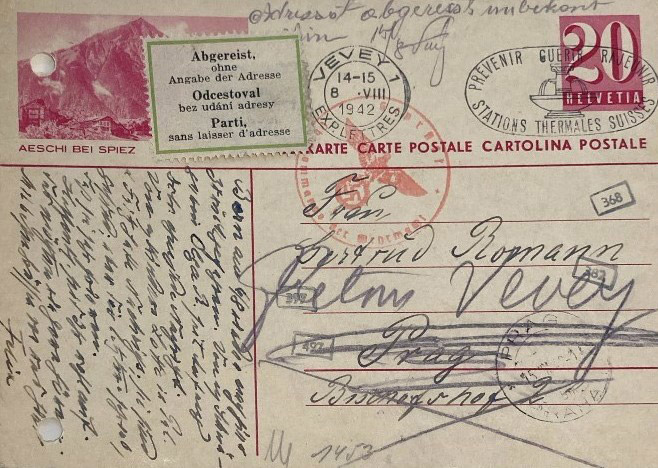
Here’s Jenni Frazer’s review of the exhibition from Jewish News.
Other News
My health seems to have stabilised. I am what I am! No improvement in the left eye and the left ear. I sometimes catch myself that I can’t hear very well in my left eye and can’t see very well with my left ear.
I made a film of Many Different Kinds of Love and some of the poems I’ve written since. It was shot and edited by cinematographer, Matt Dove and produced by Lisa Mead from Apples and Snakes. Here it is on our YouTube Channel, ‘Kids’ Poems and Stories with Michael Rosen’.
If you add together the number of views we’ve had for the film on the two platforms it’s reached 40,000.
You can follow my daily news on Twitter (where I’m @MichaelRosenYes) or on Facebook.
Other Bits and Pieces
I’ve always liked Bluegrass music but I now spend a bit of time going on to YouTube and listening to different artists. My favourite singer is Ralph Stanley. Favourite banjo player: Eddie Adcock. Favourite fiddle player: Kenny Baker. They all played in different bands with different combos so I spend many happy times digging out their material, their best solos, best songs.

Eddie Adcock
The Malvern Festival of Ideas
There’s a sequence of poems I do in my performances which you can find in my book Michael’s Big Book of Bad Things. There are four sections called just that: ‘Big Book of Bad Things’. I used to perform it quite often before I got ill, but I haven’t done so since because I got a little bit worried that I wouldn’t be able to remember it all. Anyway, I was in Malvern for the Malvern Festival of Ideas and I thought, I’ll give it a go. And I could remember it! I was surprised and pleased! Why surprised? Because I do worry sometimes that my memory has been affected by having been in an induced coma for so long. Well, the memory of those pieces is still there!
At the Malvern Festival:
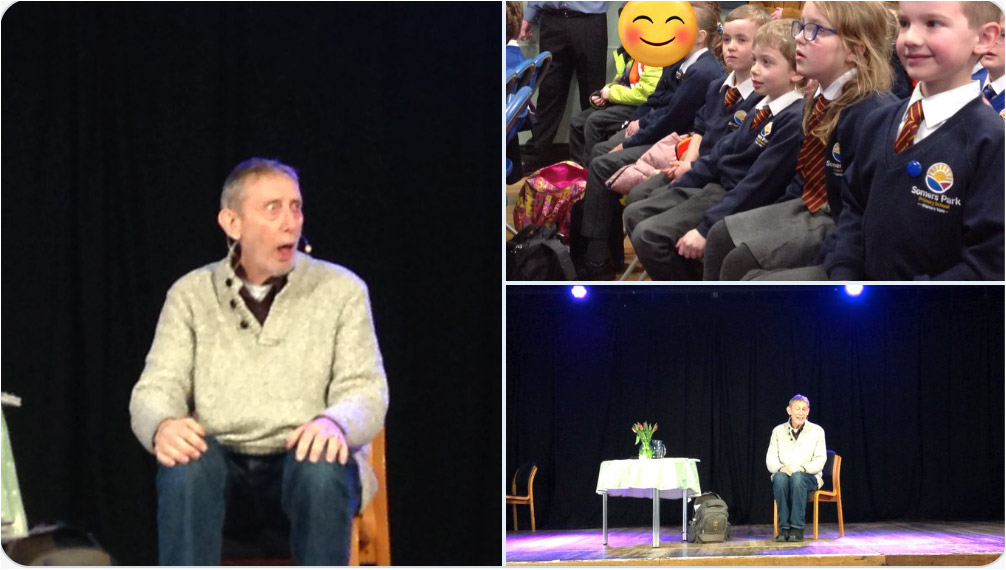
Yiddish
Another test of my memory comes every Sunday night. I’ve enrolled in a class to learn Yiddish. Yiddish is the language that my grandparents spoke and many generations in my family before that. Both my parents could speak it but when I was growing up, they only used a few words and expressions. Well, I thought it would be a good idea to learn how to speak it, read it and perhaps write it. So every Sunday night I hook up on Zoom with a teacher from the language school Babel’s Blessing, along with four or five others and we learn Yiddish together.
It’s both a challenge and very moving. Every so often a word or phrase comes up and it reminds me straightaway of my mother or my father and I hear in my mind how they said it, or the reason why they said it. It’s a challenge because Yiddish is traditionally written with Hebrew letters and I only ever went to Hebrew Classes (called ‘Cheder’) for a short while when I was a child. You can read why I left in my poem ‘Chessington Zoo’ in ‘Quick Let’s Get Out of Here’.
Anyway, learning Yiddish means for me, learning a whole new alphabet. I’m getting there, but I am quite slow! And I don’t always make time during the week to do my homework. It reminds me of me at secondary school, 65 years ago!
It’s fantastic fun and I love the sound and feel of the language. I’m very glad to be doing it.
Here’s Rukhl Shaechter in New York teaching ‘Word of the Day’. Rukhl is not my teacher but it’ll give you an idea of what we do:
AUGUST 2022
Penguin MDKOL podcast
I recorded some conversations with some of the people who looked after me when I was ill and who are in my Patient Diary in Many Different Kinds of Love. That’s out in paperback now. You can listen to Isy Suttie’s podcast interview with me here.
Here’s nurse Joe Lynch reading from the diary entry that he wrote for me.
At the end of it, you’ll see ‘more videos’ and there’s my chats with Joe and also Monique who looked after me.
These feel very important to me.
Booktrust Residency
This year, I’ve done a residency at Booktrust and did videos and live streaming with them. See full details on their website.
Here is the first of the live streams:
British Library Stories
Also this year, I’ve worked with the British Library in London and made some videos with them:
https://www.bl.uk/childrens-books/activities/cook-up-your-own-fairy-tale
https://www.bl.uk/childrens-books/activities/authors-illustrators

Viviane Schwarz and I also did a live stream of me telling a story while Vic illustrated and then Viv did a picture and I made up a story. For the moment, I can’t find the video of this but when I do, I’ll post it!
RCN Fellowship
I did a talk for the Royal College of Nurses and afterwards they awarded me an Honorary Fellowship of the RCN. I’m very grateful and proud of this.
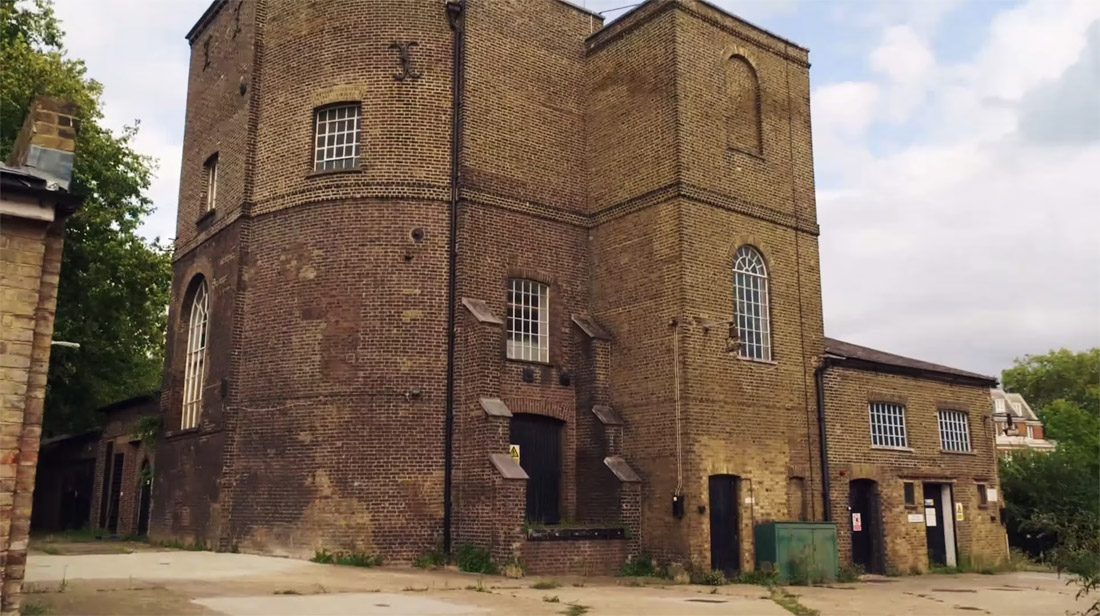
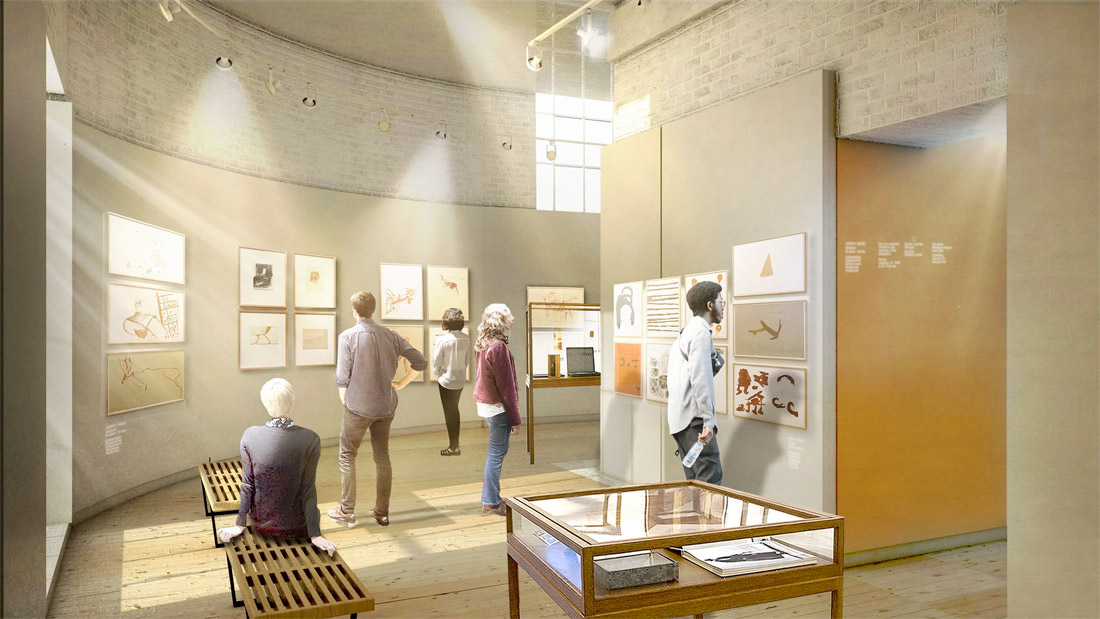
Quentin Blake Centre of Illustration.
Quentin is going to create a wonderful Museum of Illustration near Sadlers Wells Theatre in London. I got an exciting sneak preview of some very old buildings which are going to be converted. You can read the full story at the Museum’s website: https://www.qbcentre.org.uk/
Lyra Festival Bristol
I’ve never done a performance or read my poems on an old boat before. I was invited to do just that at the SS Great Britain in Bristol for the Lyra Festival.

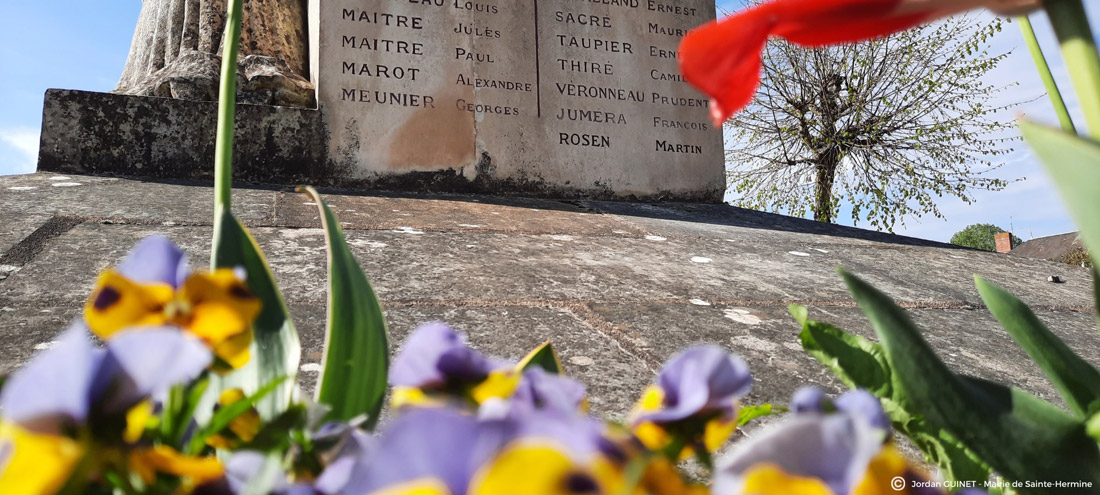
Memorial Sainte Hermine
My father’s uncle Martin Rosen (also called Martin Rozen and Chil Majer Rozen) lived for a while in a village in north-west France called Sainte Hermine in the Vendée. Sadly, on January 31 1944, he was arrested because he was Jewish. He was then handed over to the Nazis who deported him to Auschwitz and he never returned.
The village of Sainte-Hermine decided to engrave his name on the war memorial and my family and I went over on May 8 (which is VE Day) to take part in the unveiling of the inscription of his name.

Rose Rosen arrives in Plymouth, England on July 17 1922
100 years ago, my father’s mother, and her children Sylvia, Harold and Wallace arrived in England from America. This photo shows her and the children on board the boat she was on, the SS President Harding. My father Harold is the one holding Rose’s hand.

View the original photo on Flickr.
Poetry Shack – or the New Poetry Shack
I haven’t done a reading just for adults for some time, so it was great that Jack Shamash, who runs the Poetry Shack, asked me to do a reading. I prepared a little booklet to read from made up of poems I photocopied from my books. Seemed to work. I’m hoping to do a few more of these in the next few months.

Honorary Doctorate
The University of Westminster have awarded me an Honorary Doctorate. Here’s me in my Honorary Doctorate robes getting a bit muddled as to where to go next!
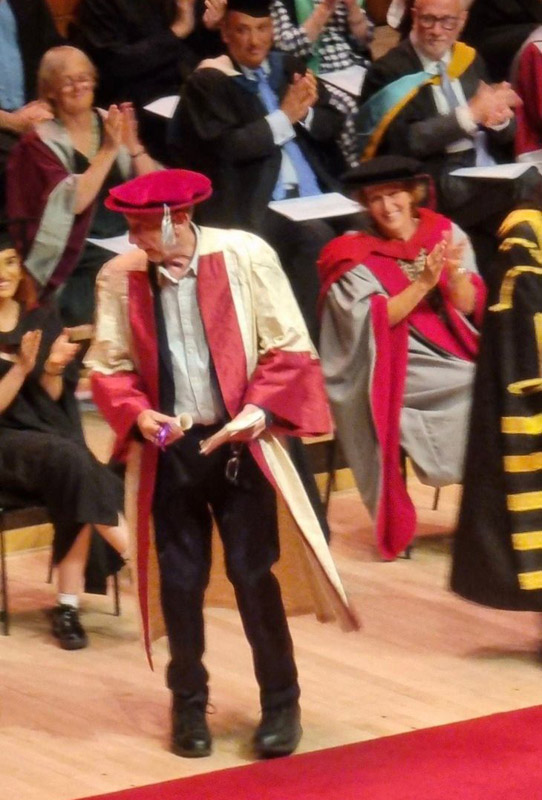
James O’Brien podcast
The LBC presenter, James O’Brien interviewed me for one of his one-hour podcasts.

Nonsense in Liverpool
There was a festival in Liverpool called ‘Serious Nonsense’ and I was invited to do a show. It was in the fantastic venue of Shakespeare North where there is an indoor theatre that is about as close as you can get to the size and shape of Shakespeare’s original Globe Theatre. It was being refurbished so I was outside in the also wonderful Sir Ken Dodd Performance Garden where there are quotes from Shakespeare and Ken Dodd up on the benches. You can watch a video on Facebook.

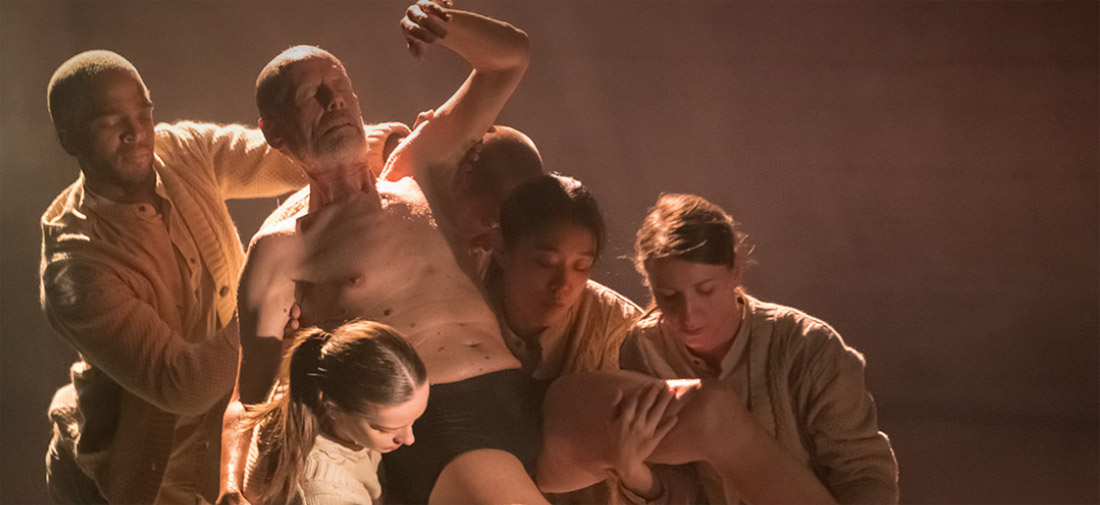
Sad Book – contemporary dance show by the 201 company.
I was asked to do a show at the Edinburgh Book Festival and I was able to go and see a show that’s an adaptation of my Sad Book. The 201 Dance Company have done a fantastic production mixing dance, with specially composed music and singing, the animated words from my book and animations of Quentin’s wonderful artwork from the book. It was quite gripping and tough for me to watch it. You can see a little preview of it here, and there are plans for it to tour all round the country. I’ll keep posting details on Twitter and Facebook.
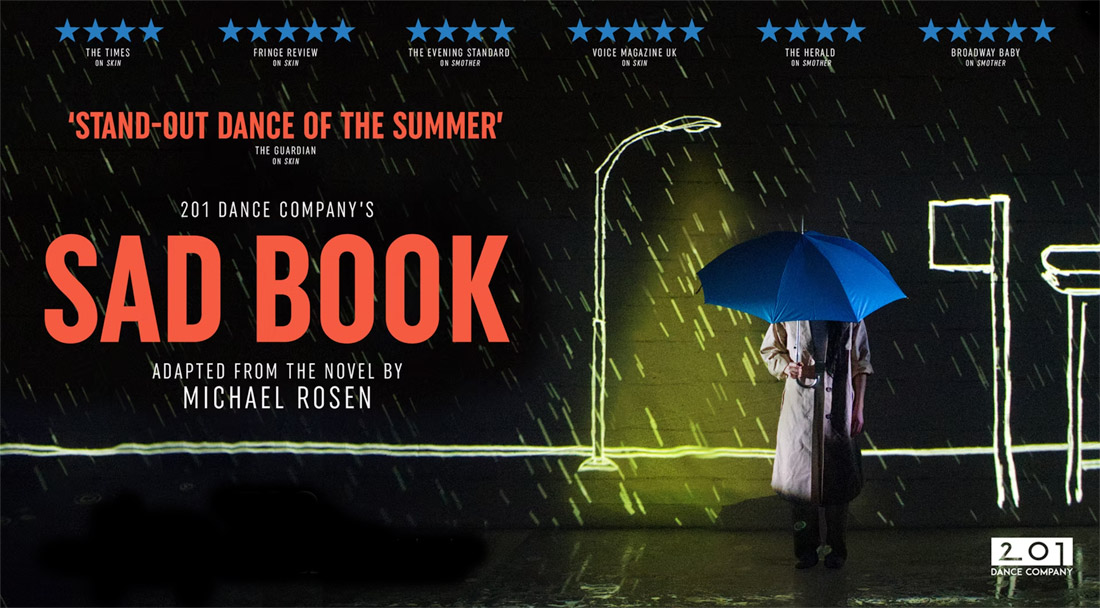
There’s a great review of the production up at the Edinburgh Reporter.
Imagine
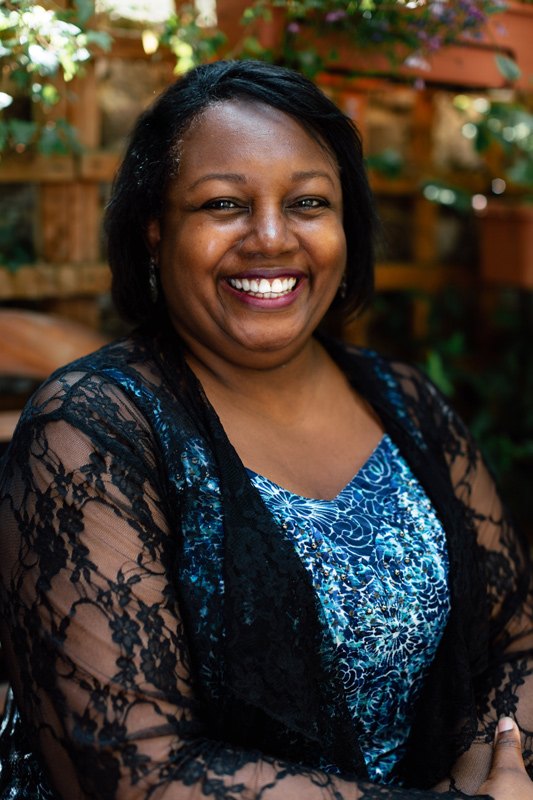
If you the follow the Imagine series of great arts programmes on the BBC, you’ll know that they often do writers. Coming up is Malorie Blackman and I was very glad to be asked to contribute. They filmed me at a venue called the Ugly Duck in Southwark and you should be able to see that soon. I hope I did Malorie proud. She has made and goes on making a fantastic contribution to the world of children’s books and beyond.
https://www.malorieblackman.co.uk/
Books
Since I last wrote up News on this website, the following books have come out:
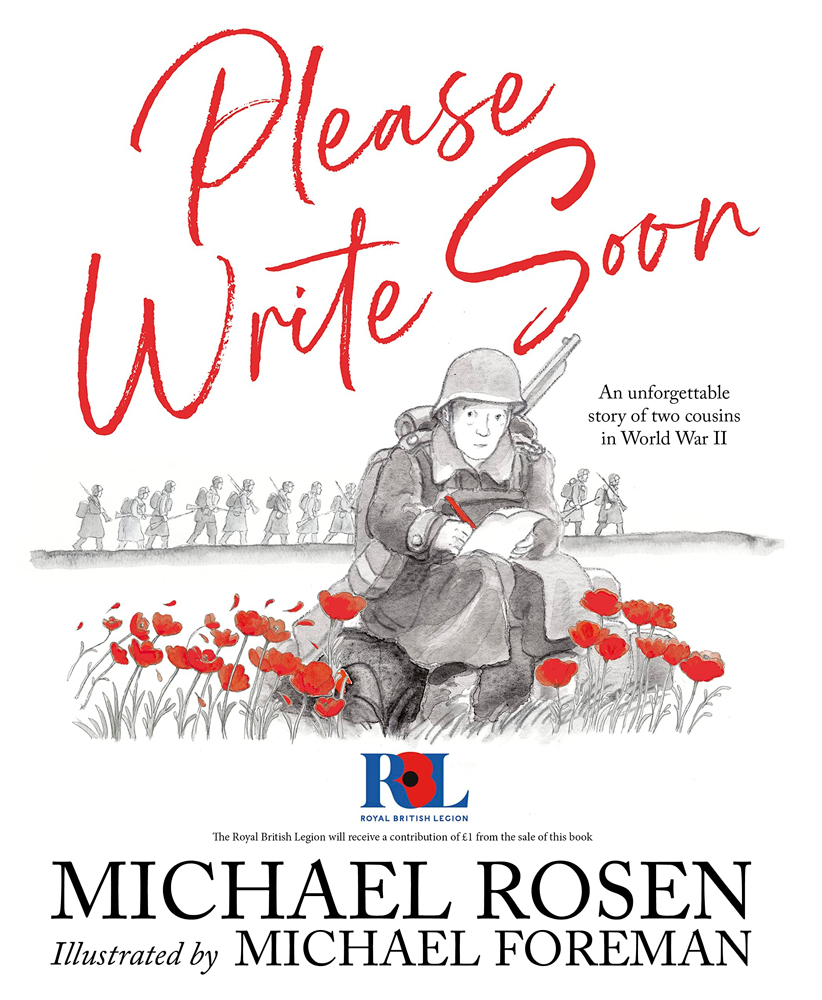
Please Write Soon – a book of letters between two Jewish cousins who write to each other during the Second World War,. It’s illustrated by the great Michael Foreman. It’s based in part on my father and his cousin Michael Rechnic who was in Poland and Russia at the start of the war and then fought in the Polish Free Army or what was known as Anders Army.
A graphic novel version of You’re Thinking about Tomatoes with great artwork by Cole Henley. This is for all ages.

Ready for Spaghetti – a book of poems for the very youngest children. This has great artwork by Polly Dunbar.

Rigatoni the Pasta Cat, illustrated by Tony Ross.

Finally, September sees the release of Goldilocks and the Three Crocodiles, illustrated by David Melling.

Previous News
FEBRUARY 2022
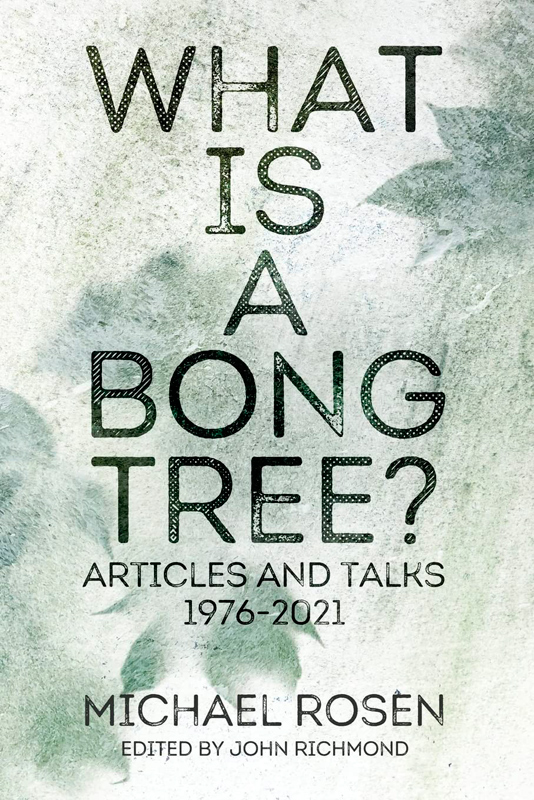
New Book: What is a Bong Tree? Articles and Talks 1976-2021
Thanks to the huge help, expertise and hard work from my old friend and colleague John Richmond, we’ve pulled together a selection of my talks and articles. Here’s what John says about the book on the cover:
“What is a Bong Tree? brings together a big selection of Michael Rosen’s writings and talks over five decades. They are about the centrality of literature, including children’s literature, in the lives of all of us; about the power of poetry to inspire, console and entertain; and about the need to argue and campaign for these liberating forces in the face of ignorant and reductionist actions by successive governments in the United Kingdom, which have narrowed and impoverished children’s experience of literature by pressing it into the service of a regime dominated by tests and examinations. The pieces here refer frequently to Michael’s childhood and upbringing, and offer a generous tribute to his parents, Connie and Harold Rosen, and their influence on him and his subsequent work. Tonally, the pieces carry Michael’s trademark: they’re witty and insouciant; they carry serious ideas unseriously. Parents, teachers, librarians, academics, in fact anyone concerned with the nurture and education of children, and with the place of culture – in its widest sense – in our society, will find much pleasure and practical encouragement here.”
It’s available now!
Health News
Since my last News update, I’ve been given a clean bill of health from ‘Thoracic’ (my chest) and ‘Neurology’ (my brain). I won’t go into too much detail, you’ll be pleased to know, but in short, the blood clots in my lungs and the ‘bleeds’ in my brain have all gone.
The fun bit was when they tested my ‘cognitive functioning’ at the brain hospital. They asked me if I knew who was the Prime Minister and how old I was when I left school. I had to play a kind of tangram game – which I couldn’t do – but then I found out afterwards that they weren’t testing me to see if I could do the puzzle but whether I could concentrate on it. I could!
At the end of the day, I had a case conference and the consultant sat me down and asked me if I would like to see my brain. I said, yes and they then put up cross sections of my brain. So strange! I sat there staring at what looked like slices through a cauliflower while I sat there wondering what I was thinking when they took that ‘shot’ of the insides of my brain.
The consultant said it was OK but it did look like the brain of someone who had had altitude sickness. (I’m not sure what he meant by that. I just took it as meaning, not too bad, all things considered.)
Performances
I’ve been doing more zoom performances for schools and occasional live shows too. It was very nice to be asked to do the live show at the Old Vic again. And they’ve asked me to do it yet again next year. As I’ve said before, this is very special for me because when I was a child and a teenager I was taken by my parents to the Old Vic to see Shakespeare plays and I think my parents fell in love going to the Old Vic together in the 1930s! They saw Lawrence Olivier and John Gielgud on that stage and I saw Judi Dench. And I stand on that same stage. Wow!

One of my previous performances at the Old Vic
J.M.Barrie Lifetime Achievement Award
This was announced in May 2021 but the official award ceremony was delayed until Autumn 2021 because of Covid. Even so, it still had to be done on zoom and here it is. I am very honoured and proud to receive this recognition. For me, there is no higher honour than for your peers to give you an award. Thank you so much, Action for Arts!
Here’s the film:
History Works
It’s been great working again with Professor Helen Weinstein and History Works in Cambridge. Helen is hugely active in the fields of local history, history in the community, Holocaust Education and refugee support. She is inspirational and tireless so it was great to write some more poems, song lyrics and texts for school students for theatre, dance and graphic design in relation to this year’s Holocaust Memorial Day.

Find out more at:
creatingmycambridge.com/events/2022/01/10/michael-rosen-poetry-events
Holocaust Education
I was very honoured to have been asked to give presentations for the Association of Jewish Refugees – one for their conference in London and the other for the Vision Schools Scotland Award. You can read more about the Vision Schools Scotland Award here.

Radio
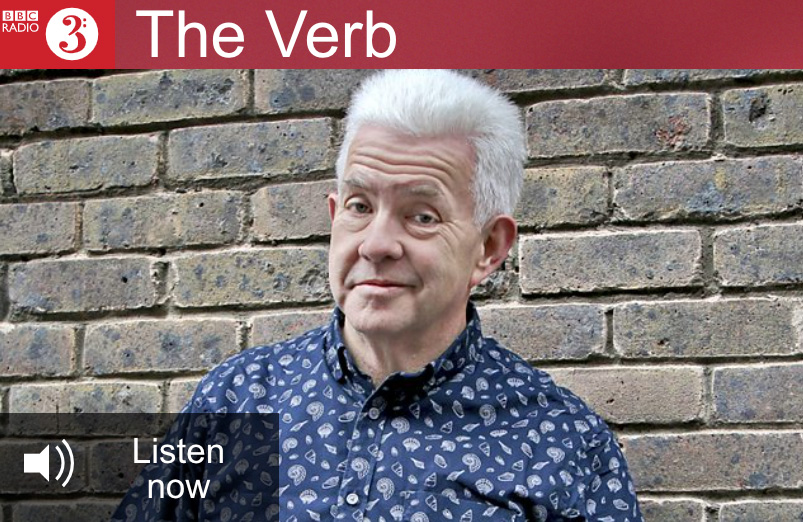
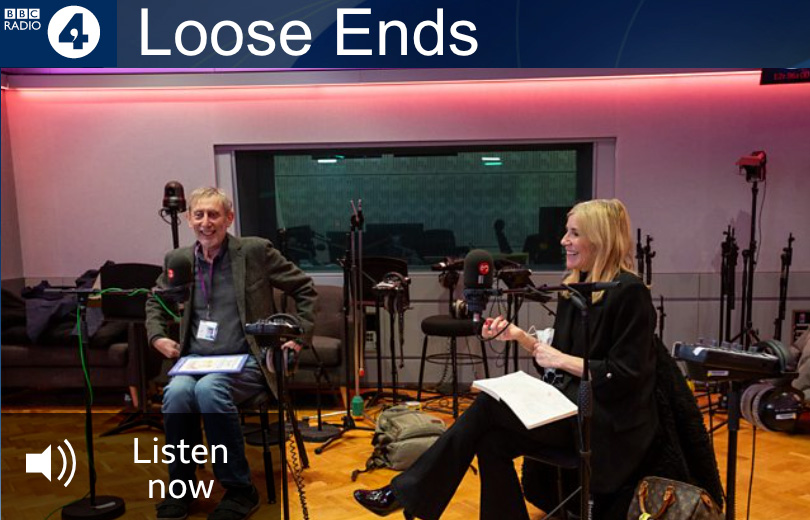
I’ve had a nice time appearing on programmes like Radio 3’s ‘The Verb’ presented by Ian McMillan, Radio 4’s ‘Loose Ends’ presented by Clive Andersen and Arthur Smith. I’ve also interviewed some great guests on Radio 4’s ‘Word of Mouth’. Remember, the BBC has a huge archive of our past programmes on the BBC Sounds website. It’s a fantastic resource for anyone interested in how we use language – ideal for Sixth Formers and anyone studying language-use.

Profile
Thanks very much to Keren David for this article about me in the Jewish Chronicle:
www.thejc.com/life-and-culture/all/rosens-recovery-1.522851

Imagine Children’s Festival
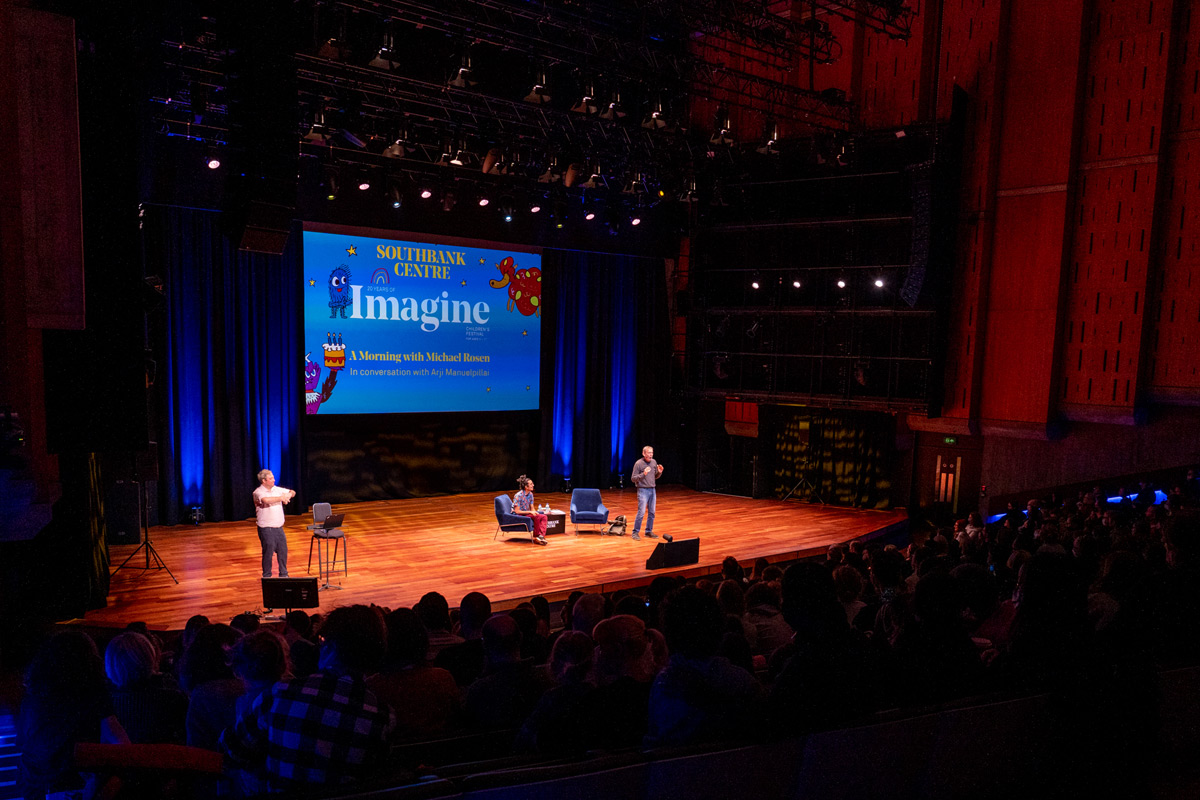
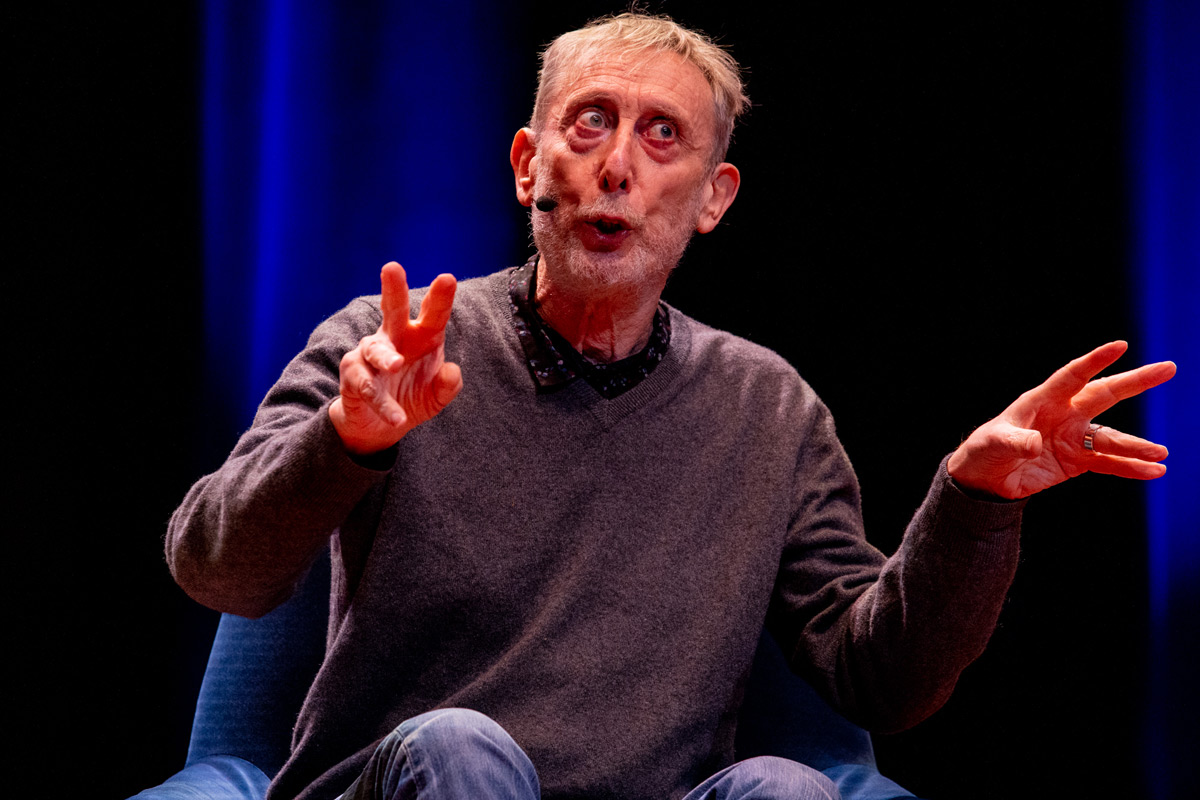
I performed at the Queen Elizabeth Hall, Southbank Centre, on February 20th, along with Arjil Manuelpillai, as part of the Imagine Children’s Festival. Here are a few pictures of the event courtesy of the Southbank Centre.


Previous News
NOVEMBER 2021
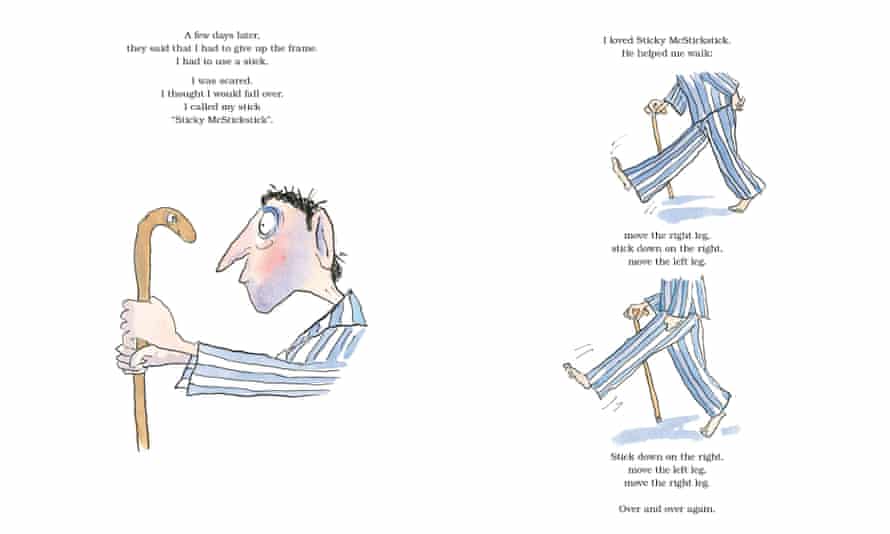
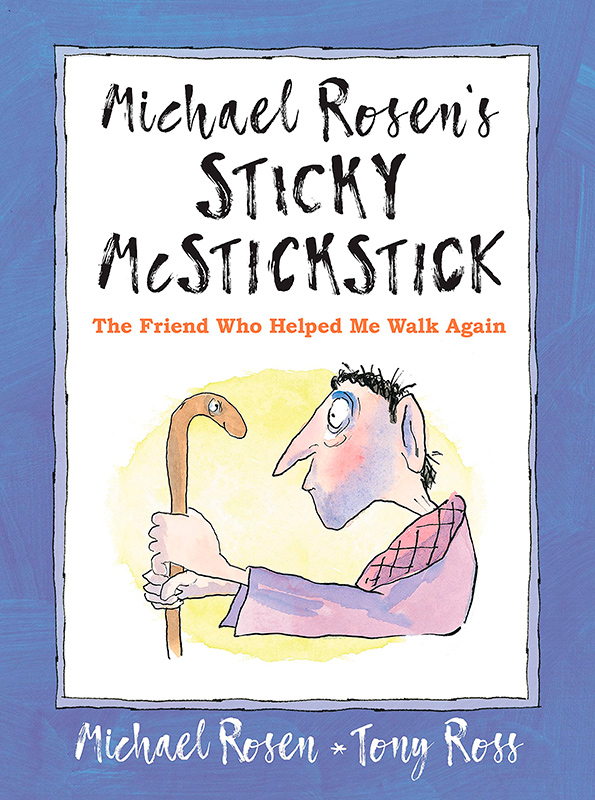
Michael Rosen’s Sticky McStickstick: The Friend Who Helped Me Walk Again
My latest book is out on November 4.
It tells the story of how I learned to stand up and walk following my illness in 2020 – thanks to the wonderful staff at the St Pancras Rehabilitation Hospital and my faithful stick, Sticky McStickstick!
Here’s a write-up at The Guardian that is a good introduction to the book.
CLPE Children’s Poetry Award (CLiPPA) 2021
Thanks to the judges and the Centre for Literacy in Primary Education I won the UK’s only prize for a book of poetry for children. I feel very honoured to receive this. I went to Cheltenham Literary Festival to receive it and actually I felt a bit weepy when I went up on stage for the award. Please look at all the shortlisted poetry books for both this year and previous years. All those books are in effect a perfect library for your school.
https://clpe.org.uk/news/michael-rosen-announced-winner-clpe-childrens-poetry-award-clippa-2021

My Best Teacher Podcast
This is a podcast I did for the Times Educational Supplement:
https://www.tes.com/news/my-best-teacher-podcast-michael-rosen-author-books-history
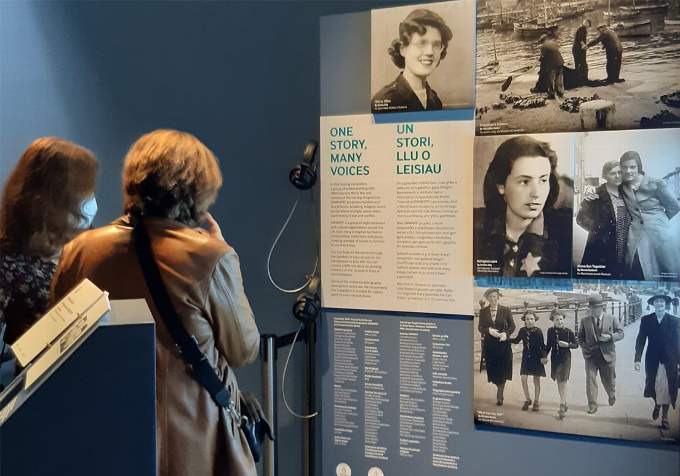
Imperial War Museum
I’ve been doing some work with the Imperial War Museum, helping them make an installation for their new Holocaust and WW2 galleries. A group of writers were commissioned to make an audio installation for one of the regional galleries. Mine was for the Aberystwyth one:
www.aberystwyth-today.co.uk/article.cfm?id=137866
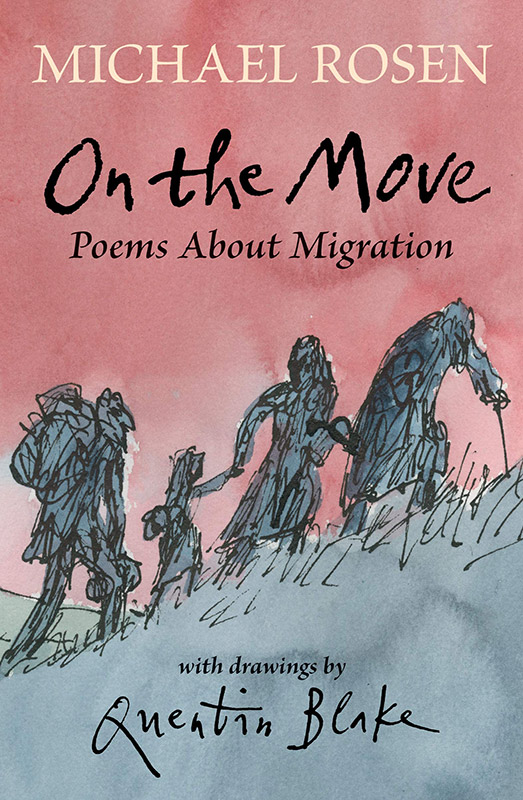
Articles in the Press
An article in the Guardian about my book, On the Move, Poems About Migration, illustrated by Quentin Blake and published by Walker Books:

An interview for the ‘i’:
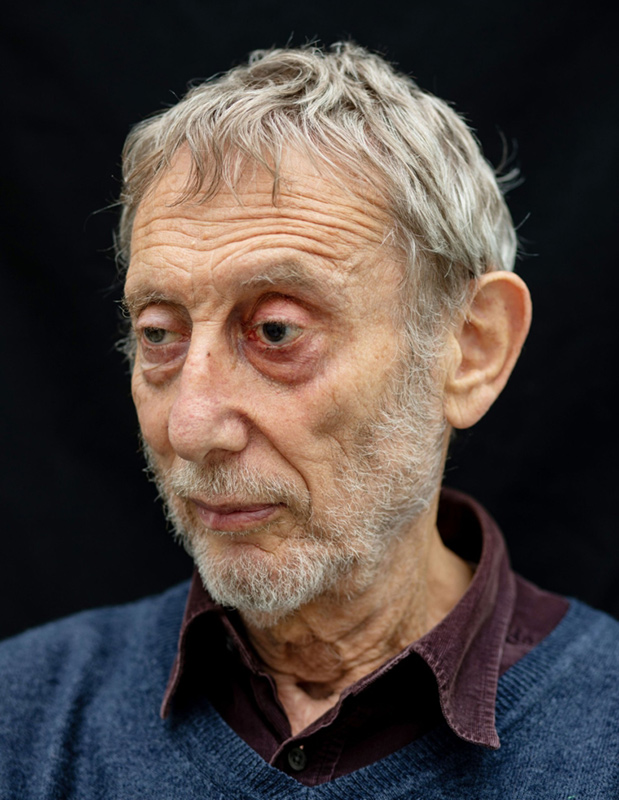
And an interview in the Times:
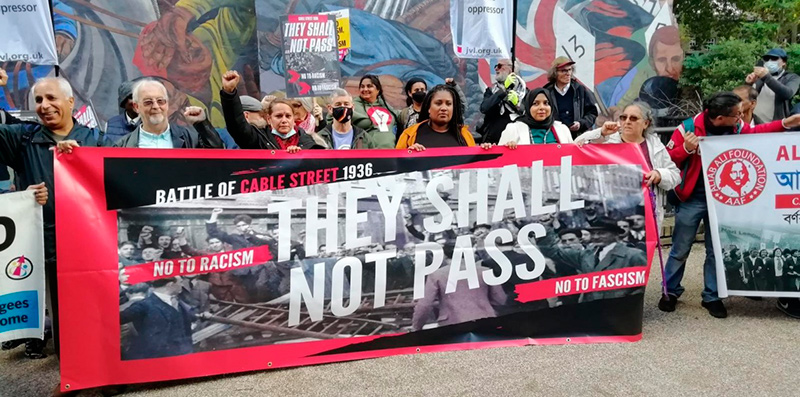
Cable Street
On October 4 1936, my parents (then 17 years old) took part in what has come to be known as ‘The Battle of Cable Street’. Every five years, we hold a commemoration of this event which was when local people in London’s East End met up at Gardiner’s Corner to prevent Oswald Mosley and his British Union of Fascists from marching through the streets. My parents (then, Harold Rosen and Connie Isakofsky) were very proud to have been part of it. In turn, I’m always very proud to be part of the commemoration.
https://morningstaronline.co.uk/article/east-end-march-marks-85-years-battle-cable-street
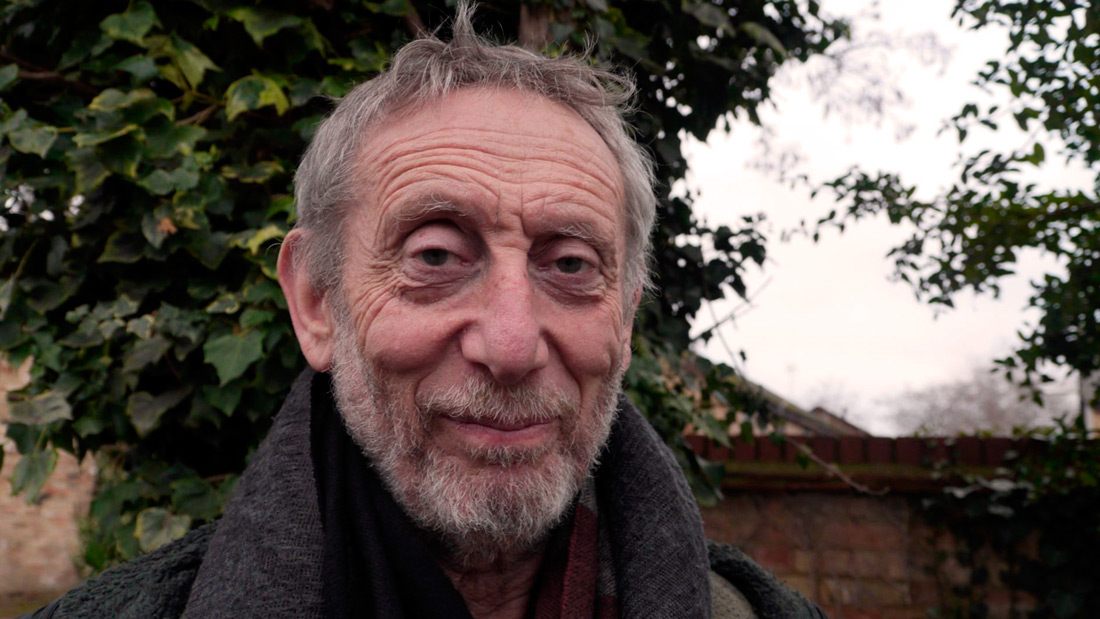
The Association of Jewish Refugees Conference
The Association of Jewish Refugees held a conference to talk about the effect of the Holocaust on the generations that come after the people who were directly affected by it. Much respect to the AJR for providing a space for survivors and their descendants and many thanks for asking me to talk about my father’s uncles and aunts who were killed in the Holocaust. I look forward to doing some more work with the AJR.

Haringey Learning Partnership Library
I love opening libraries! Here’s me at a library in the Haringey Learning Partnership along with David Lammy MP.
https://www.hamhigh.co.uk/news/michael-rosen-opens-haringey-learning-partnership-library-8312980

125th Anniversary of the Birth of British Cinema
It was great to be part of this event, celebrating early days of cinema history. As it happens, this very building was where my father went to college for two years when he was 16!

Goldsmiths, University of London
Here’s what’s happening at the University where I teach on the MA in Children’s Literature.
JULY 2021
The Latest
Since my last News, I’ve been doing what I can to get fitter and stronger. I’m very good at lifting saucepans and walking round the kitchen with them. I can also climb up Muswell Hill which is in…er…Muswell Hill. My son and his family live at the bottom of Muswell Hill. We discuss whether I walk down to see him, or he walks up to see me. Sometimes we put it off till the next day – especially if he’s busy working on our YouTube Channel ‘Kids’ Poems and Stories with Michael Rosen’ – now viewed over 100 million times! Don’t forget we put up new videos every two weeks. At the moment, we’re putting up videos of teacher and poet Jonny Walker talking about how to use the channel for writing poetry.
He’s also written a booklet to help teachers with this, Michael Rosen’s Poetry Videos: How To Get Children Writing and Performing Poems Too.

I Am Angry
I’m dead chuffed that a new book has come out. As you can see it’s about being angry! I think the pictures by Robert Starling are great. Very funny and full of energy. I hope it’ll give children, parents and teachers a chance to talk about emotions in a warm, fun sort of a way. Find out more…

J.M.Barrie Award
Huge thanks to Action for Children’s Arts for honouring me with the J.M.Barrie Lifetime Achievement Award. Here are the very kind words they have written in their announcement:
“We are delighted to announce that Michael Rosen has been named as the recipient of the 2021 J.M. Barrie Lifetime Achievement Award. This is in recognition of his tremendous work championing the arts for children as well as his achievements as a performer and author.The winner of the award is selected annually by the Trustees of Action for Children’s Arts. Speaking about this year’s choice of Michael Rosen, Chair Vicky Ireland MBE said:
‘This award recognises Michael as a hugely talented and popular writer, and also as an outspoken supporter of Action for Children’s Arts and of all we stand for with regard to so many things – especially the need for creativity and expressive arts in schools. After Michael’s battle with Covid-19 last year, we are lucky to still have him with us, and believe this is a brilliant chance to celebrate his achievements and say thank you for his constant courage in speaking publicly for the sector.’
Michael will be presented with the award in an online ceremony in autumn 2021. He will be joining an illustrious list of previous winners that includes Baroness Floella Benjamin DBE, Sir Philip Pullman CBE, and Stuart and Kadie Kanneh-Mason. The Award is given annually to a children’s arts practitioner or organisation in recognition of a lifetime’s achievement in delighting children.”
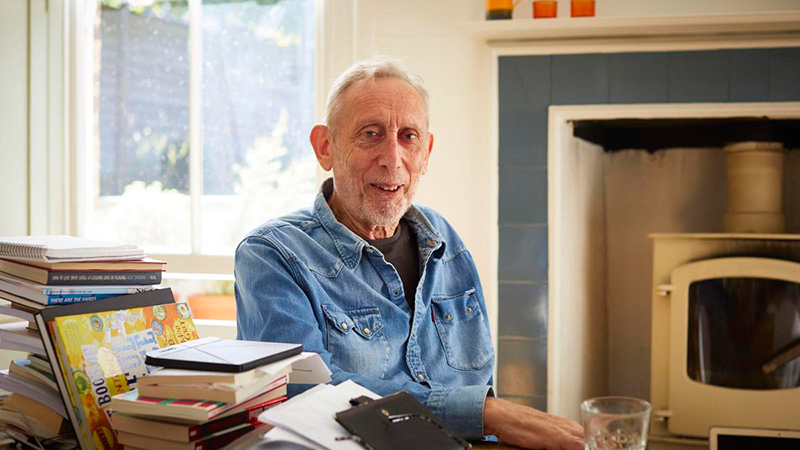
Many Different Kinds of Love
I’ve been getting lots of requests to talk to practitioners in the medical profession. That’s come about because there have been lots of articles, TV appearances and radio interviews to do with my book Many Different Kinds of Love, a story of life, death and the NHS (Ebury). I like listening to the other speakers talking about what they understand to do with Covid. I get to realise just how much of a huge challenge and struggle it’s been for them for many different reasons at the same time: they get ill, they’re hard pressed, they are overwhelmed by the emotion of it all and so on.
One of the most poignant and affecting sessions I’ve ever done was with the children at the Great Ormond Street Hospital School. They’ve been reading Many Different Kinds of Love and writing their own poems about being ill. We talked about using metaphors and how that works for things you’re bothered by.

Zoom Performance
I’ve been doing quite a few zoom calls into schools and for talks with teachers. I’ve had to learn how to make these work, doing the poems imagining the children are joining in. I can see them, but they have to be on mute or they won’t hear me! I’m also working out ways of using the camera by, say, putting my hands right up close to the lens, or even my eye! It’s a new kind of performance poetry – thanks to the pandemic.

We’re Going on a Bear Hunt
I was delighted to take part in a launch event for Five Leaves Press publication of the Yiddish version of We’re Going on a Bear Hunt. Yiddish is the language that all my forebears spoke. It’s the language that most eastern European Jews used for everyday life. And now there’s a version of it for ‘Bear Hunt’. A month or so later, I talked to the Folklore Society about my parents’ use of Yiddish when I was growing up.

Friday Afternoons
Friday Afternoons is a project for singing in schools. I wrote words for 12 songs that Russell Hepplewhite composed. We chose the theme ‘Everything’. That’s quite a lot (!) but you’ll get the point when you listen. These are available here: www.fridayafternoonsmusic.co.uk

In Conversation…
On May 21, it was a great treat to talk to Philip Pullman for one of our ‘In Conversation’ events at Goldsmiths, University of London, where I’m Professor of Children’s Literature. He was insightful, amusing, philosophical and really interesting talking about how he writes. You can hear the event here: https://sites.gold.ac.uk/clcl-blog/
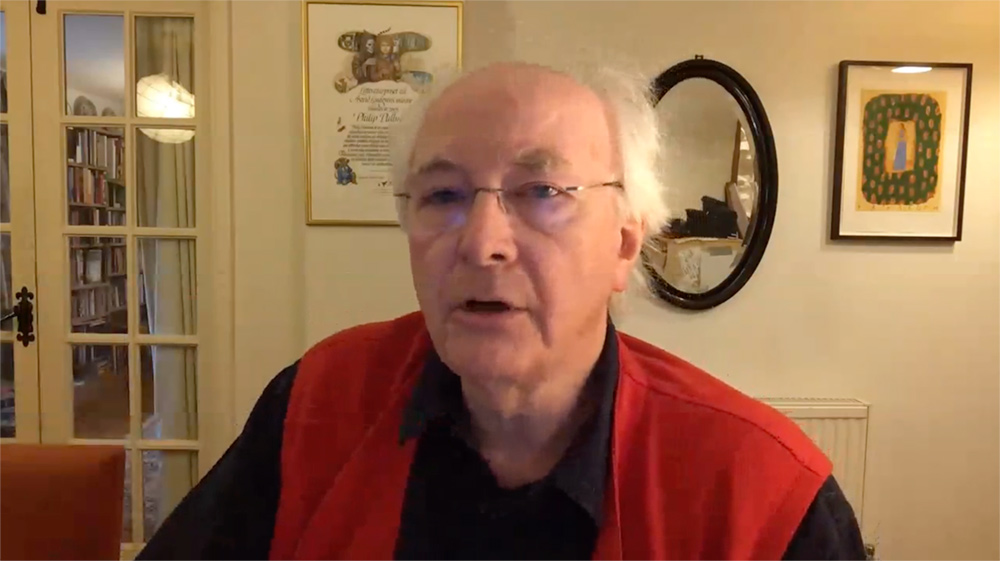
Teaching
I’ve picked up teaching again at Goldsmiths on our ‘Children’s Literature in Action’ course. This is where people studying for an MA devise a project which will show how children and young people respond to children’s books. It’s fascinating to read transcripts of children discussing books, learning through talk and writing about books.
The Lollies
The Laugh Out Loud Awards (the Lollies) are back. It’s an award for the funniest children’s books of the year. Here’s the short list: https://shop.scholastic.co.uk/lollies

Children’s History Society
It was great working again with Kimberley Reynolds and Jane Rosen. We co-edited Reading and Rebellion, an anthology of radical writing for children 1900-1960. We did a session for the Children’s History Society and now we’re thinking of how to do a book on the same theme for 1960-2000.

The Harold Rosen Lecture
The United Kingdom Literacy Association (UKLA) put on a Harold Rosen Lecture every year in honour of my father. This year – it was my honour to be the person giving the lecture! I talked about oracy and literacy to fit the theme of their conference. The text of it is here.
Health Update
I’ll get the health news out of the way first! I heard someone say that for every day you’re in intensive care, it takes one week to recover. I came out of intensive care at the end of May after 48 days. If my maths is right, that means I should be as recovered as I’ll ever be by the end of April.
At the time of me writing this, I certainly feel fitter and stronger than I have been. I test myself by walking as fast as I can round the block where I live, doing laps, for about 45 minutes to an hour. It feels OK. Marching about like that gives me a chance to think as well.
My two main problems are my left eye and my left ear. They’ve done a series of ops on my left eye which have kept the pressure down, and the sight – rather strangely is OK in a tiny area in the middle. The rest is fogged. The ear doesn’t really work, but I get a sense of 3D sound by wearing a hearing aid and turning it up.
There that’s the end of my health bulletin!
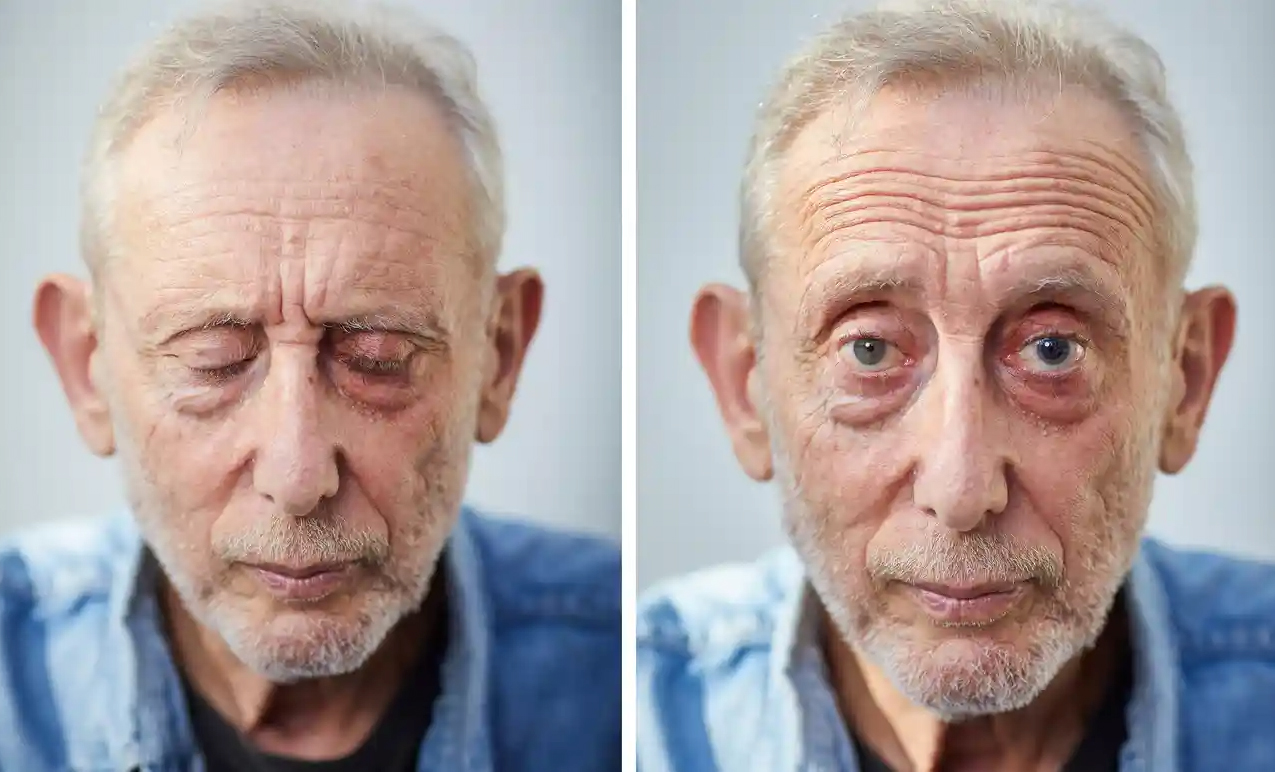
Photograph: David Levene/The Guardian
Virtual Broadcasts
I’ve been doing plenty of ‘virtual’ meetings and broadcasts. One that was fascinating for me was a BBC Radio 3 programme about a language called ‘Rotwelsch’ – an old European language of the underworld that used a mix of German, Romani, Yiddish and other influences. A writer called Thomas Puchner has written a book about it called The Language of Thieves and it’s taken him into his own family background (sometimes unpleasant, some less so) in the early and middle years of the 20th century in Germany.

Also on the programme that night was someone who has studied the Nazi transit camp on the edge of Paris (Drancy), and another person who has looked into the role of the railways in the Holocaust. As my father’s uncles and aunt were deported to Auschwitz on trains after being imprisoned in Drancy that was of particular interest to me. (I’ve written about this in my books The Missing and On the Move – both published by Walker Books and also in the last chapter of my memoir So They Call You Pisher! (Verso Books).
I interviewed the great writer Hilary Mantel for BBC Radio 4 about how she chooses and uses language for her books. That seems to have been interesting for quite a few people, judging by the response.

I’ve been working with the Imperial War Museum on a couple of projects. I can tell you more about this next time. They will be audio installations that people will be able to listen to when visiting some of the different Imperial War Museums round the country.
I’ve started going back to teaching students at Goldsmiths, University of London.
Many Different Kinds of Love
There have been a whole set of interviews with me about Covid and the book I’ve written Many Different Kinds of Love, a story of life, death and the NHS (published by Ebury, illustrated by Chris Riddell) which came out on March 18.
There have been interviews in the Big Issue, the Guardian, the New Statesman, the Amnesty magazine – amongst others – and I’ve done broadcast interviews about Covid or the book on BBC Radio 4’s ‘Front Row’, Scala Radio, Giles Coren’s show on Times Radio, Adrian Chiles’s Show, Jeremy Vine’s Radio 2 show, GMB, BBC News, BBC Radio London (Vanessa Feltz’s show), BBC Radio 4 ‘The Reunion’, BBC Radio Scotland and there have been several podcasts and virtual appearances for Jewish Book Week, Ed Miliband’s ‘Reasons to be cheerful’, Owen Jones’s podcast, Radio 2’s podcast about how to cope, the ‘Griefcast’ podcast, the ‘New Humanist’ podcast. ITV also put out a film called ‘2020: the story of us’ (directed by Kevin Macdonald) where I was one of the 3 patients in intensive care shown in the film. (I can tell you, it was pretty grisly seeing myself in an induced coma!)

Discussing my illness in ‘2020: The Story Of Us’
Many Different Kinds of Love made it into the best sellers lists for two weeks running (at number 4 and number 5) – the first time a book of mine has been a best seller! There have been reviews in the Observer, the Daily Telegraph and on various blogs around on the internet. You can find out more about the book here…
Book News
I presented a BBC Radio 4 programme about Dr Seuss’s book, The Lorax for the series ‘Costing the Earth’. It was good fun to interview Children’s Laureate Cressida Cowell for that. She was at her enthusiastic best!
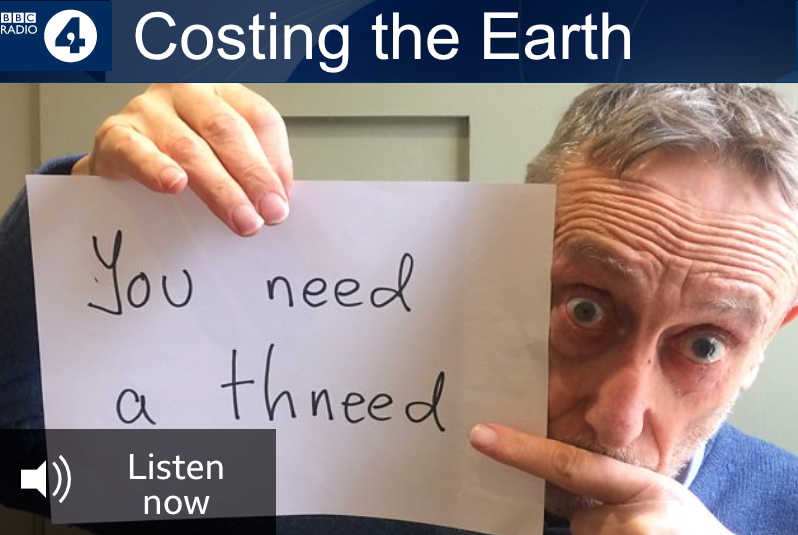
Some time ago I wrote a book about Emile Zola’s stay in England (The Disappearance of Emile Zola (Faber), and I’m pleased to say that a group of us are working on that to create a stage show. More on that when things start to come together.
Thanks to Five Leaves Bookshop and the persistence of Ross Bradshaw, there is now a bilingual English-Yiddish version of We’re Going on a Bear Hunt. We did a bi-lingual reading of it in February.
I’ve helped in getting out a book of William Morris’s narrative poem part of which is set during the time of the Paris Commune: it’s called Pilgrims of Hope and published by Redwords and distributed by Bookmarks Bookshop. It’s been designed and edited by Roger Huddle and I’ve written the intro.

YouTube
Meanwhile, over at the YouTube channel ‘Kids’ Poems and Stories with Michael Rosen’ (director, Joe Rosen), we’ve reached 100 million views! We’re pretty proud of this. It seems amazing that a channel devoted to poems, stories, a few jokes, interviews with other writers and some children’s book reviews has had that many hits. We put up a new vid every two weeks so please subscribe to the channel. That way you get to hear when new stuff goes up.
As part of our celebrations, Jonny Walker, a classroom teacher who teaches poetry has produced a booklet to help teachers use the YouTube Channel to help children write and perform poems and it is titled Michael Rosen’s Poetry Videos: How To Get Children Writing and Performing Poems Too. He is full of experience, has loads of ideas and some great thoughts about teaching poetry. I promise you, that if you read the booklet and use the channel you will be find it easy, fun and rewarding to teach and write poetry. More details about the book here.
Pandemic Thoughts
Finally, I hope you have all coped with the pandemic. Obviously, it’s been a big shock for my family as it has for tens of thousands of other people. I believe very strongly that we need a public enquiry to find out why things went so badly wrong in the first few weeks of the pandemic when it started spreading in the UK. I know it’s a terrible thing to think about but we could face something like this again and we need to learn the lessons from what happened this time.
Finally finally (!) I must thank all the people who saved my life and have helped me get better: my wife Emma and family, Dr Katie Amiel, all the NHS doctors, nurses, physiotherapists, occupational therapists, voice therapists and all the health workers at the Whittington Hospital and the St Pancras Rehabilitation Hospital. Without them all, I wouldn’t be alive today.
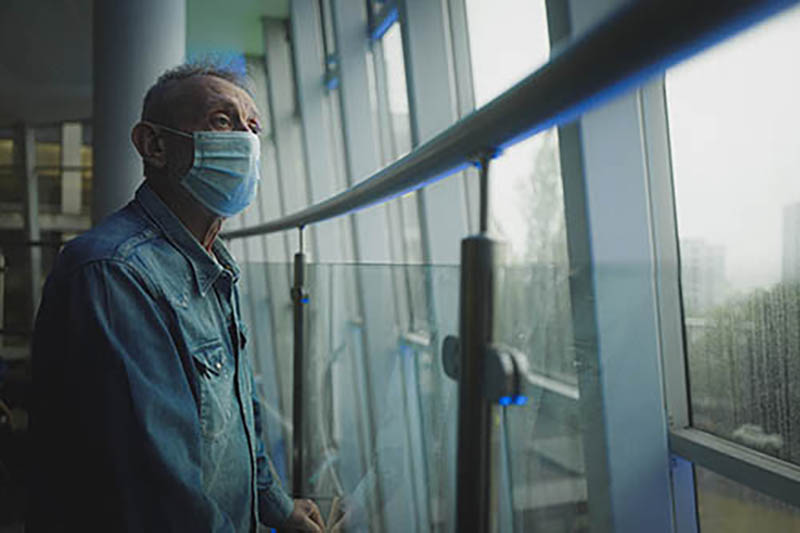
‘2020: The Story Of Us’
Previous News
Walking
I’ve been doing my best to get fitter and stronger. My record for going for a walk is 75 minutes and that included what I think of as a mountain: walking uphill from Alexandra Park Station to Alexandra Palace! OK, I know it’s not the Matterhorn. Fantastic view over London just as the lights were coming on in houses, streets and offices.
I remember being taken there for the first time when I was 7 by a family friend, Francis Aprahamian, who looked out and said, that when we grew up we would have to have hope. And far away beneath us an express train was heading north. I think he said it was the Tyne Tees Express. I loved the sound of that: Tyne Tees Express…
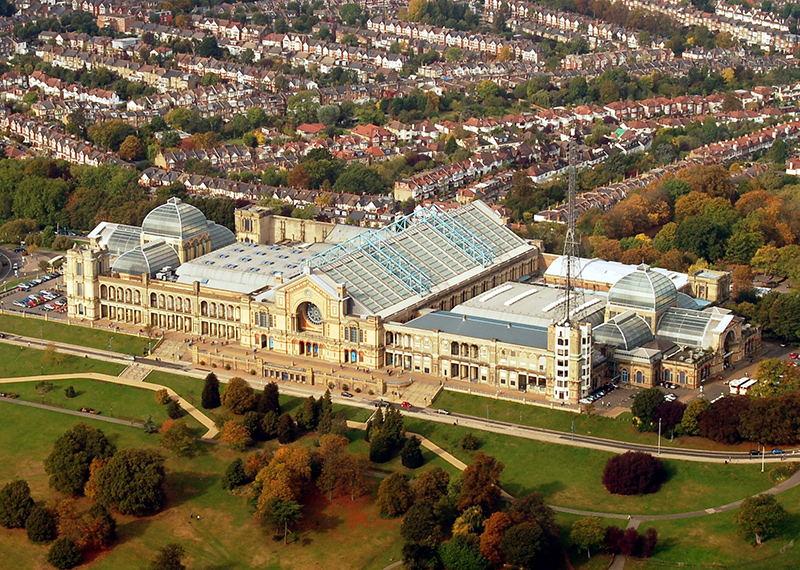
Alexandra Palace

View of London from Alexandra Palace
Virtual Programmes
I’ve been doing all sorts of ‘virtual’ things: programmes on BBC Radio 4, like ‘The Reunion’, where the BBC reunited me and my wife, Emma with the doctors and nurses who saved my life. It was very emotional for me to hear them talking of me about the time I was unconscious while my body was trying to get better. I also read one of my new Covid poems at the end of the programme.

Another programme that I really enjoyed doing was ‘Pick of the Year’. They asked my son Joe to present it with me and we talked to each other (virtually!) about some great, uplifting or sad moments that happened through the year. You can listen here…

I very much enjoyed being the last item of the last BBC Newsnight of the year 2020. They asked me to write a poem that had a bit of hope in it and they came to our back garden and filmed me doing it. I’m quite excited by the idea that when we write poems, it’s possible through technology for 100s, 1000s or even millions of people to see and hear them within a few hours of them being written.
I’ve also started recording the programme I present, ‘Word of Mouth’, a programme about words and language use. I love doing this and I’ve been presenting it for over 20 years. It’s great to be back! The latest programmes go out in January and February and then they’re all on BBC Sounds.
YouTube
Before I got ill, I made quite a few videos for our YouTube Channel. Joe is loading these up on to the channel either once a week or once a fortnight. By the way, we’re very proud that the channel has been viewed over 95 million times. That means we’ll hit 100 million views in a couple of months time! The latest video is the final instalment in a series I made in conjunction with Authorfy, Michael Rosen’s Poetry Masterclass. You can watch the whole series on our channel, Kids’ Poems and Stories With Michael Rosen.
One way we might celebrate this is with a book being written by teacher and poet Jonny Walker. It’s for teachers to help them teach poetry to children. He’s beavering away to get it done. Look out for that.
New Writing
Talking of writing, I’ve done quite a lot myself over the last few weeks: finishing off Many Different Kinds of Love to be published by Ebury Press with pictures by Chris Riddell. It’s about my 9 months of getting ill, being in intensive care and struggling to get better. This comes out on March 18. I feel quite ‘tingly’ about this…wondering what people will make of this. You can find out more here…

I’ve also been writing some new children’s books. Not sure at the moment when they’ll be out, but I’ll keep you posted.
My Blog
If you go to the button we call ‘blog’ you’ll see that there are some writing ideas there. They’re for anyone – children, teachers, parents, carers or any person dropping in – to get started on writing something. Please free free to use them, adapt them, change them in any way you want. The latest is Poetry Idea.

In the Press
There have been various interviews with me in newspapers and magazines. I’ve put them all together here:
https://michaelrosenblog.blogspot.com/2020/12/recent-print-interviews-on-surviving.html

Photograph: David Levene/The Guardian
Finally
One other thing: in June and July my hair started falling out and I thought I was going bald. Then in November and December it’s started to grow again! Well, it keeps life interesting doesn’t it?
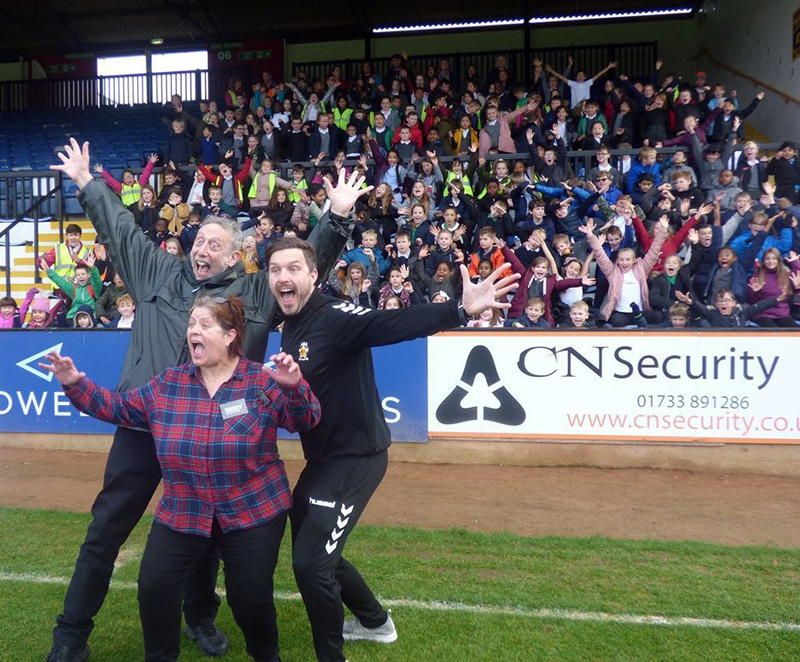
Lastly, here is a photo that Cambridge United Community Trust just posted on Twitter, capturing the day when I visited Abbey Stadium to work with local children.
Previous News
Health Update
As far as my personal health is concerned, I’m continuing to make progress. I can walk for about 40 minutes non-stop without having to take a rest. It’s a slow walk – more of stroll, really – but it is me moving along steadily. I’m afraid the sight in my left eye is only a bit better so far but the doctors are doing their best to improve it. The hearing in my left ear is pretty well gone, but I have a hearing aid and this helps a good bit. Meanwhile, I’m waiting for scans to see if my lungs and heart have got better. I hope so. The ends of my toes are numb which is a strange feeling! Then, as other Covid sufferers have said, I’ve also lost quite a bit of hair off the top of my head. I shouldn’t have to say this, but please don’t believe anyone who says that Covid is a hoax or that for everyone it’s only a mild form of flu and so it’s nothing to worry about. I believe we should take every precaution we can to help avoid getting Covid.
Here is a video I have just made detailing some of the lingering effects of my Covid experience.
Writing
I’m also writing and doing occasional interviews. There’s a recent one in The Daily Telegraph and there’ll be one in The Guardian soon. I’ve written some things about Covid – wait for news on that soon! I’ve been writing some poems for the very youngest children – that’s with Walker Books. No title at the moment! And I’m doing an anthology with Walker Books too. I’ve got some interviews coming up for films on Sir Quentin Blake and another one on Julia Donaldson which will be on TV in a few months time.
I’m also writing my ‘Dear Gavin Williamson’ column in The Guardian. One’s already come out since I came out of hospital. One a month from now on. And I do the origins of a word that’s in the ‘air’ for the magazine New Humanist. I missed a few editions while I was ill but I’ll be back on that soon.

And there’s the poem I write for the National Education Union Newspaper, Educate. I write a poem per issue and I’ve been doing that for several years now going back to when the magazine was The Teacher. I would like to make a collection of all the poems I’ve written for these magazines.
You’re Thinking About Doughnuts
We’ve successfully crowdfunded my book You’re Thinking About Doughnuts with Cole Henley turning it into a graphic novel. We’re doing it with ‘Unbound’ who are very keen that people go on supporting the project.

New Books
This month two books came out:
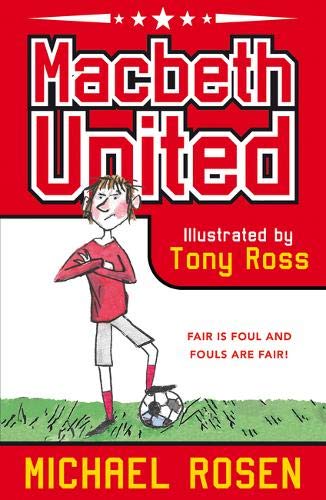
Macbeth United (illustrated by Tony Ross). This is a football story based on the story that Shakespeare tells in the play ‘Macbeth’. And you can’t get nastier than that! Find out more…
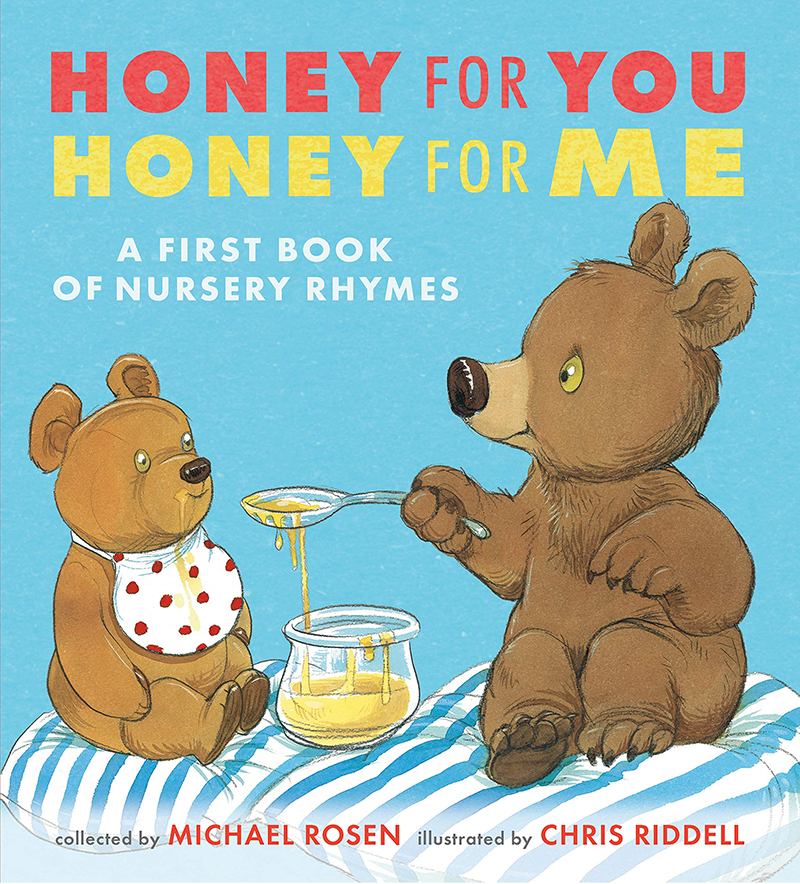
Honey for You, Honey for Me (illustrated by Chris Riddell) is a book of nursery rhymes and playground rhymes. It’s a companion volume to my A Great Big Cuddle. I think of it as the folk roots for the kind of writing that I do for the youngest children. Find out more…
Look out for a new book coming soon on October 1st, On the Move: Poems About Migration, illustrated by Quentin Blake. Find out more…
YouTube – Kids’ Poems and Stories with Michael Rosen
Don’t forget that each and every week, we put up a new video on our YouTube Channel. These were filmed before I got ill but we will be making some new ones soon. Please subscribe to the Channel – it’s free – and that way you can keep up with what goes on the Channel. We’ve had nearly 85 million views at the moment of me writing this News!
My latest video is Cucumber from my True or False? series:
By the way, a teacher friend of mine is writing a book for teachers that will be a guide on how best to use our YouTube Channel to help children write and perform poems. More on that next time!
Coronavirus
Hello friends
In case you hadn’t heard, I can tell you that in March I caught the Coronavirus. I was in bed at home for a while but then went into hospital. I spent 12 weeks there including 7 in Intensive Care. I was in a very serious condition.
When I recovered enough I wento a Rehabilitation Hospital where they taught me how to stand up again! And then they taught me how to walk so that I could go home and get around the house.
I had great care and between the doctors and nurses saved my life more than once. I’ve had wonderful loving care from my wife so it’s been wonderful to come home after 12 weeks in hospitals.
I also have to say that I’m still recovering: walking is very slow, I’ve lost sight and sound from my left eye and left ear and there are some other problems too. This means that some of the things I’ve been doing for years I can’t do at the moment: school visits, conferences, broadcasting, and teaching at Goldsmiths university. I can’t say for the moment how long this is going to last but I am doing all I can to get fit and well and I have great help and support.
Here are some news reports of what happened:
The Guardian: Michael Rosen ‘very poorly but stable’ after night in intensive care
The Guardian: Michael Rosen home from intensive care after coronavirus
The Guardian: Michael Rosen I’m Only Finding Out Now How I Was Saved From Coronovirus
BBC: BBC Radio 4 – Best of Today, ‘They Handed Me A Piece of Paper and Said You’ve Got a 50/50 Chance
Good Morning Britain:
New Books
I am doing a little bit of writing right now and there are some new books coming out during the next few months.
September 3rd 2020:
Macbeth United, illustrated by Tony Ross. Find out more…
October 1st 2020:
On the Move: Poems About Migration, illustrated by Quentin Blake. Find out more…
November 26th 2020
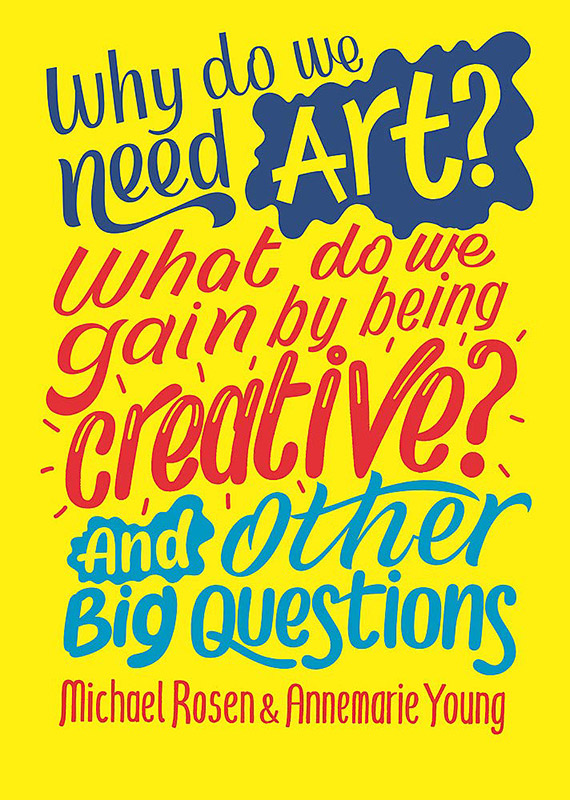
Why Do We Need Art?, with Annemarie Young. Find out more…
YouTube Videos
There will be a new video coming out every week for a while on the Kids’ Poems and Stories with Michael Rosen YouTube Channel. You can watch them here on my website and on my Official YouTube Channel – Kids’ Poems and Stories with Michael Rosen.
The latest is Rats…
Kidoodle
I have also launched a Michael Rosen TV Channel for Safe Streaming on Kidoodle with some classic videos like Chocolate Cake, No Breathing, Babysitter and more.
Search @kidoodletv on any social platform and you’ll find them or visit Kidoodle.

Merch
You can now buy Tee-Shirts, Stickers, Tote Bags and other great Michael Rosen stuff on my Merch Page:
https://teespring.com/stores/michael-rosen-merch
The Old Vic
On December 14, I did a show at the Old Vic in London. This is the second year I’ve done this and it’s an absolute treat to do it. I was taken to the Old Vic from about the age of 10 and I thought it was so grand and special full of such clever people performing Shakespeare and other great plays. And then 60 years later, I come out on to the stage and do my thing! Maybe that doesn’t sound amazing to you but as I stand there, inside I feel like I’ve caught some of that grandness just by being there! And because I went with my parents and brother, I feel full up with feeling. It was also special this year because my son Joe came along with my step-daughter Laura and her family.
The Verb
I was on BBC Radio 3’s The Verb on December 20. This is hosted by the wonderful Ian McMillan, poet, performer, wit, jester, language observer and shaper. I love the way he tells things, talks about things. Every day he writes a tweet which is really a little prose poem about his morning stroll. Anyone wanting to write poems should read these and see how in just a few words, you can create a pictures and feelings. They remind us that you can build an atmosphere and observe things around us in a very small space. Over time, one by one, Ian is constructing a world out of these fragments.

Ian McMillan, host of the Verb
I was on the programme because it was about nonsense (I’ve done two books of nonsense, which I wrote as a kind of tribute to Edward Lear.) Amongst the guests was Julia Donaldson who, along with Axel Scheffler the illustrator, has done more than anyone to make the rhyming picture book a fantastic art form. The programme is recorded in the BBC studios in Salford, Manchester.
The recording went well, I thought, we got on a train back to London and about a half hour from Manchester the train stopped. The guard announced that they had been informed a tree had fallen on the line. Then the lights went out and we all sat in the dark. Axel’s phone didn’t work and he needed to get in touch with someone to tell them that he wouldn’t be able to fly to France in the morning because he wouldn’t have time to get home and to the airport! He used my phone to make the arrangements. Next time I see him, I’ll check to see if he ever got to France over Christmas.
Also on the programme was writer, comedian and podcaster, Jake Yapp who was down to write and perform his next podcast – from home. Instead, he set up his computer and he did it from the train. You can listen to it here and hear me break out into doing We’re Going on a Bear Hunt just to give people something to join in with. But they didn’t. Well I tried, here it is.
La Dinette
I also did another little Christmas show at one of our local cafes, La Dinette. It’s a very baby-friendly eatery, and it’s nearly always full of young mothers and fathers with babies and toddlers. They make their own cakes and muffins there and at Christmas, fantastic mince pies. A few doors down is the Muswell Hill Children’s Bookshop so they supply a pile of books, I do poems, everyone eats mince pies, babies roll round the floor…

The Missing
My book The Missing came out in a kind of double-barrelled sort of a way with some copies released in December and the proper publication date at the beginning of January. It seems to have interested a lot of people so I’ve been on radio and done interviews for several newspapers and podcasts – such as BBC Radio 4’s ‘Saturday Live’, BBC Radio 5 Live’s ‘Jeremy Vine Show’, Just Imagine’s podcast with Nikki Gamble, and newspaper interviews, articles and reviews in The Guardian, The Telegraph, The Times, Financial Times, Books for Keeps, Yorkshire Post, The I, The Week, First News, Authorfy and others.
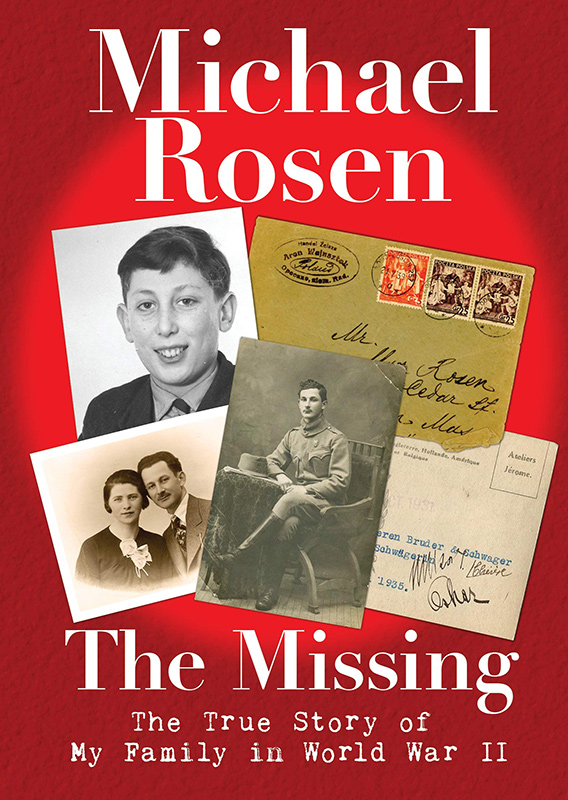
The Orbit
On January 16 I was asked to give a talk for a conference held in the Orbit. That’s the red tower on the Olympic site, next to the London Stadium where West Ham play now. If you get a chance to go, you must do it. The view at night is like you’re in an aeroplane, looking out over the east side of London. The stadium lights were on and it looked like a space craft had landed next to us, while all around people were sitting in their towers waiting for unseen creatures to emerge.
The ArcelorMittal Orbit

The view from the top
Holocaust Memorial Day
January 25 was when we had the ceremony for Holocaust Memorial Day in Cambridge. This was to commemorate the 75th anniversary of the liberation of Auschwitz-Birkenau by the Russian army in 1945. I’ve been working with Helen Weinstein and HistoryWorks in Cambridge alongside Eva Clarke a survivor from one of the concentration camps. In fact she was born in Mauthausen and survived with her mother. She tells her story, I tell the stories in The Missing, read poems and the school students write poems themselves, sing songs that I’ve written the words for, or do other creative work around the terrible events of that time.

Eva Clarke (image by Newcastle Chronicle)
By the time we get to the memorial day itself, we’ve spoken to and worked with something like 5,000 students and teachers. On the day itself – which was held in the Corn Exchange, there was a mix of speeches, dance, drama, song, poetry, and testimony from survivors both of the concentration camps and of more recent genocides and discrimination. It was a powerful and moving event, full of brilliant work by the young people.
Everything
Another project I’m working on which involves songs is with the composer Russell Hepplewhite. I’m writing the words for his music as part of what are known as ‘Friday Afternoons’ at Snape. This is a resource for teachers and pupils to have new songs to sing in schools on all sorts of themes. Our theme is Everything! I’ve written words on atoms, cells, movement, discovery, life and a whole lot more! We’ll be presenting a performance on May 4th at the City of London Boys School, then it’ll be available after that. I’ll keep you posted.

Russell Hepplewhite
Very sorry, it’s been some time since I’ve posted up some News. Here is a quick catch-up.
New Books
I’ve done another one of my booklets for teachers. This one is Reading for Pleasure and has tips, resources, thoughts on how we read, (the reading process if you like), how doing things like the SPaG test puts us off reading! And more. You can buy the booklet here on my website along with my other self-published books for teachers, my book about writing (The Author) along with all my other books published by mainstream publishers.
There’s a new book in the ‘Big Questions’ series that I’ve done with Annemarie Young. This one is What is Politics?
It’s meant for Key stage 2 and 3 students.

There’s my book Book of Play that has come out in conjunction with an exhibition at the Wellcome Collection. Please do go to the exhibition and I hope you enjoy my book too!

I have a book of poems for adults called Mr Mensh as part of my series of poems for adults that I’ve done with Smokestack Books – Don’t Mention the Children and Listening to a Pogrom on the Radio.
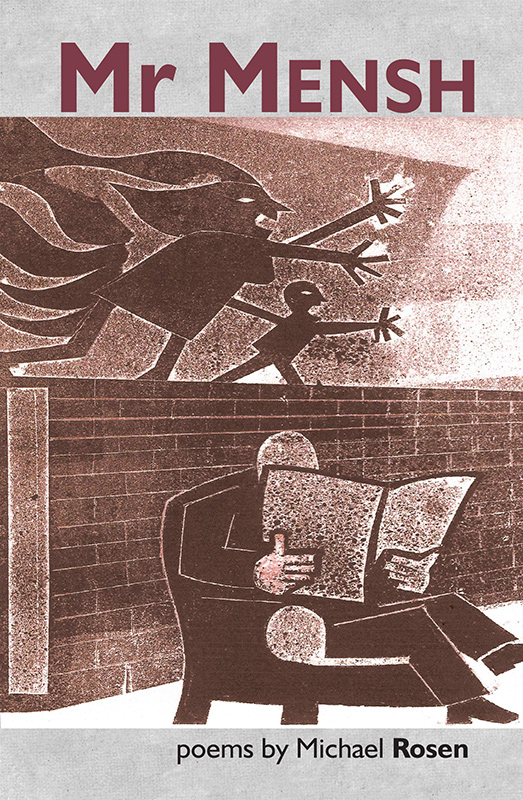
Available on 12th December: The Missing, the True Story of My Family in World War II.
YouTube
I’ve done some more filming for our YouTube Channel ‘Kids’ Poems and Stories with Michael Rosen’.
We’ve had over 65 million views and we have more than 330 thousand subscribers. New videos go up every week.
The latest ones include an interview with Francesca Simon about how she writes, a story about how I used to get scared going to the outside loo when I went to see my grandparents (!) and another ‘Right Class 6’ monologue by the teacher who doesn’t seem to be getting anything right.
Roald Dahl
I did a bit of filming for Arte Television, for French TV. It was about Roald Dahl and where he lived in Great Missenden. A French film crew and I walked round Great Missenden talking about the village and the museum in relation to Dahl’s work. We looked at the petrol pumps that gave Dahl the idea for what Danny’s father does in Danny Champion of the World (a book I like a lot), the houses that he describes the BFG striding over, and we looked at his writing hut which has been put in the museum. I was able to use what I researched for my book about Roald Dahl, The Fantastic Mr Dahl – a book for Key stage 2 students taking readers into the life and work of Dahl.

The interior of Roald Dahl’s writing hut, courtesy of www.roalddahl.com
Scala Radio
Simon Mayo who used to DJ on the BBC left to be a DJ on Scala Radio. When my Book of Play came out, he asked me in to talk a bit about it. It’s always interesting going to see different kinds of radio stations. At Scala, it’s all very compact, with the studio right next to where people are on their computers, the producer sits in the studio and it feels more like an office that just happens to be broadcasting! All very matey.

Simon Mayo at Scala Radio
What else…
Apart from this, I’ve been zipping about: Liverpool, Cumbria, Belfast, Shoreham, Bournemouth, Cheltenham, Appledore… If you look at my Events on this site, you’ll see where I’m going next!
A Dog’s Tale!
This month, I have a new book out, A Dog’s Tale! An old dog chats to a young dog about what’s coming up in life: big new adventures. But not to worry, the old dog says, and even if something bad or sad happens, what matters is how you deal with it. It’s in rhyme with fantastic pictures from Tony Ross. Find out more…
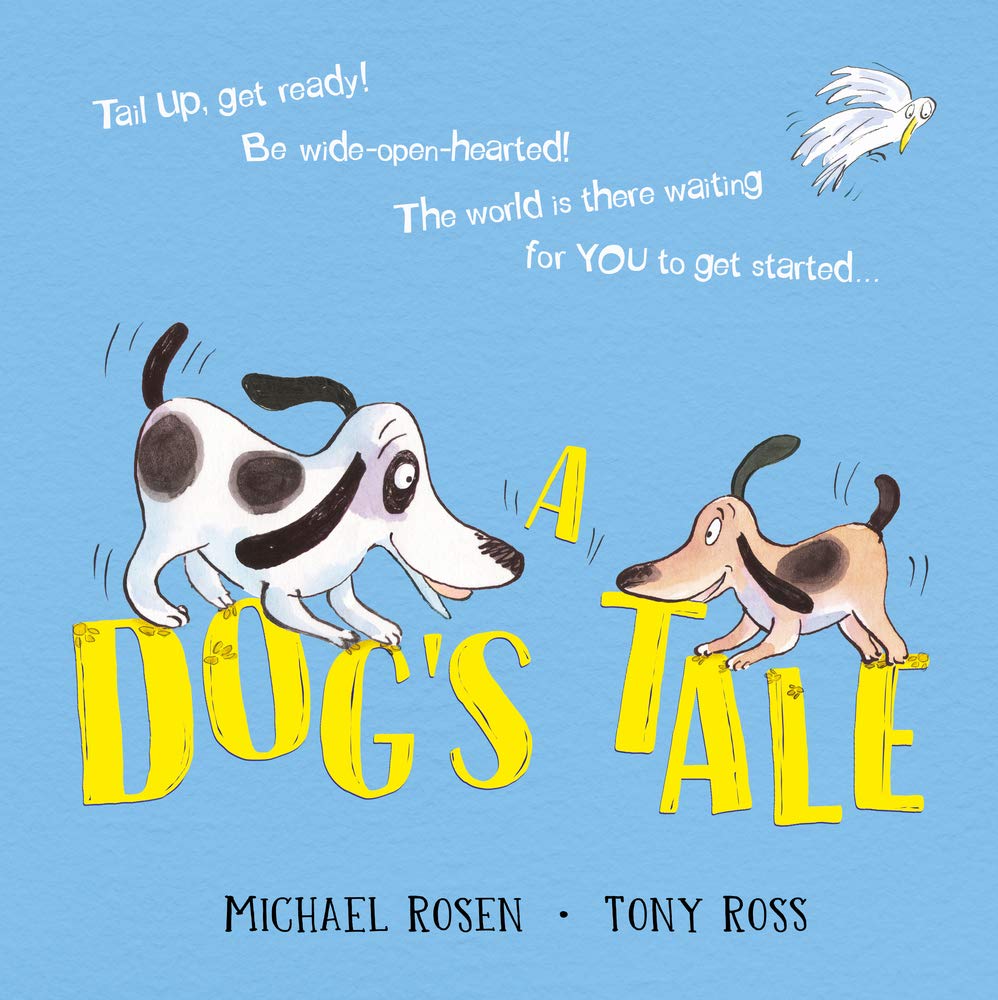
The Corner Table Podcast
In June I went to the wonderful Evin restaurant in Hackney, near to where we use to live to eat their gorgeous falafel and gözleme to record a podcast for ‘The Corner Table’. It’s a neat idea from Jack Aldane to record authors in their fave cafe about life, times, writing, rhubarb or anything.
Here’s how it came out: check if you can hear me munching. It was genuine, authentic munching.
Evin is the best place I know for falafel and gözleme.
Digital Storytelling Festival
June 7, I took part in a multilingual Digital Storytelling conference at the college where I teach, Goldsmiths, University of London. I wasn’t able to stay for the whole thing but it was great to hear We’re Going on a Bear Hunt being spoken in German – and with new places like up mountain, in the story.
Here’s a sample of Bear Hunt in German:
“Wir gehen auf Bärenjagd
Wir fangen ein ganz Grossen
Und wenn ihr uns fragt,
Wir haben keine Angst
in den Hosen.”
Writing
This month I’ve been working really hard finishing off some books. I can’t say exactly what they are at the moment. Publicity people at publishers like to keep things hush-hush so I’m not giving away titles just yet. I’m not trying to be mysterious, it’s just the way the publishing industry works!
What I can tell you, is that for one of the books, I volunteered to be put under a kind of house arrest: I went into the publishers, put myself in a room in their office and didn’t come out until I had done a few thousand words. And it worked! I did it. Just the final bits of editing to do. One night when I came out of the little room after working almost non-stop for about 8 hours, the people left in the main office clapped!
Well, it’s one way to get writing done.
Bridge School, Islington
I helped open the Bridge School’s new building. Here’s how Jane Ramsey announced it on twitter along with her photo of the event:
The wonderful Michael Rosen officially ‘ribbon’ (tinsel!) cutting at today’s ceremony celebrating formal opening of their integrated learning space (ie things to do outside of school day) at the inspiring Bridge School in Islington working with CYP with autism

BC ELTon Awards
David Crystal was given an award at the English Language Teaching awards evening.
Here’s Benjamin Zephaniah hosting the evening at the ELTon Awards and me presenting Professor David Crystal with a Lifetime Achievement Award:

Bob Leeson
Professor Alison Baker of the University of East London hosted a symposium on Robert (Bob) Leeson who was a writer for children, poet, critic and reviews editor for the Morning Star. He was a also a friend, activist and great supporter of librarians, teachers and other writers. He wrote the book that went with the ‘Grange Hill’ TV programmes and ‘The Third Class Genie’ and various adaptations of eg ‘Robin Hood’ and the ‘Thousand and One Nights’.
We discussed his work and shared ideas about how BAME authors and characters in books could be better represented.
Here’s his profile from the Walker Books website.

Flights of Fancy
Still with Walker Books: they published a book called Flights of Fancy, which is by all ten Children’s Laureates. We each have a few pages to give readers some ideas of something creative to do. The book is out and this month we recorded our pages so that there can be an audiobook to go with it. My pages contain some ideas for how to write some poems. One of my ideas is to play with the word ‘Bobble’. Oh yes.

Shakespeare Birthplace Trust
The SBT is in Stratford and they invited me to do two family shows there with some words about Shakespeare. It was great to do my poems and then throw in a kind of Shakespeare quiz based on old-fashioned words that Shakespeare used – people had to guess the meaning from a choice I gave them.
For example are ‘gaskins’ – a) onions, b) baggy trousers c) itchy feet ? And then I ask them if some sayings are by Shakespeare or not: What about ‘Knock, knock. Who’s there?’ Is that by Shakespeare or not? What do you think?
Then amazingly, while I was sitting in to one side, waiting between shows, I recognised someone walking through: it was one of the greatest and most famous Shakespeare scholars of our time: Stanley Wells! I was able to ask him a question about the clown, Feste, who is in ‘Twelfth Night’. Did he think that the man who first played the part – Robert Armin – provided the songs that Feste sings? He thought so!

Stanley Wells
And while we’re on Armin, do you know he wrote a kind of guide for clowning. Amazing. 400 years ago, the clown in Shakespeare’s theatre company was writing about how to be funny.
Here’s the one of Robert Armin’s books:
Barbican Boxes
I finished up a project I did with the Barbican Education team. This involved me collecting together and writing some poems about my family history and giving them to the team. Then they made a kind of doll’s house, with ‘rooms’ for each memory, and put into it objects to represent something from that particular memory. Many of my family stories were about migration – my father, his parents, and my mother’s mother and her grandparents all migrated from Poland to Britain and America and back again! Plenty to talk about there!
Then we had a teacher training session for the teachers taking part. We looked at how you can collect memories and turn them into poems and objects to create this ‘house’. On, April 20, we came together and each school had made a short film and the children and teachers explained what they had done.
I’m hoping that we can make a little book out of all their poems.

Box created by alumni and staff from St Mary’s University, Twickenham
More info can be found at: stmarys.ac.uk/news/2019/02/barbican-boxes
Festival of Ideas
On May 5, I was one of the speakers at the Royal Academy’s Festival of Ideas. I talked about how the arts are getting squashed and squeezed out of the school curriculum. I began though by talking about how the ‘interpretation’ of one piece of art with another used to be high status. I used two prints from the Royal Academy’s own collection as an illustration of this: Henry Fuseli’s pictures of Thor battling with the serpent in Midgard, and Fuseli’s picture of Prospero, from The Tempest.
Thor battering the Midgard Serpent, 1790
Interview with Liz Pichon
On May 6, I talked to Liz Pichon, the creator of the wonderful Tom Gates series. This was for our ‘Talking to Writers about Writing’ videos on our YouTube Channel. We’re building up a library of writers talking to children and teachers about writing here. So far, we have Malorie Blackman, David Almond and Frank Cottrell Boyce. Can I ask teachers to take a look at these?
Suggestion: read a book by one of these authors, look at the video and put into practice something of what they say. I promise you, this will work out well.
South Tyneside Festival
Had a great time in South Shields, being interviewed by the journalist Kevin Maguire at the Word – the central library – for the South Tyneside Festival. Apart from that, Kevin introduced me to an app on my phone which counts the steps I do in a day. Apparently, according to him, I’m supposed to do 10,000 steps a day. I never knew that my phone was secretly recording what I do. What else does it know about me?
YouTube
We shot some more vids for our YouTube channel – more poems and stories. We try to put up new material once a week. If you want to keep up with this, best thing to do is subscribe. Just click on the little bell!
Crowdfunding You’re Thinking About Tomatoes
One spin-off from the our channel is that we’re crowdfunding the book that I’ve just read on the channel You’re Thinking About Tomatoes.
I’m working with artist, Cole Henley, to turn the book into a graphic novel. A beautiful full-colour hardback book of 128 pages, it’s perfect for introducing readers to the magic of comics! We would really like your support and there’s all sorts of rewards for people who spend a bit more. Pledge levels include signed copies, original artwork, and appearing as a character in the book.
Reading For Pleasure
We had a fantastic one-day conference at Goldsmiths on new ways to inspire Reading for Pleasure. I interviewed some of our students who had done research on this and we had speakers and workshops through the day. This is one of a series of conferences at Goldsmiths for teachers. Please look out for these. I promise you they will help you in making teaching reading or writing more interesting for the children and you! Please check my Events section on my website here, to see other Goldsmiths events coming up – like a series of poetry workshops I’ll be leading and a talk about writing and writing poetry.
Carousel
I did a long interview for Carousel magazine about my writing and life. Look out for that in the magazine soon.
The National Poetry Archive
The National Poetry Archive kicked off their children’s section with a launch at the Illustration Museum, near Kings Cross Station. Please look out for this. There are hundreds of poems, read by poets on this archive. It’s a great way to show children – or anyone – how poetry sounds and an inspiration for anyone to make recordings themselves.
Goldsmiths
We had an author event at Goldsmiths as part of our MA in Children’s Literature. I interviewed Malorie Blackman. It was an inspiring event, full of Malorie’s observations growing up as a child of Caribbean parents, thinking about herself in the world, facing discriminatory attitudes, overcoming these and becoming the great and successful writer she is. She is writing for ‘Doctor Who’ (bringing her love and admiration for Ruby Bridges into the story) and her series of Noughts and Crosses books have been made into plays and . . . soon to be a TV series. Fantastic!

Malorie Blackman
The Hay Festival
At the end of May, I went to the Hay Festival and did 5 events: a panel for former children’s laureates – with Chris Riddell taking the mick with his wonderful on-the-spot cartoons of me! I did a family event and signed books for two and a half hours. What? Really? Yes!
I also did a schools event for teenagers – 1700 school students – and they gave me the nicest, most enthusiastic welcome that I’ve ever had. When I did poems about my family’s experience of losing a child and another poem about my family’s experience during the Holocaust, you could have heard a pin drop. I was moved by that. Then when I told them about writing in an exaggerated style (‘Stone Age’ and ‘No Breathing in Class’) they whooped! And then when I did the meme thing of ‘choop, click, noice’ (as the meme people put it!), they applauded. I was actually really moved by the welcome they gave me. And some of them had come from as far away as Birmingham.
The organiser of the Hay Festival, Peter Florence, interviewed me for a one-hour session based partly on my memoir So They Call You Pisher! (Verso Books). Peter has created a Glastonbury for books. It is an incredible achievement with speakers from all over the world, talking, discussing, demonstrating. It’s like a one-week university. It was a lovely group of people who seemed to like my stories and accounts of my family. Thanks for everything, Peter!
Then, sadly, we heard that the wonderful Judith Kerr had died and so we did an impromptu event, with Julia Eccleshare, Philippa Perry and myself to talk about Judith’s life and work and context. it was the least we could do.
At Hay, BBC Culture interviewed me:
https://twitter.com/BBC_Culture/status/1134036121502015491

Oracy
In the 1990s there was a project called the Language in the National Curriculum Project or ‘LINC’. It brought together teachers, researchers and academics to discuss latest ideas on ‘literacy’ and ‘oracy’ – how we write, how we talk and how best to teach these things. The project encouraged teachers to bring ‘portfolios’ of children’s work into centres like the old ‘Teachers’ Centres’ or CPDs as of now. Academics provided ideas which passed down via experienced language experts based in the Centres. The teachers who came to the centres reported back to the staff in their schools.
Materials started to be produced based on these examples of the children’s work and what teachers were finding worked well. Alongside these were some of the theories coming from the researchers and academics. What was happening was a mix of theory and practice whilst the teachers themselves were developing professionally.
I thought at the time that it was a great model for how education should and could be run. If there were problems or snags, they could have been worked on, but the structure seemed great. But it was abolished.
However, there is one survivor from this time: the concept of ‘oracy’. That is, we can look at how we talk, whether that’s in speeches, in conversations, in arguing or telling stories, or how we find out things using ‘talk’ and any other ways in which we talk.
There are some key figures who’ve studied oracy and learning through oracy (known as ‘dialogic learning’), most notably Neil Mercer, Robin Alexander, Fiona Maine, Lynn Dawes, Julia Snell and Teresa Cremin and her ‘book blether about books’. In the past, Gordon Wells, my father Harold Rosen, Nancy Martin, James Britton, Jerome Bruner and others explored this area too. We teach dialogic approaches to children reading books in our course ‘Children’s Literature in Action’ at Goldsmiths, University of London. I have presented the theory as we use it in my booklet, Poems and Stories for Primary and Lower Secondary Schools.
Oracy is alive and well with the Voice 21 school in East London and on March 28 I was invited to visit and present our work in the field. I follow their work on twitter and it was great to see how this has become a national project.
Haringey Library Awards
On April 2, I was over the moon to be able to go to our local ‘people’s palace’, Alexandra Palace (everyone calls it ‘Ally Pally’) and present the Haringey Library Awards. Haringey Libraries choose books for the years 5-8 to choose from. They vote on their favourite. There were about 800 children in the recently restored theatre cheering their favourite writers. I did a little poetry show and gave out the prizes.
Here’s the shortlist:
The final shortlist for the Biblio-buzz Alexandra Palace Children’s Book Awards (formerly Haringey Children’s Book award) has been published. Haringey schoolchildren aged 9 to 12 were invited to vote for their favourite book from the six titles.
The shortlisted novels were:
- Will You Catch Me? by Jane Elson
- Tin by Padraig Kenny
- Child I by Steve Tasane
- Kat Wolfe Investigates by Lauren St John
- The Lost Magician by Piers Torday
- Kick by Mitch Johnson
Here’s how Haringey announced the winners:
Congratulations to Jane Elson and Steve Tasane who are this year’s winners of the Biblio-Buzz Alexandra Palace Children’s Book Award (formerly Haringey Children’s Book Award).
Voted for by schoolchildren across Haringey, Jane’s novel Will You Catch Me? received the Schools Award, while Steve’s book Child I received the Library Award, voted for by children visiting Haringey’s libraries.
Alexandra Park and Palace Charitable Trust’s Creative Learning team and Haringey Library Services collaborated to deliver the award aimed at nine to 12-year olds, inspiring them to read and vote for their favourite book.
The winners were announced at a ceremony at the restored Alexandra Palace Theatre, hosted by Michael Rosen – one of Britain’s best-loved writers and performance poets.
Here’s the website link:
haringey.gov.uk/libraries-sport-and-leisure/

With Jane Elson and Steve Tasane.
Oxford Literary Festival
On April 4, I did a talk at the Oxford Literary Festival about my book, Workers’ Tales. These are stories taken from old socialist magazines and newspapers from 1880-1914. It’s always odd for me to go back to Oxford where I was at university. On this occasion I was talking in what used to be the Indian Library, an old building next to my old college, Wadham College. When I came out I could see the window of the room I used to sleep in in my first year at university. It’s amazing how just being in a place, looking at things you first saw many years ago – in this case over 50 years ago – gives you such powerful sensations. I could feel being myself. I also remembered that right on that spot there was a big demonstration which I took part in and one person who came up to me on that day is called Robert Reich. He went on to become Bill Clinton’s Labor Minister and he often writes about politics today. He always says that he met and became friends with Clinton at Oxford and Clinton says how he took part in demonstrations. I often wonder when Reich came up to me on that day and said, ‘I agree with what your demonstrating for but I don’t agree with your methods’ was Clinton there too?

Wadham College, Oxford.
We’re Going on a Bear Hunt
On April 5, I went to London Zoo and acted out We’re Going on a Bear Hunt for the book’s 30th birthday. There aren’t any bears there…well…there was one, actually. There was someone inside it, waving. I had another time-memory thing there too. I first visited London Zoo about 70 years ago! There are photos of me there with the rest of my family and some family friends. That must have been in 1949. The big rock in the middle always reminds me of that time. I think it used to have mountain goats on it.

The British Library
On April 9, I went with my daughter to the British Library to look at old alphabet books for children. I’m going to be doing a talk there on May 3 about alphabet books so we wanted to look at the old ones, and take pictures of them in order to show these to the audience on the screen as a powerpoint. I love going behind the scenes at the British Library – or at any museum, or going backstage in a theatre. It’s like being let in on a secret.

Inside the British Library
Nicknames
On April 26, two of my sons and I went to watch the Arsenal under-23s playing Leicester under-23s. The stadium was mostly empty apart from one corner so it was strangely quiet. Arsenal scored 3 goals in the first ten minutes and then spent the rest of the match stroking the ball about. The people in front of us were about my age and did a lot of talking about ‘Dick Emery’. The Arsenal boss is called Unai Emery and is Spanish. Dick Emery was an English comedian who dressed up in all sorts of different outfits and did different voices. I can’t think of two people less like each other than Unai Emery and Dick Emery. It just goes to show that nicknames are not always about how people look like or sounds like someone else. Sometimes they are about how unlike they are. Maybe. Anyway, given that Arsenal weren’t that keen on scoring anymore and Leicester couldn’t, it started to be more interesting listening to these people in front of me.
A poster featuring Dick Emery, from the collection of Brighton Museum.
Previous News
Old Possum’s Book of Practical Cats
On January 15, I joined in a celebration for the 80th anniversary of the publication of ‘Old Possum’s Book of Practical Cats’ by T.S.Eliot at the British Library. This was the book that Andrew Lloyd Webber turned into ‘Cats’ the musical. I was on with the poet Christopher Reid and the actor Simon Callow. We each read our favourite poem and Christopher and I read one or two of our own poems. It was all great fun, and it’s really interesting to see a real actor at close quarters reading or acting. You can learn so much from the way they ‘play’ their voices like a musical instrument – as Simon did. Anyway, it was great fun.

Barbican Centre ‘Boxes’
I’m working with the Barbican Centre and some schools on creating ‘boxes’ which will help the children tell stories or write poems about their lives. These boxes are divided into ‘rooms’ which each have something in them to represent something from our lives or the lives of our parents or grandparents. I’ve got a poem that goes with each room. I didn’t make my box but the children in the project will make theirs and I’ll get to see them later in the year.
A previous Barbican Box
History Works
I’ve been working with History Works in Cambridge on a variety of projects – local history and Holocaust Remembrance. You can see some of this on their website. I’ll just add that the project has given me the chance to meet Eva Clarke who was born in Auschwitz. She has a terrifying story to tell of her and her mother’s survival in the last months of the Second World War. This part of the project came to a close with a ceremony of poems, songs and testimony in the University Church.

Shakespeare in Whitley Bay
I had a trip to Whitley Bay in Northumberland to do some work with several of the organisations that do work on Shakespeare in primary schools. Two schools took part in a debate on ‘Romeo and Juliet’, discussing whether Romeo and Juliet were good ‘role models’ and whether their parents behaved well or not. I did a short talk on Shakespeare’s language. I did a kind of quiz on the meanings of some of the ‘forgotten’ words in Shakespeare’s plays and I used a piece from ‘Antony and Cleopatra’ to show how he turned a piece of prose into a speech in the play.

Children’s Laureates
This year is the 20th year of the Children’s Laureates so there are all sorts of events to celebrate this. There was a party to kick it all off and 9 out of the 10 laureates were there. It’s a great project, run by Booktrust, to put it about out there that children’s books and writers for children play a big part in cultural life in this country. It’s not always an easy message to get over.

Lollies
On February 14, Scholastic announced the winners of the Laugh Out Loud Awards – the Lollies. These are the awards for the year’s funniest books for children. There are three categories and four books on a short list for each. A group of judges choose the four and children from schools all over the country vote on them. I started this up when I was Laureate at a time when the Roald Dahl estate backed it and it was called the Roald Dahl Prize. It disappeared for a year or two until Scholastic picked it up and they’ve backed it ever since. I think an award for funny books is a great way to draw attention to the fact that there are really good, well-written books for children that a good for a laugh, good to read together in schools or at home and there are others that are great to read on your own. I just wish that the press, radio or TV would take notice of the award to give it more profile. They are supposedly interested in putting over the idea that it’s a good thing to read. What better way to promote that than to make a bit of a fuss about funny books – which really encourage children to read! I think this is kind of obvious. They don’t! The daft thing is that every few months I get invited on to radio or TV or a newspaper asks me about why it is I think that children are reading less these days! I feel like saying, ‘Well, if you helped us promote books, perhaps that would help!’

Remembering Morris
My best friend at school was called Dave and I used to love going over to his house for ‘Friday nights’. This is a way of celebrating the eve of the sabbath or ‘shabbes benacht’ (Yiddish for it) in Jewish homes. What I liked about it was the way Dave’s father, Morris, used to tell jokes and make up jokes. He and Dave’s mother ran a shoe shop in Wembley Market but he had been a jazz musician. Anyway, sad to say, Morris died aged 103 but the funeral was an amazing event with some of Morris’s songs playing on the speakers at the service and Dave and his brother Howard reading some of Morris’s poems. He was a very clever, funny, kind man. I’ve written about going over for ‘Friday Nights’ in my memoir So They Call You Pisher!.
World Book Day
On World Book Day, I did two performances in the Genesis Cinema on the Mile End Road in Tower Hamlets and then did an ‘In Conversation’ event with the playwright and actor Danny Braverman. It was mostly based on that memoir so I got a chance to tell a lot of family stories – which the audience seemed to like.

Stand up to Racism and Fascism
I took part in the Stand up to Racism and Fascism march on March 16th and spoke at the rally at the end. I read one of my poems and met up with people involved in things like the campaign to get justice for the Windrush generation.

Image from a video by Sasha Simic
Nov/Dec Roundup
In late November I did an event in St James’s Church, Muswell Hill, for a great children’s bookshop – Muswell Hill Children’s Bookshop. The vicar told me how a bomb had landed on the church during the Second World War and we stood right where it had landed. For a moment it seemed ages and ages ago and then thinking about it again, it was only a couple of years before I was born!

St James’s Church, Muswell Hill
My son and I had a great time at the Emirates on December 2 – perhaps the best time ever! Arsenal beat Spurs 4-2. It was especially amazing because Arsenal were down 1-2 at half-time and to be absolutely, absolutely, absolutely honest, I think Spurs are playing better than us this season. Hah!

Emirates stadium
On December 7, I did a little Christmas show in one of our cafes in Muswell Hill, La Dinette. I like doing local shows it somehow connects what I do with people I see in the street. Maybe, it reminds me of how people mostly live in ‘neighbourhoods’ and villages. If you stay anywhere long enough, that’s what happens. Maybe I’m the village children’s poet!
La Dinette
On December 12 I visited St Paul’s Church of England School, in Whitehcapel and that had a special link for me. My father lived just a few hundred yards from that school when he was growing up between 1922 and 1939. I like visiting the places where my parents came from and visited.
That evening something special happened. My oldest son and his wife had a baby. No photos, we’re all respecting her privacy – if that’s OK!
That’s why it was especially amazing to perform at the Old Vic theatre on December 15. My parents used to tell me how they went there in the 1930s and saw Laurence Olivier and John Gielgud acting there. I first went there in the 1950s and I can remember seeing Judi Dench playing Juliet in Romeo and Juliet in 1960. To stand on the same stage as such people really is quite amazing. I was – hah! – stagestruck!

At the Old Vic
YouTube Livestream
On December 18 I did another Livestream for our YouTube channel with a special guest, the wonderful Frank Cottrell Boyce. He is a great guy, writes fantastic books and he’s a big Liverpool supporter so we had lots of banter. He’s got the upper hand at the moment, hasn’t he? Then I interviewed him for a new one of my Writers’ Interviews, third in the series after Malorie Blackman and David Almond.
Royal Albert Hall
To finish up my public Christmas events, I did two performances in the Elgar Room at the Royal Albert Hall – another great venue, very red and velvety! There were thousands of children there and at first I wondered how they were all going to get in the room, and then I realised that they were showing films like The Snowman in the main auditorium which holds about 6000 people! Oh, they hadn’t come to see me after all.

What I’ve Been Up To
I’ve been out and about (as usual!) talking in schools and to groups of teachers. I’ve been doing this in Chelmsford, Chester, Cambridge, Ashford and Dartford. I met some reading volunteers who are part of an organisation called Beanstalk and I’ve been teaching our MA in Children’s Literature at Goldsmiths, University of London.
The trip to Chester was a performance in a theatre – the Storyhouse, which is a lovely, modern theatre. I have to say, I really do like doing performances in theatres when hundreds of children come in from all around. It always feels exciting and full of fun – a real event. Of course this kind of thing takes a huge amount or time, money and organisation. The people who do this for me are the Children’s Bookshow, a fantastic organisation that puts on a whole series of book events all round the country.

Sheffield Children’s Book Award
On November 16, I was delighted to attend the Sheffield Children’s Book Award on November 16. I was invited because one of my Uncle Gobb books won the overall prize a few years ago and all the winners of the prize stretching back over 30 years were invited. It was held in the Lyceum Theatre, a beautiful old theatre and hundreds of children were there who had read this year’s books that were up for the award. That’s what I really like about this award – the final winners are chosen by thousands of children. I wish every city, town and locality in the country could do this, as it’s a fantastic way for children to read and talk about books.

Not Boyzone reunited but me at the #SheffieldChildrensBookAwards with three greats from the #ChildrensBooks world: @JstrongJeremy, #KesGray & @MichaelRosenYes. I’ve had the good fortune to have illustrated for them all. @SheffLibraries
— Nick Sharratt (@NickSharratt1) November 16, 2018
Uncle Gobb Review
And talking of Uncle Gobb, I got a very nice review from the English Association for my latest Uncle Gobb book:
Uncle Gobb and the Plot Plot (illus. Neil Neal Layton) published by Bloomsbury
“The cover of this book reproduces and excerpt from a Guardian review describing Uncle Gobb and the Plot Plot as ‘story telling anarchy’ and I really couldn’t put it better myself! This hilarious, often irreverent tale of Malcolm, his friends and the dreadful Uncle Gobb is the third in the Uncle Gobb series and presents an ultimately predictable good defeats bad ending, but what a journey we go on to get there. Rosen’s carefully crafted language jumps off the page as readers join him on this fantastical tale which again intertwines everyday classroom debates and dilemmas with appearances of a body-building genie and a ‘dread shed’ doubling as a rival school where IMPORTANT FACTS (not my capitalisation!) are taught. Within the highly humorous plot Rosen also skilfully gets in a plug for the Sure Start initiative ‘now closed’ and a poke in the ribs of the National Curriculum’s preoccupation with conjunctions… And all this is punctuated by a pair of bemused weasels. As I read, and guffawed at, this book my mental image was of Michael Rosen’s highly flexible face reading the text – with its mixed fonts and textual variance – out loud. Rosen has again presented a language-rich, laugh-out-loud tour de force which continues to ‘save his place’ amongst the forerunners of contemporary children’s writers. Recommended forY2 upwards both as an independent read and as a treat for teachers who enjoy a good read-aloud Rosen at the end of the day!”
– Laura Manison Shore, Senior Lecturer in Early Years & Primary Education, UWE, Bristol
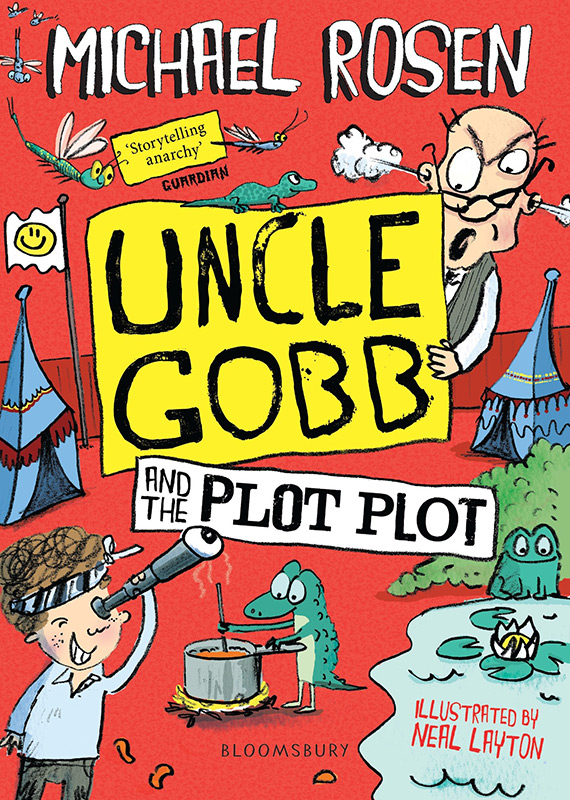
The Memorial of the Shoah
I’ve been to Nottingham for Five Leaves Bookshop and Whitechapel, London for the Idea Store talking about my autobiography So They Call You Pisher! (published by Verso Books). In these talks I tell some of the stories that come from the book. Halfway through, I sometimes worry that if I tell too many and if I tell them too well, people won’t want to read the book! The last part of the book tells the story of how I discovered what had happened to my father’s uncle and aunt in France. He had always said that ‘they were in France at the beginning of the war but they weren’t there by the end’. He never knew but one way or another, partly through luck, partly through digging away in books or online I’ve pieced it together.
One result of this is that I’ve discovered that my father’s Uncle Jeschie and his Aunt Rachel were deported from Nice, in southern France, to Auschwitz where they were killed. I found that their names are engraved on a wall that commemorates all the Jews who were deported from France and who died as a result. It’s at the Memorial of the Shoah in Paris. On November 20, my wife and I went over to Paris for a ceremony which commemorated the departure of the train which carried them to Auschwitz (Convoy 62). At the ceremony there were more than a hundred relatives of the other people who were transported on that train and we could, if we wanted to, read out the names of our relatives. It was very cold and people huddled up in their winter clothes, many were quite old themselves and as they spoke, we each said what our relationship was to the person or people who had died. I said, in French, ‘l’oncle de mon père’ and ‘la tante de mon père’ (the uncle and aunt of my father). What was really moving was hearing people say things like ‘maman’ (mum) or ‘papa’ (dad) and they asked us to read out the ages of the children on the train. Some were less than a year old. While we read the names, there were some children playing in a playground nearby and you could hear their voices as they ran about laughing and shouting.
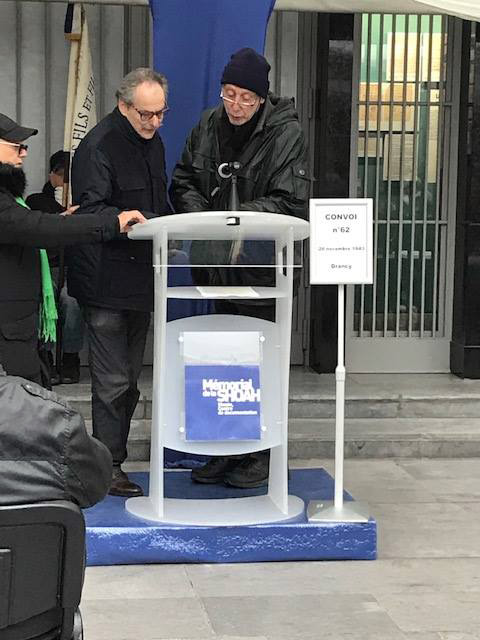
The Memorial of the Shoah
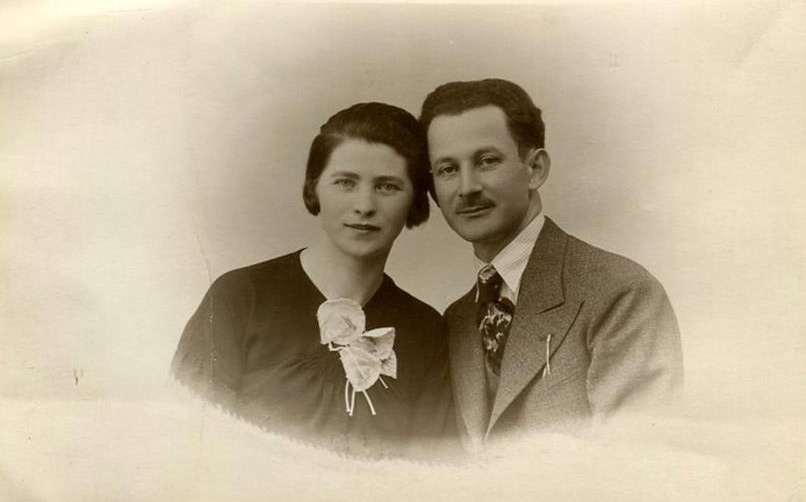
My father’s Uncle Jeschie and his Aunt Rachel
An English journalist was there and he asked me a few a questions and wrote it up for the Daily Mail online. Here it is:
BBC RADIO 4
I’ve just finished a season of ‘Word of Mouth’ on BBC Radio 4, which means that I’ve been presenting the programme for 20 years!
One of the highlights of this last series was an interview I did about what happens to people’s language when they have dementia. Then, the last programme of the series revisited a book by Raymond Williams that came out in the 1970s, called Keywords.
Following that, I did a series of 15-minute programmes called ‘Key Words for Our Times’ where a commentator chose a word to talk about and I interviewed them about it. You’ll find all these programmes on BBC iPlayer and podcast.
bbc.co.uk/programmes/b09x9k59/episodes/player

Extracts
The Guardian published an extract from a book I’ve edited called Workers’ Tales. It’s a story written by one of the people who helped found the Labour Party, Keir Hardie.
And the ‘New Statesman’ published an extract from a book that I co-edited with Kimberley Reynolds and Jane Rosen, called Reading and Rebellion.
newstatesman.com/2018/10/michael-rosen-communist-childrens-books
James Berry
On October 5, Emma-Louise Williams and I went to a conference on the work and life of the late Jamaican-British poet, and short-story writer, James Berry. We knew him well, I had worked with him several times since the 1980s and Emma made a radio programme about him for BBC Radio 4. It was great to hear his voice come over the speakers and hear people talking about him so thoughtfully and affectionately.
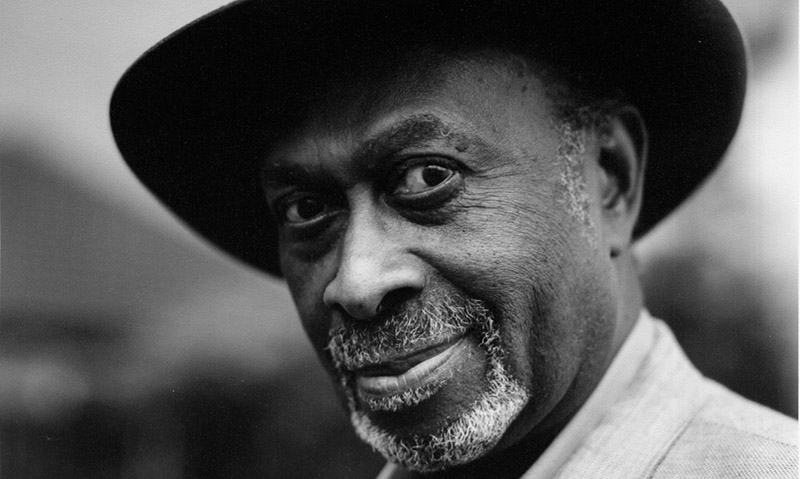
theguardian.com/books/2017/jul/04/james-berry-obituary
So They Call You Pisher!
I was delighted to have the chance to talk about my memoir, So They Call You Pisher!, at the wonderful Wiener Library, a unique archive and library documenting the Third Reich. Here is my talk:
The book is recently out in paperback, published by Verso Books.
versobooks.com/books/2735-so-they-call-you-pisher

Audio Adventures
Giles Paley-Philips has got a podcast up and running. It’s called ‘Blank’ and he and a colleague interviewed me in a murky basement cafe, Nordic, in London. We had a good time and I think it’ll be ready for listening soon.
I did a recording of my book ‘Unexpected Twist’ for a company called ‘Bolinda’ who also recorded me doing all the books – bar the latest – that I’ve done for Andersen Press. Here’s Volume 2. You can find them all on Audible.
My latest book for Andersen Press is Hampstead the Hamster which has a special Christmas touch to it.
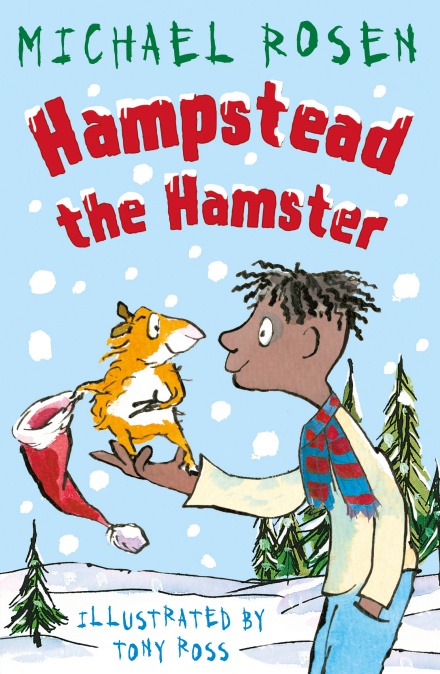
penguin.co.uk/books/111/1116199/hampstead-the-hamster/9781783447329.html
What the Dickens…
On the way back from recording the programme, I went to Cleveland Street in London. This is very special for anyone interested in Charles Dickens, and in particular, Oliver Twist not only because Dickens lived in Cleveland Street twice in his early life, but because from the house, young Dickens would have been able to see people coming in and out of the Cleveland Workhouse just down the road from his home. Both his home and the Workhouse are still there, so you can get a real flavour of what it was like and there’s every chance that that experience fed into Dickens’s writing about the Workhouse in Oliver Twist. By the way, the old Workhouse building was very nearly knocked down a few years ago, but it was saved, thanks to Dickens enthusiasts.

workhouses.org.uk/ClevelandStreet/
en.wikipedia.org/wiki/Cleveland_Street_Workhouse
There’s a plaque on the wall of Dickens’s home there:
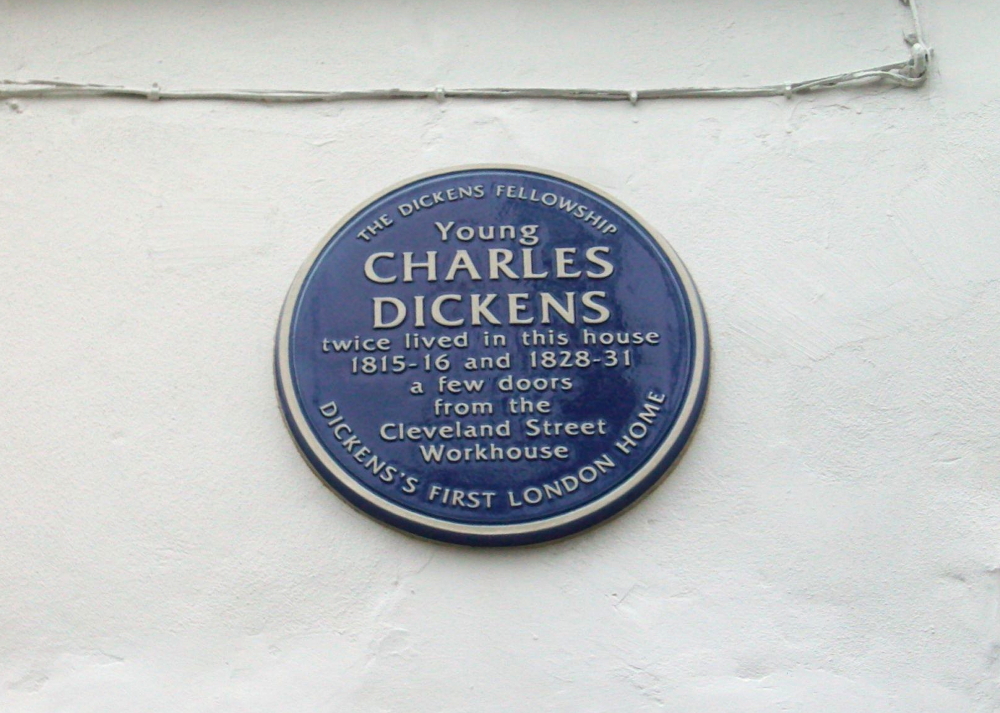
news.fitzrovia.org.uk/2013/06/10/plaque-unveiled-to-identify-charles-dickens-first-london-home/
– and in a lot of other places in London, like the Dickens Museum in Doughty Street
and his birthplace in Portsmouth.
charlesdickensbirthplace.co.uk
And here’s my book Unexpected Twist which tells two stories – a shortened version of Dickens’s Oliver Twist and a brand new story that I’ve written based in part on the Dickens story!
shop.scholastic.co.uk/products/Unexpected-Twist-An-Oliver-Twisted-Tale-Michael-Rosen-9781407188560

September’s News
I’ve been busy visiting schools this month doing my performances of my poems and stories. I can see that everyone I meet wants me to do ‘Chocolate Cake’, ‘No Breathing in Class’ and to make the noises I do in ‘Hot Food’ – choop, lip-smack, NICE! It’s very funny when I start to do them because everyone joins in straightaway. It makes me feel like a singer singing their greatest hits!
I visited the Pitt-Rivers Museum in Oxford and the Natural History Museum next door. They are amazing places. So many incredible things to see. If you’re ever in Oxford you must go. Don’t laugh – I was looking at old brooms! It’s to do with a radio programme that my wife is making.
Radio 4 are making a programme about learning poems off by heart. Gyles Brandreth interviewed me for it, so that might be coming out soon.
There was a conference in Oxford to do with writers and their education and I spoke about my book So They Call You Pisher! which in some ways is a book about how different kinds of education – school and home – turned me into a writer. It was great to hear Beverley Naidoo speak about her life in South Africa and how she began to write books like Journey to Jo’Burg.
I visited the literary festival at Budleigh Salterton and I realised that I had been there before. I didn’t recognise anything because it was when I was 4 years old, 68 years ago!

Audio Book Recording
I did some audio recording of a book I edited called Workers’ Tales published by Princeton University Press. It’s old stories published by socialist and Labour newspapers between 1880 and 1920. I’ve edited it and written an introduction. Find out more…
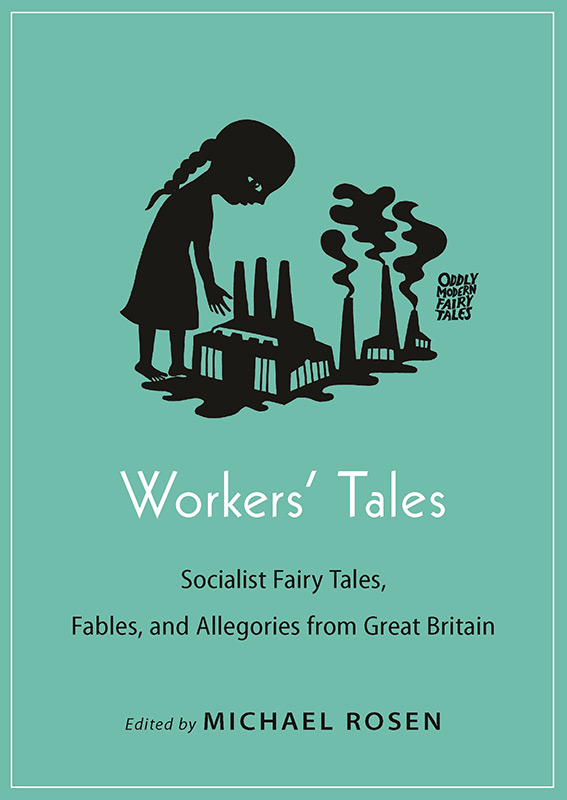
Emile Zola
I’ve been having some meetings to do with my book about Emile Zola – The Disappearance of Emile Zola, love, literature and the Dreyfus Case published by Faber. I can’t say any more at the moment, but I’m a bit excited. (In other words, very excited.)

Football
My son and I share season tickets with a friend and it was good to sort that out this month. We went to see Arsenal versus Everton. Great goal from Lacazette but we only won because Cech made some incredible saves. Still, the best football moment of the month had to be Eden Hazard’s incredible goal against Liverpool. Sometimes, in football it doesn’t matter that the player plays for a rival team: a great moment is a great moment. It was just wonderful to watch. Even though we were at home watching it on TV, I stood up and clapped. As if he was there.

The Author
In 1997 I completed a Ph.D. on the subject of authoring a piece of children’s literature – a book of poems that was eventually published as You Wait Till I’m Older Than You (Puffin). I have self-published this Ph.D. thesis and it is out now in the form of The Author: Towards a Marxist Approach to Authorship. Find out more…

Latest YouTube
I’ve been filming some more things for our YouTube channel. A live show, which you can see up on the channel now and an interview with the great writer, David Almond, author of Skellig and many other books. Watch now
Summer
I hope you’ve all had a great summer. We went to various places, one of them, Ventnor on the Isle of Wight. We had a great time – I found a cafe that sold raspberry sorbet. My two favourite ice creams are raspberry and blackcurrant sorbet, though I can manage dark chocolate, rum and raisin and cookie dough too.
Newsletter
I have a new email Newsletter that I am sending out regularly. Here is a teaser…
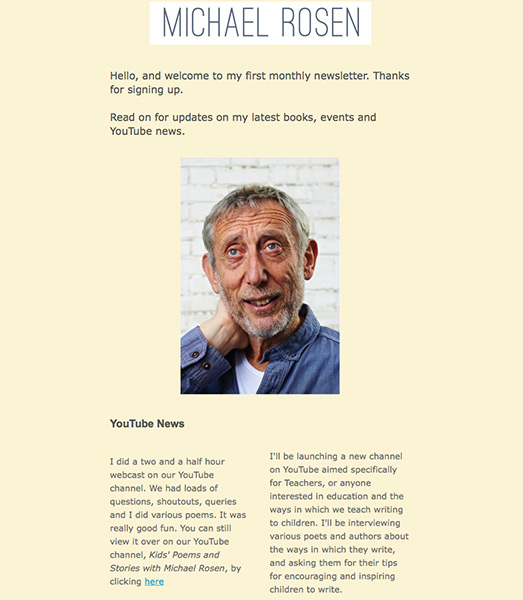
If you would like to receive this then you need to sign up and subscribe to it. The sign-up form can be found below:
New Books
I’ve got some books coming out in September:
Uncle Gobb and the Plot Plot – this is the third in my Uncle Gobb series. Poor Malcolm has to love with his Uncle who is mad keen to tell Malcolm what to do. And he keeps asking him questions and telling him how he should be better than it is. Once again, Malcolm is plotting on how to get rid of Uncle Gobb. But – meanwhile – Uncle Gobb is plotting on how to get rid of Malcolm. Luckily Malcolm has got his great, great, great friend Crackersnacker to help him. And there’s a girl called Lizard who is helpful too.
Unexpected Twist – this is a book based on Oliver Twist by Charles Dickens. Perhaps you know a bit of that Dickens story – about a boy who has no parents and is in the Workhouse. What I’ve done is imagine a story that is a bit like the Oliver Twist story. And this time it’s a girl. In the Dickens book, Oliver gets in with a bad crowd, even though he doesn’t realise it at the time! Can you think how that might happen today? How could someone not know they were getting hooked in to a bad crowd?
The paperback of my book Jelly Boots, Smelly Boots is coming out too and this has in it some of my favourite poems: a mix of funny, crazy, sad, mysterious and great, great pictures by David Tazzyman. Hope you enjoy it.

I’ve been writing some more books too! I’m working on a book to do with how I found out what happened to my father’s uncles during the war. It’s a very sad story but at least I’ve been able to find out and so they are not forgotten – which is how it was when my Dad was alive. He never knew what happened to them. And now I’ve found out. It doesn’t bring them back alive but at least they are remembered properly.
I’ve also written what I hope is a funny fairy story…I don’t know yet whether any publisher will want to publish it. That’s what it’s like when you’re a writer. You write something. You hope it’s good. You send it off and you wait to see if a publisher likes it and thinks that they can make it into a book. So, I’m sitting here with my fingers crossed!
June’s News
On June 13 it was great to go to the Social History Society’s annual conference in Keele University. People were giving a whole host of papers on their research on social history of the past and present. I talked about my memoir So They Call You Pisher! which gives a view of what it was like growing up in the London suburbs in the 1940s, 50s and 60s coming, as I did, from a background of people who came from ‘outside’. My parents were from London’s East End, Jewish in background, and so there was a big contrast for me and my brother, between the world our parents talked about from before the Second World War and the world we grew up in.
In the evening of the same day, I went to the Wiener Library in London, which is a remarkable archive of the history of Nazi Germany. They have regular exhibitions and this one is about what the Nazis called ‘decadent’ art, the art they despised and thought was ‘degenerate’.

On June 14, my son and his friend, Ian organised a pub quiz event on behalf of St Joseph’s Hospice in Hackney. Ian’s mother, who I knew well, sadly died in the Hospice but in order to show his gratitude for the way they cared for her they set about raising money for it. Anyway, I was the quiz-master. I don’t have many ambitions left, but one of them was to be a quiz-master! It was fantastic fun, making up the questions, doing them and I met a young celeb: Liam from ‘Bake Off’! He was at the same school as Ian and my son and he agreed to do some cake questions – o yes! – and act with me doing bits of dialogue from famous films.
Matchwomen’s Festival
Great fun at the Matchwomen’s Festival which commemorates the wonderful strike by the women who worked at Bryant and May’s matches factory in London’s East End in the 19th century, organised by Louise Raw who’s written a book about it. I talked about So They Call You Pisher! (which talks quite a lot about my parents who came from nearby). It took place at Bow Arts, where Emma-Louise Williams and I organised an exhibition of the East London Group of painters only a few months earlier.

Bear Hunt
Great fun at the Lyric Theatre, Shaftesbury Avenue, London, where the show, ‘We’re Going on a Bear Hunt’ based on Helen Oxenbury’s and my book, is on. I was asked to come along and do a workshop with the audience. We went on all sorts of other ‘hunts’, the children making up going on a ‘robot hunt’ or a ‘snake hunt’ and the like, and they came up on stage and we made all sorts of funny noises. Great fun to work with such young children who were really brave to come up on stage like that!

YouTube
Live webcast. I did a two and a half hour webcast on our YouTube channel. We had loads of questions, shoutouts, queries and I did various poems. You’ll be able to see it up on our YouTube channel very soon – or it’s up there already! I never know exactly as these things are sorted by my son Joe!
Speaking of my YouTube channel, we have released a batch of official T-Shirts. They are available to order now!

Meningitis Research Foundation
I recorded an appeal for Meningitis Research Foundation, that is broadcast on BBC Radio 4. This will go out in September, so listen out for it! It’s focussing this time on a research project on vaccinating women when they’re expecting a baby as this may well give the babies great immunity to meningitis.
Wiggly Wiggly
A lovely board book version of ‘A Great Big Cuddle’ comes out on the 2nd August. It’s called Wiggly Wiggly and it’s got the most wiggly, funny, rhymes from the book, ideal for the very youngest children to have and pour their gunky food all over and chew the corners. Ah, I remember it well! And to think that my oldest child who used to give his books a really good going over is the one directing me on YouTube!
Anyway, it’s Wiggly Wiggly published by Walker Books. Find out more…
How to Make Children Laugh (Quercus)
This book is out now, and it was covered by Chris Evans on his breakfast show on BBC Radio 2. We had a good chat and he was very enthusiastic about it – which was great – but very unexpectedly, straight afterwards, Vassos, the guy who does the football round-ups, started talking about Chocolate Cake. I think he was talking about my performance on video at our YouTube Channel – Kids’ Poems and Stories with Michael Rosen. In case you hadn’t seen it, that version of the story is now in paperback form published by Puffin. Find out more…
Chocolate Cake (Puffin)
Congratulations to Kevin Waldron who did such wonderful pictures for this book! He won the Children’s Books Ireland prize for illustration.
Further Chocolate Cake news: the Polka Theatre did a wonderful musical based on the poem, and I went to see it a couple of times. It’s now on tour around various venues in the country. I think it’ll be back next year playing various venues then.

Dublin
I had a great time in Ireland doing a show in an old theatre converted from a church in a place called Smock Alley. We had fun thinking about people making smocks in an alley. But first, the children had to tell me what a smock was…
Jack Zipes
Professor Jack Zipes, one of the world’s great experts on folklore, folk and fairy tales was over in England and we were delighted to host him talking to us at Goldsmiths, University of London. He talked about how fairy tales have a social and political relevance, particularly when they talk about power and haven’t been stripped of this relevance by people trying to ‘civilise’ them. I’ve been reading his latest book, ‘The Sorcerer’s Apprentice’ – a magnificent book, exploring the significance of the master-slave, boss-apprentice, adult-child relationship as shown through the many different versions, (anthologised in the book). Highly recommended. Published by Princeton.
Wellcome Museum
I’m working with them on a project which is under wraps at the moment!
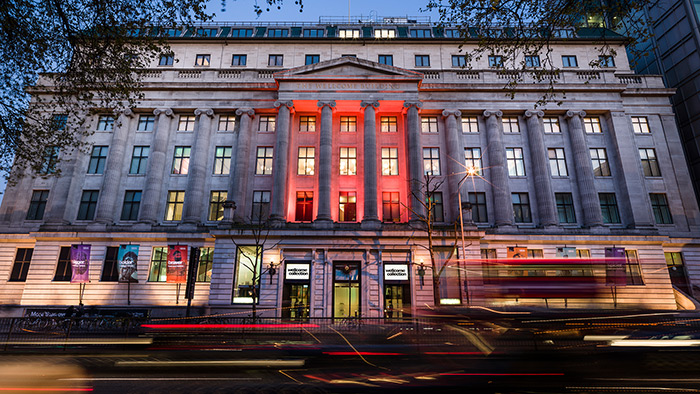
Eddie Steele Rosen
As you probably know, dear Eddie died in 1999, when he wasn’t quite 19. Every year, his old mates who he played hockey with, organise a memorial game. The team was part of Arsenal Community sports, run by the wonderful Freddie Hudson. Well, the 19th game was on June 9, on the pitch in the Arsenal Hub and there was a fantastic crowd of Eddie’s ex-team-mates, their friends, partners, and now: people’s children. So we had a great time, and swapped news, and there’s a wonderful moment when we remember Eddie and I give the award for the best player, the award being a goal-keeper’s glove mounted on a wooden plinth, reaching for and holding a bottle of Efes beer – Eddie’s favourite! Great moment, as always – and I even played for a few minutes! We make a collection and give it to the Meningitis Research Foundation. Here is a photo from last year’s game:

Writing for Pleasure
Here’s a booklet I’ve done to support work that teachers are doing in helping pupils write for fun. It focusses on a technique of using the shape and ‘syntax’ of stories that are already written and imitating them and/or inventing aspects of them. I give an example of doing this using the plot of ‘The Tempest’ in order to write a modern story.

On the Road With So They Call You Pisher!
I’ve been talking in quite a few places about my memoir So They Call You Pisher! (Verso Books) and it’s turned into a kind of 45 minute stand-up comedy routine. My parents were in their own way both comedians and so it’s good to get their jokes and ways of going on ‘out there’. I’ve now made a recording of the book and it will come up soon on Audible, iTunes and Amazon.
More Chocolate Cake
The Polka Theatre has come to the end of its run of Chocolate Cake – a show based on my poem of that name and some other poems. I saw it twice and thought it was wonderful, so full of fun and music and inventive digital work. I’m really glad to say that it’s going on tour this year and will, they hope, return for another tour next year.
National Union of Teachers
It was a great honour to give a short speech at the final conference of the National Union of Teachers before they go into one big union the National Education Union. No matter what criticisms I make of government policy on education and though this is sometimes a criticism of what goes on in classrooms, I keep trying to say that this is not a criticism of teachers. I fully understand that teachers have to do what the government, Ofsted and the testing-exam system tells teachers to do. I hope that that is always clear. If it isn’t, then I hope I can make that clear here. It’s always been my aim to support teachers in their professional job of doing their best by children, parents, families and community. I believe that the excessive test and exam system, policed by league tables and enforced conversion, prevents teachers from assessing pupils in ways that can directly help the pupils.
Newham Bookshop Celebrations
It was great to do an evening at the Wanstead Tap in celebration of 40 years of the Newham Bookshop, a fantastic community bookshop that supports community reading in hundreds of different ways. Viv Archer who has managed the shop in all that time is a friend and colleague and it’s always been a delight to do readings of all kinds for the bookshop. Long may it thrive!

What is Right & Wrong?
A book I did with Annemarie Young called What is Right & Wrong? published by Wayland has come out. It’s to help anyone reading it how to decide the really big stuff in life and living.
A Book About A Dog
I’ve been writing a rhyming picture book for Scholastic. I can’t say much about it yet – top secret! – but it’s about a dog. Well not actually ‘about’ a dog – more, ‘by’ a dog. OK, I realise a dog didn’t write it, but you get what I mean! Anyway, I’m still working on it. I mean, the dog’s still working on it.
Royal Albert Hall Shows
I’ve done a rehearsal for two huge shows at the Royal Albert Hall on March 11. I’ve written the words for some songs based on the Greek Myth, Daedalus and Icarus. The music is written by Will Todd and I’ll be doing the narrating – the spoken bits between the songs. We rehearsed at our home, and the conductor brought his little 2 year old boy with him and he played with our children’s old soft toys and ate houmous!

So They Call You Pisher!
In my memoir, So They Call You Pisher!, I put a photo of my father’s uncle in his army uniform. I thought that he had been in the French Army in the First World War. It turns out that he was on the other side: he was in a Polish regiment in the Austro-Hungarian Army. How do I know? Because I posted up the picture on twitter and people tweeted me to tell me. The power of social media, eh?

Other Happenings
I had a great time in Oxford with my students from Goldsmiths. We talked about Edward Lear and Lewis Carroll and their nonsense poems and stories. Imagine that! A whole Saturday talking nonsense. (Sounds a bit like me most Saturdays, actually!)
I’ve just heard that BBC Radio 4 have asked me to present five shows about words like ‘post-fact’, ‘fake news’, ‘debt’, ‘doom’ and the like. I’m really looking forward to it.
New Books
I’ve pretty well finished my Oliver Twist book. It’s hard to explain but really, like Bah! Humbug! it’s 2 books in 1. That’s to say, there’s a cut-down version of Oliver Twist and there’s a brand new story that I’ve written about a girl called Shona, who is in a way a bit like Oliver. She and her classmates are reading Oliver Twist in class, exactly while Shona gets into trouble over the matter of getting a ‘free’ phone! Tony Ross is going to illustrate it and it’ll be out in September or October this year.
I’ve also finished a book that goes with the series of books I did with Tony Ross that includes Fluff the Farting Fish and Choosing Crumble, all published by Andersen Press. The latest is called Hampstead the Hamster about a boy who gets a hamster for Christmas…but something is wrong: the hamster is unhappy. Luckily, the boy – Leo – is very good at figuring out what Hampstead wants. Will he be able to cheer him up? Let’s hope so!
YouTube
You may have seen on my YouTube Channel, Kids’ Poems and Stories with Michael Rosen, that I did another live web chat. It went very well at the beginning but then we ran into ‘technical problems’ and I started to fade into a fog. It looks a bit like some kind of sci-fi movie. I have to say, it wasn’t what we meant it to turn out like, but – hey – we’re busy learning how to do these things and at least you know it’s for real, and we’re not puppets!

Lollies Update
The Lollies award ceremony was amazing with great acts and performances from the Horrible History Show and Alesha Dixon read from her children’s picture book. And then the prizes were announced. If you want to find out what are the funniest books of the year, go to the Lollies website and take your pick! I have a strong connection with this prize because it’s sort of ‘my baby’. I mean, when I was Children’s Laureate, I helped create the Roald Dahl Funny Prize, and the Lollies Award has taken over from it. It’s great to celebrate funny books, don’t you think?

Other Happenings
As I said, in my last ‘News’ I was going to visit my old school, Pinner Wood, in Harrow, North London. It was amazing to see it. It’s survived falling down into the chalk mines that were found underneath the school. The head told me that they aren’t prehistoric ones – I thought they were! They were dug by a farmer who lived just up the road and thought that he could sell some chalk. One problem: he didn’t fill in the holes and tunnels! So, over a hundred years later, the playground suddenly opened up and there was a great big hole down there. They put a camera on a cable to look and they saw the tunnels. It reminds me a bit of when I was a boy in Pinner we went down an air raid shelter that we found in the Memorial Park.

Pinner Wood (photo courtesy of Harrow Times)
I was very honoured to take part in the Cambridge memorial days for Holocaust Memorial Day. I read some poems about my relatives who died in the Holocaust and school students from several schools – Parkside and Trumpington amongst them – wrote fantastic poems themselves.
And then I made some more videos for the YouTube video channel. This time I’ve told some stories about someone I call the ‘Bakerloo Flea Woman’ who comes from a book that I wrote called Nasty. I also made some little videos for the Polka Theatre for the show they are going to put on from March to May based on my poem Chocolate Cake and some other poems too – with music by Barb Jungr.
Why Read? Why Write?
Teachers may be interested in my new booklet: Why Read? Why Write? It’s a set of articles about reading and writing to inspire you and your pupils with great language work. Some of it comes from my talks with my MA students at Goldsmiths, University of London. Find out more about the book.
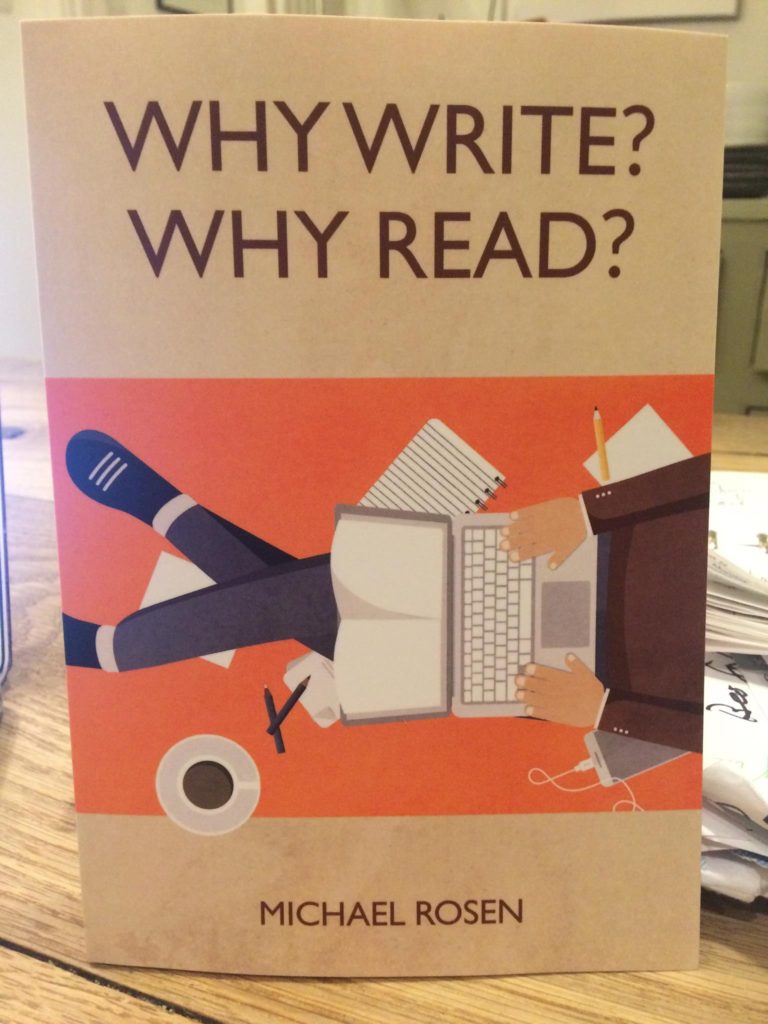
More Dickens
I’m deep in the middle of writing the follow-up to my book Bah! Humbug! that came out for Christmas. That one is based on A Christmas Carol by Charles Dickens and this new one is based on Oliver Twist – also by Charles Dickens. With Bah! Humbug! we had the idea of a modern family where some of the people in the family are like the characters in A Christmas Carol so Dad is a bit like Scrooge, the daughter, Eva, is a bit like Tiny Tim and so on… The children in school are putting on a play version of A Christmas Carol. The pictures are by Tony Ross and we both dressed up in Dickensian clothes to go on BBC Breakfast and Newsround to talk about it.
We sat in the studio in our Dickens’ outfits chatting to the presenters and we had finished, Tony said, ‘When do we do the show?’ I said, ‘We’ve just done it, Tony!’ He said, ‘Oh, I thought that was us just rehearsing.’ He didn’t realise that we were on live television and it was all over!!!
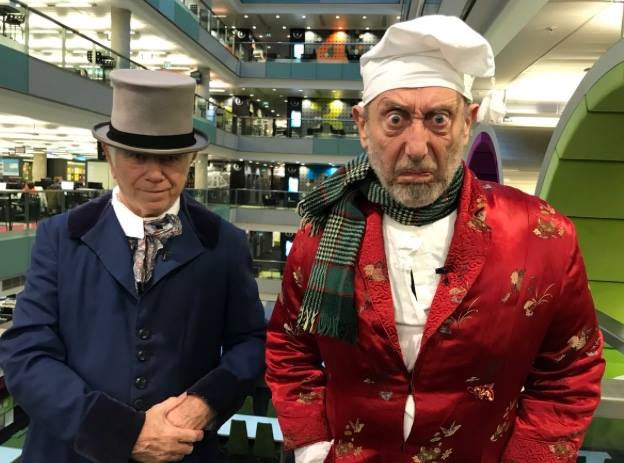
This time with the Oliver Twist story I’m writing about a… No! I can’t say any more. You’ll have to wait till it comes out next Christmas!
Lollies 2017 Book Awards
On January 18 there’ll be the Lollies Awards. This is the prize for the funniest children’s books of the year. I’m the chair of the judges and each year since I was Children’s Laureate – first with the Roald Dahl Prize and now with the Lollies Awards, we’ve been celebrating funny books.
Who is going to win? I don’t know! Children in schools have been voting for the best book and I haven’t seen the results.